
Join the Crew
Get the best resources for producers delivered to your mailbox

Get the best resources for producers delivered to your mailbox
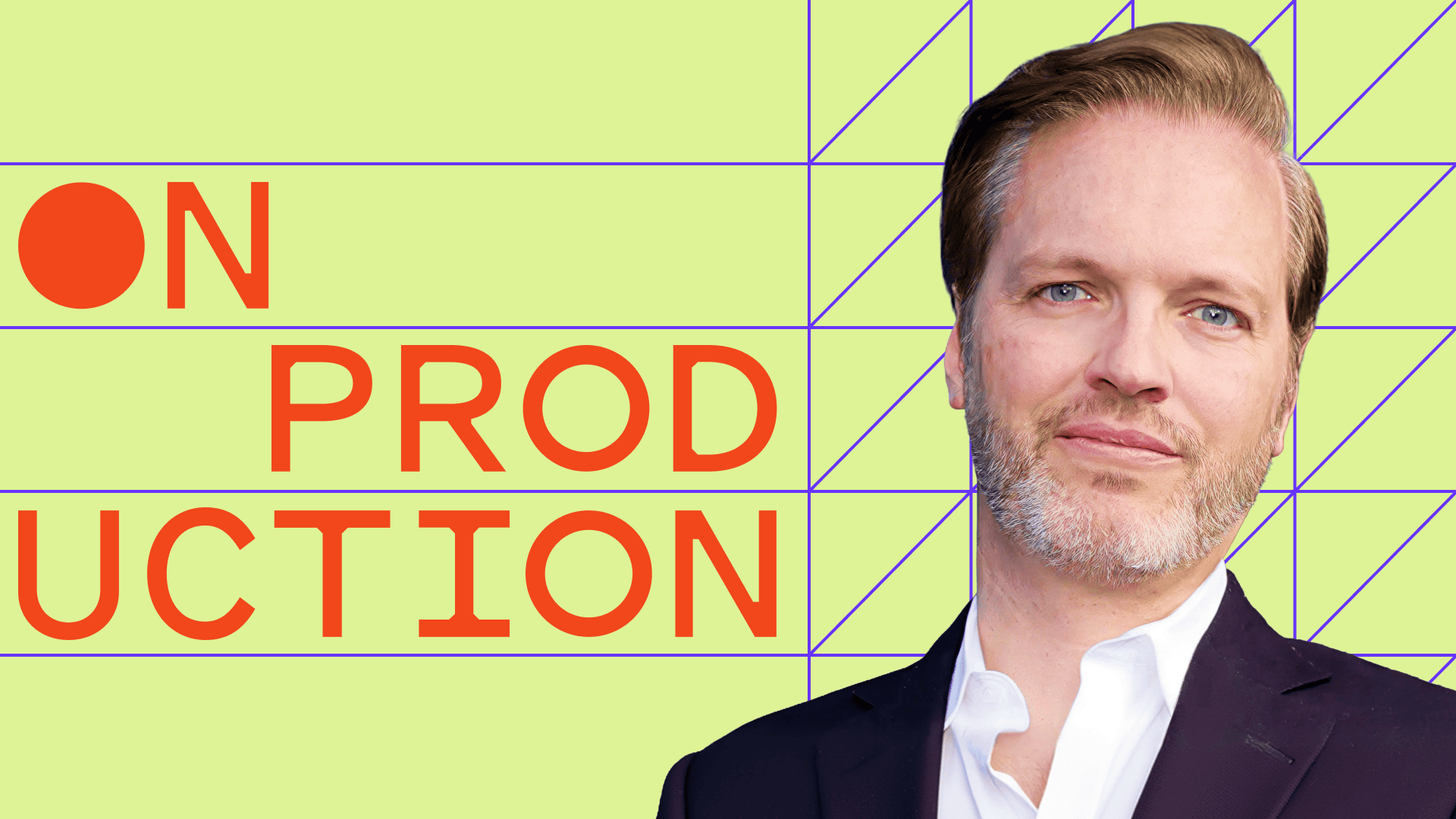
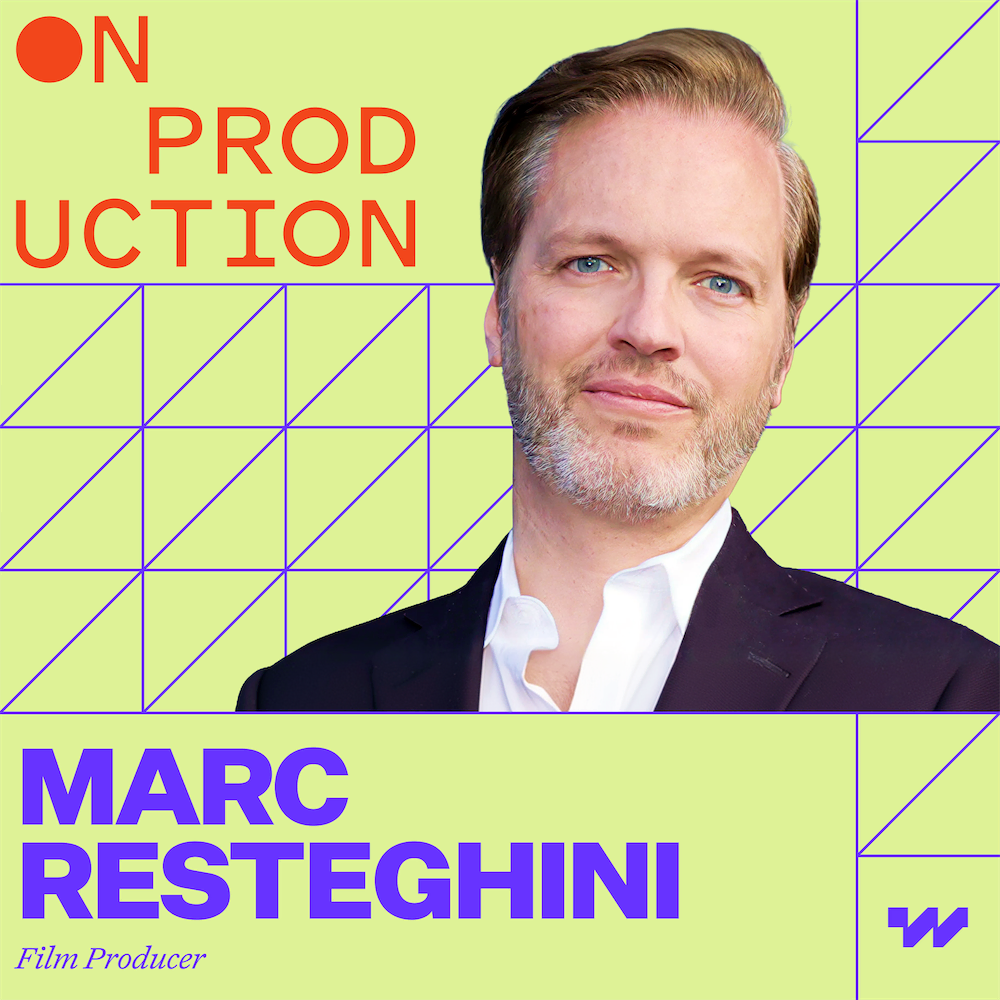
Cameron sits down with Marc Resteghini, producer and former U.S. and global head of TV development at Amazon Studios, to explore how projects move from pitch to greenlight inside a modern streaming studio.
With a dual perspective as both an independent producer and a senior studio executive, Marc brings a rare inside-out view of the system. During his time at Amazon, he helped guide major titles like The Marvelous Mrs. Maisel and Fallout from development through global release, building teams and processes that bridged creative ambition with business discipline.
In this conversation, Marc breaks down what changed structurally as streaming studios evolved—from smaller, entrepreneurial teams to more traditional systems—and how decisions are actually made when creative instinct, data, and economic realities intersect. They discuss what truly drives a greenlight, how much weight data carries, and why creative conviction still plays a central role.
The episode also dives into the producer’s side of the table: how risk is evaluated, what to anticipate before walking into a development room, and where budgets and schedules are quietly won or lost.
If you want a grounded look at how today’s streaming studios think, evaluate, and build projects, this episode offers a practical view of the mechanics behind development, greenlight decisions, and the evolving relationship between creators and platforms.
Welcome back to On Production. Today I'm joined by Mark Resteghini, producer and former US and global head of TV development at Amazon Studios, now running Jack Tar Pictures at Amazon. Mark helped build Amazon's television engine during its formative years, overseeing development and production across scripted, unscripted, and animation, including series like The Marvelous Miss Maisel, which I loved, Fallout, and Tom Clancy's Jack Ryan.
Today, I'm hoping we can unpack what actually moves a project from pitch to green light, where budgets and schedules are quietly won or lost, and how the architecture of these modern studios has changed in the streaming era. Mark, great to have you here. Let's dig right in. Yeah, it's a pleasure. So you helped build Amazon Studios from near zero into a global studio with these awesome
Marc (00:49.864)
Thanks so much for having me.
Cameron Woodward (00:59.167)
Emmy winning franchises. When you look back, what did Amazon get structurally right that traditional studios structurally could not?
Marc (01:09.886)
You know, I started, there was probably less than 30 people at Amazon Studios. So it was pretty early days. And I think in those early days in terms of structure, we were small and nimble and it allowed us to move really quickly and take risks that other more traditional, I think networks and studios weren't able to do.
which I think was, was really important. I think, you know, as any of these streamers have grown, you can ultimately become a little bit more traditional in terms of building out what would be considered a, studio infrastructure. So, you know, now I think probably similar to more traditional media companies, but obviously having a tech tech background to them.
Cameron Woodward (01:57.303)
That's awesome. Yeah, I was curious if like there was things that it like that the data layer was especially helpful in the early days. Obviously, Amazon has a lot of capital and a lot of infrastructure and a lot of management expertise, but breaking into our entertainment, there was so much to talk about. Yeah.
Marc (02:09.822)
Oh, yeah, absolutely. In fact, when I first went to Amazon, I joked that it was like my first real job because I had worked in in traditional entertainment for so long, which not not to disparage any of us who work in entertainment, but it's such a different beast. I thought like I'm going to get a whole new skill set going to work at a tech company. And I did. mean, the the way we approach decision making when I was at Amazon and the level of data
that was used was just totally new to me and not something I had ever been a part of before. Amazon famously has what's called a doc culture where for any meeting or any big decision, you start the meeting with a five to six page document that kind of lays out, okay, this is the agenda that we're gonna talk about. Here's the decision that needs to be made. Here's like all the information. Here's the recommendation.
and everybody sits quietly for about 15 minutes and reads that. And then you kind of debate the merits of the document and the decision. That was such a new concept to me.
Cameron Woodward (03:15.189)
And that carried over to the entertainment side. Wow. That's awesome. When you were global head of TV development overseeing, you know, like 50 people, you had kind of classic Amazon cultural architecture, it sounds like, but how did you design the machine in addition to that? Like what decisions did you decide to centralize? Like what did you personally insist on touching like in, that design of that business?
Marc (03:17.928)
I very much manage by pushing decisions downward. don't, I don't, and maybe it's because I've worked at traditional companies and I've been on the producing side, I try to eliminate as many layers as possible. I really worked to build an organization and a team that I believed in and had really strong lieutenants who I felt like could go off and manage a slate or manage productions.
so that everyday decisions could be managed by those people. So for me, I would weigh in on, you know, things that were being put up for green light. That would be based on my recommendation. Things that were big development spends that maybe required a writer's room commitment or a penalty commitment. I would weigh in on that.
things that had involved talent that we had deals with or were particularly high level A plus talent I would be part of. And then when it came time to production, bigger decisions, pilot script, pilot director. But beyond that, I really tried to empower the people underneath me to make those the everyday creative decisions. They were the ones who were living in the details and were much better equipped. And, you know, I was also really lucky that the
the senior leadership above me at Amazon also managed the same way. And so that really fostered a culture that allowed me to kind of, you know, to spread that out through the entire organization.
Cameron Woodward (05:18.519)
So I'm curious, like in practice, when a show like The Marvelous Miss Maisel or Reacher came in, what actually like moved the needle internally? Was it creative conviction, data modeling, like international appeal, budget math? Like how did you all think about it at Amazon versus?
Marc (05:34.341)
I think all of the truth is all of those things would be part of it. But what was great about my time, and I don't want to speak now to where Amazon is, I'm not an executive there now, but like we certainly use data and really were thoughtful about decisions, but there was very much a level of creative conviction that still drove things forward. And I can tell you that the marvelous Mrs. Maisel when
That came out of a general meeting that I had with Amy Sherman-Paladino. I just wanted to get to know her as a writer. And she came in and said, I have this idea. I think I sold it in the room to another network yesterday. I was like, what's the idea? Please tell me what it is. She wouldn't really tell me. She left the general meeting, hounded her agent. She came back the next day. I pulled my boss into it. I was working on the drama team at the time. He was the head of the team.
She kind of pitched out a little bit of the pilot acted out Rachel Brosnan hands comedy me see and we bought it in the room We're just like, okay, we want to develop this And then that green light decision Once the pilot script came in it was hey, let's this was back when Amazon did pilots It was it was really creatively led I mean like we we were just excited about her vision and and doing something that was so original and specific to her and then
Marc (06:55.28)
when ultimately when the show is greenlit to series, think at the time it was the first Amazon show that was greenlit to a two season commitment. That was certainly on both the strength of the creative in the pilot that was produced, but then also in terms of data that came in, audience response to it. You know, how many people watched what the reaction was online. So there was definitely an element of data, but in the beginning it was really about conviction and Amy.
Cameron Woodward (07:20.789)
I love it. Yeah, I mean, what a writer, what a talent, what a great show. What is the biggest misconception producers have about how streamers decide?
Marc (07:34.495)
That's a good question. I, it may be the question about data. I think that there's this sense that like, Oh, it's so, it's so tech driven. It's all about the numbers and yeah, that's really important, but like at the end of the day, the people that are at these places are still creative people. And, you know, I think we all got into this business because we're passionate about storytelling and filmmaking. And that's that hasn't gone away. That's certain that you look at any of these streamers and certainly my experiences has been largely with Amazon, but I think any of the other streamers around town, they're staffed by people who are film lovers and television lovers. so that passion really is very much a part of the decision making.
Cameron Woodward (08:20.033)
That's great. So you you did this interesting thing, Mark. You went from being the green lighter to asking for the green light. What changed in how you see risk?
Marc (08:28.382)
You know, I think it makes me a better producer because I certainly, I certainly can go into the network or the buyer, being able to preempt some of the questions and concerns that people are going to have. But you know, when you're on the other side, you're definitely an advocate and a seller. so
You may look at things with a little less, a little less risk aversion, but I think what makes me strong as a producer is I'm able to know like, okay, these are the questions I'm gonna get asked. And if I were sitting in that seat, I'd be concerned about this and like, this budget's too expensive. And like the show's gonna have to perform at this level in order to justify this number. And like, I get it. I was in that chair for a long time. So hopefully it makes me a better partner.
Cameron Woodward (09:25.101)
To that end, Mark, what do you think executives misunderstand most often about producers and what do you producers misunderstand about executives?
Marc (09:34.719)
Um, I am a big proponent of honest and direct communication. Um, so I, I tend to over communicate, hopefully I don't think in an annoying way, but just always trying to be incredibly transparent with whichever side I'm on. And I think for producers, we really appreciate studio and network partners who just give us the real, um, here's
Here's what's going on internally. Here are the dynamics or the internal politics that I'm up against. Here's where your project really sits. We all want the same thing, which is to make a great show that we're proud of and that a lot of people are gonna watch. But I think sometimes, when I was certainly in that role as an executive, you can get lost in the corporate speak.
and try to carry a party line. And it's always better just to be transparent with people say like, Hey, I love your show, but we're not going to make it for X, Y, or Z reason, or I love your show. And, you know, this is the conversation that's happening internally right now. My boss has questions about this because we had this other show that didn't perform last week. Just, just, you're not going to give away insider information, but like being honest and transparent, I think creates a good, good teamwork. And then similarly,
for a producer, being honest with the studio, like, you know, you don't have to tell them every problem that's going on. It's your job as a producer to solve those things before it gets to the studio, the network's desk. But I think also don't hide the ball, like be transparent about a situation and don't try to, you know, pretend that you're going to come in on budget when you're trending a million dollars over, like, let people know. So you're in the, you're all in the same boat together and rowing in the same direction.
Cameron Woodward (11:26.475)
Mark, what is the advantage of running Jack Tar pictures inside of Amazon versus outside of it?
Marc (11:33.451)
well, certainly to I'm privileged as a producer to have a deal with Amazon and be financed by them, which is great. And gives me a level of just stability in my life. but also to have a deal to place that believes in me as a producer and is willing to support, the things that I'm excited and passionate about.
again, gives me a level of freedom to build my business. And then also having those relationships with so many people that I worked with for years, I have a shorthand. can understand what they want, like how to deliver something that's going to work for them. So I think it's hopefully a symbiotic mutually beneficial relationship. I'm one leg up because I know
I know what they need and how to get it done, but also I can deliver maybe a little bit better for them than other people because I know what the process is like.
Cameron Woodward (12:32.907)
That's awesome. mean, aside from Amazon, just in these types of deals with production companies as well, like, do you feel like this proximity has a tendency to accelerate or to constrain in some cases?
Marc (12:44.552)
definitely accelerate. Yeah, I think I think definitely accelerate. just you're just you're assuming it's a good relationship. It's more of a partnership. I mean, in many ways, I consider myself an extension of Amazon. I want to do shows that are going to work for them.
Cameron Woodward (12:57.483)
That's awesome. Speaking about this, you've got a new show, Young Sherlock. So with Young Sherlock and Guy Ritchie, what does a producer actually protect on a show like that?
Marc (13:09.208)
I think, well, there's a, there's a lot that a producer protects. mean, certainly, the creative vision. So, you know, my job is to protect the creative vision of Guy Ritchie and Matthew Park Hill, our creator and show runner, and to support them and make sure they have the resources they need. At the same time, I also have a responsibility to Amazon to,
deliver an excellent show that's on budget and to make sure that that process is and that production is managed smoothly. So, you know, as a producer, you're you're and ultimately also my own vision in terms of like what I know is going to work as a show and deliver something that I think is gonna is gonna please audiences worldwide. Like we want to we want to make a big hit that people are going to watch. So I think all of those things you serve many masters as a producer, but the
really, it's the show's the king.
Cameron Woodward (14:07.181)
Can you tell me a little bit about the show, not from the narrative side, but the production side? Where were you? Give me some of the big beats of things that were pretty exciting for you in terms of production on this one.
Marc (14:15.982)
so it's a, it's a UK based production. I have amazing partners at motive pictures, which is a, is a London based company. we were based, our production was based in Cardiff, Wales, which is where, we had studio space, wonderful support from the Welsh government, incredible crew in Wales. and then we shot in and around the English and Welsh countryside. were at Oxford university for two weeks.
and then the final, block of the show, we were in Southern Spain, in, in Kadith in the South, Perez and, Seville. so big, big scope, hopefully, hopefully that translates, on screen. and, know, I think in terms of just some of the challenges of it, it's, it was.
The amazing thing about Sherlock is it's one of the most adapted characters in works of literature. So how do we bring something new and fresh to that? And certainly telling the origin story of Sherlock gave us a good footing for that. And having a filmmaker like Guy Ritchie.
who brings such a specific sensibility and tone gave us a leg up, but it was constantly asking ourselves and having that be our creative North Star is what are we bringing new to this character and to this world?
Cameron Woodward (15:46.989)
Actually, Mark, that sparks me a question, which is like, what in your view makes IP adaptable versus not?
Marc (15:55.679)
I think to me it starts with a great story and great characters and great themes. But some people have said in the past to me, I don't know if I 100 % subscribed this, but there's a saying that like really bad books make great adaptations, really good books are challenging. Because a lot of times it may be not a great book or not a well-known or well-respected book, but there's a kernel of an idea that's really interesting in there.
I don't know if there's a hard rule or thumb. There has to be just enough. Enough that you could use as a launching pad and some things you make, it's a very literal adaptation and other things you're, picking and choosing, but those great nuggets are, are sufficient. And I think also it's really important, particularly if you have a rights holder, who's active in the process to recognize that when you're adapting IP.
you're translating it for another medium. And so it's never gonna be a one-to-one adaptation. Like you have to be willing to...
to change and to modulate based on a visual medium. If it's from a book to a movie or a TV show, if it's from a video game, it's slightly different. You're visual in both places. But you want to be specific to the medium that you're on, which is going to require some changes. One of the first shows I made at Amazon was an adaptation of Philip K. Dick's novel, The Man in the High Castle.
which is such a complex work. And many people would say it was really challenging to adapt. And we had a great, I had a great partner, Philip K. Dick's daughter, Issa Dick Hackett, who was a producer for Amazon, along with Ridley Scott and David Zucker, who was great, who understood.
Marc (17:54.075)
what was special about her father's work, but also it really embraced the need to sort of update it and change it for television. And then Frank Spotnitz, who did the adaptation, came up with just a couple of core ideas that were so brilliant in terms of like, how do you take this book and make it sing for TV?
And again, it was really looking at it. Some people may have looked at that book and said, this is really hard to adapt. It had been developed a lot of different places, but Frank had, Frank was like, these are the couple of things that are important and these are the couple of things that I'm going to change. And that alchemy really worked.
Cameron Woodward (18:29.099)
Hmm, that's really, really cool. That was a great series. What are the early warning signs to you that something just will not translate to screen?
Marc (18:44.764)
I mean, you, you'll see warning signs in initial conversations and pitches and stuff, but really it's all about the scripts. When you get into the script writing phase, you know, by the pilot, by episode two, if you, if you have challenges, I mean, episode two in many ways is the toughest. I think that's a, that's sort of a, a well thought thing in the television business that
Episode two is really figuring out what the series is going to be. And so you know pretty quickly what you're up against as you're into that second episode. Cause your pilot, you can maybe make some excuses. You're setting up a world, it's new, you're building some ideas, but two is really starting to say, okay, this is how the show is going to unfold. And I think when you get into that second script, you know whether something has legs or if you have some issues with the adaptation.
Cameron Woodward (19:31.607)
So, across shows as different as Fallout, The Summer I Turned Pretty, and Swarm, what is the through line in your taste?
Marc (19:41.439)
Really, really unique creators with specific voices. So, you know, having Jonah Nolan, Jenny Han, Donald Glover and wonderful collaborators for all of them, I think is part of it. And then for me, like my taste is really about when I look at something, if I want to take it on as a project and it's different as a producer than as a
Marc (20:09.136)
as an executive, certainly when I was at Amazon, I was responsible for delivering like a slate of programming. So not everything was, was a mirror of my individual taste, but I genuinely generally look for things that I think are going to be broadly appealing that a lot of people are going to want to watch, but feel 15 degrees left of center. so that
that aren't necessarily the expected or down the middle adaptation, but have a little bit of a top spin on them. And usually that comes down to who the creator is, who's the voice behind the show that has a level of specificity that makes something stand out and resonate.
Cameron Woodward (20:47.455)
Is there something that you feel like you consistently respond to them?
Marc (20:52.798)
Uh, it honestly, it's really just voice. It's, it's, that's such a, morphous term. was describing this to someone the other day. Like I know within five, 10 pages of reading a script, like if there's a voice that stands out to me, um, you know, it could be a really well constructed script, but what's the, what's the like essence behind it that has a little bit of flavor to it? It's not, it's not quite tone. So maybe a little tone, a little style. Um,
but it's that 10 to 15 degrees left of center. But for me, mean, I'm genre agnostic. Some of my favorite things are, you know, I made a show at Amazon that was proud of called Outer Range. It was a sci-fi western. I made Mrs. Maisel that was a period comedy. Like, loved them both, and very different, but also both of them had really specific visions behind them.
Cameron Woodward (21:38.049)
That's sweet. A bit of a pivot. What is the job of a producer at the highest level?
Marc (21:45.727)
Uh, at the highest level, um, everything, uh, I mean, you, you've got to, you've got to manage the creative and the budget and, get a show or a movie made. It's, you know, it really is everything. It's, it's, you know, you can come in at different points and on different projects. have partners who maybe contributed something different to each of them. And so my role follows a specific, uh,
or has a specific subset. like if you're, if you're the one sole producer from beginning to end, you're, you're incepting the idea and you're seeing it until it's launched. And it's every part of that. And, and, and again, sort of seeing the show, like what are the best decisions for the show or the movie?
Cameron Woodward (22:34.647)
What do great producers consistently do that average producers don't?
Marc (22:39.87)
great producers don't take no for an answer. you know, when I was an assistant, like anybody who in the business who started out, I, I was like, why am I having to do this? This is so not like connected to the job. You'd have, you'd have these crazy tasks that you were asked to do and
I realized that like it's actually, it seems like it's terrible training. You're just being taken advantage of, but it was great training because you had to be really resourceful and figure out how to get something done. you know, I always, I was taught and anybody who's worked for me, I've tried to instill like you never, you never go back to your boss or to whoever talent director and say no, or it can't be done. You say, okay, let me figure out how to do that.
Because there's always a way. Like it's just, may cost more money, like, or, you know, it may require somebody else's assistance, but there's always a path forward. Just a trade off. Is it worth it?
Cameron Woodward (23:36.46)
What is something producers obsess over that doesn't actually matter?
Marc (23:46.239)
I mean, I think some producers have ego and obsess over their own recognition as a producer. Like it's so not about us. It's our job is to make the filmmaker and the stars and the actors and the writers, everybody else look good. We don't, know, credit's nice, but like not important.
Cameron Woodward (24:07.521)
All right, what project were you wrong about?
Marc (24:11.558)
Ooh.
I can't answer that question. love all my children equally. I will say, I'll spin this answer to my advantage. was at the Mexico premiere for Young Sherlock last week and I was saying afterwards to our star here, Fine Stiff, and I said, you know, I've worked on shows before where I thought they were amazing and then I showed up at the premiere and I was like, what was I thinking? I was like, this show, like I showed up at the premiere and I was like, yeah, I really love this.
Cameron Woodward (24:44.652)
Yeah.
Marc (24:44.894)
So there have definitely been things that I've gotten wrong, but you know, I'll let sleeping dogs lie.
Cameron Woodward (24:52.513)
What's your favorite note to give?
Marc (24:57.458)
What's my favorite note to give? Go weirder. Be different. Surprise me. Be unexpected. You know, that can be a variety of different things. It could be a very typical note that you give in the streaming space of like, what's the cliffhanger at the end of the episode that shocks me that's gonna get me to move on? Or it could be...
You know, I mentioned that show Outer Range, which was a personal favorite of mine. I remember giving the note just like more weird moments in the show and, things that stand out. That was specific to that show because it had a very weird tone. I think just remembering that people want to talk about and immerse themselves in a show and, and finish and tweet about it or, you know, what we used to call water cooler moments. I don't know if you say that anymore, but like lean into that, give those moments to people.
Cameron Woodward (25:55.639)
What about your least favorite word in a pitch?
Marc (26:01.734)
least favorite word in a pitch. Hmm. I'm to have to come back to that one.
Cameron Woodward (26:09.323)
That's all right. Okay, how about this? What's the most creatively interesting budget range?
Marc (26:16.894)
well, this is a, this is a challenge and I think it's a challenge for me as a producer and a challenge in the business right now, which is the eight to $12 million per episode budget range is just getting squeezed because it's just economically difficult to justify shows in those budget ranges. And unfortunately for me, and maybe coming back to your question about my taste, like I really like shows that can be done in that.
range there maybe maybe dramas, shows that aren't aren't world building, but certainly have scale and scope to them. And they're just tough to get things done. And that right now, I think most places in the streaming space are really looking for less than eight million dollars an episode or really expensive shows based on big IP that, you know, they feel like they're they can be marketed easily. So that that range is tough. And I get it. I understand why from a business perspective.
Cameron Woodward (27:16.887)
What about a show you wish you had been?
Marc (27:21.094)
I wish I wish I bid on a big little lies back when I was at Amazon didn't get it. That was in the early days right up till, you know, tried to get a pluribus and lost it to Apple, which wish I had gotten both of those.
Cameron Woodward (27:39.063)
So good. If you could only produce one genre for the next decade, what would it be?
Marc (27:44.679)
adult drama.
Cameron Woodward (27:46.825)
Awesome. And one last question, Mark. What still feels unfinished for you? What still feels unfinished for you?
Marc (27:58.558)
Well, there's my development slate, which is unfinished until they get greenlit. So that is definitely unfinished. You know, I want to just keep working with great creators. you know, there's certainly, I'm joking, but there are individual projects that feel unfinished, but as a producer overall,
Cameron Woodward (28:01.498)
You
Marc (28:25.092)
you finish something and then you jump back in and want to do it again. And everyone is different because you're working with a different writer or a different filmmaker and supporting their vision. I want to be able to keep doing that. And I feel very lucky during the time that I was at Amazon, I got to work with the most unbelievable filmmakers and creators from Amy, who we talked about, to Barry Jenkins, to Jonah, to Steve Conrad. mean, just
the most Donald Glover, the most amazing people. And I would love to keep, keep doing that. That's unfinished for me. I'm greedy. more.
Cameron Woodward (28:58.559)
I love it. Wonderful. Mark, thank you for joining on on production. It's been a pleasure.
Marc (29:03.952)
Awesome. Thanks for the, thanks for the conversation. I'm going to be thinking about that one word in a pitch.
Pitching your next project? Upgrade your presentation game with the breakdown of best practices for pitching a film or TV show.




Get pricing, see a product demo, and find out how much easier payroll can be.
