
Magilla Entertainment takes control of its slate with Wrapbook

At any given moment, Magilla Entertainment has a dozen productions in flight. Some are in development, some are shooting, some are in post, but no matter what, things are always moving. Ask the finance team how many active show codes they’re carrying and the answer comes back with a laugh: somewhere north of a thousand. That’s the reality of unscripted television. It rewards volume, speed, and, more than anything, cost-effectiveness.
“Efficiency is everything in unscripted,” says Owner/Executive Producer Laura Palumbo Johnson.
“You’re trying to keep things super lean, while still making sure that your people can do their jobs, feel supported, and be creative.”
As the person running operations at Magilla, Laura is the one keeping the business side moving day by day. When every dollar counts, she says, the one thing you can’t waste is people’s time. Every hour a producer or accountant spends untangling paperwork is an hour not spent moving things forward. Which is why Magilla knew they needed a payroll platform that was capable enough to keep all their projects compliant, funded, and moving. For that, Magilla turned to Wrapbook.


At any given moment, Magilla Entertainment has a dozen productions in flight. Some are in development, some are shooting, some are in post, but no matter what, things are always moving. Ask the finance team how many active show codes they’re carrying and the answer comes back with a laugh: somewhere north of a thousand. That’s the reality of unscripted television. It rewards volume, speed, and, more than anything, cost-effectiveness.
“Efficiency is everything in unscripted,” says Owner/Executive Producer Laura Palumbo Johnson.
“You’re trying to keep things super lean, while still making sure that your people can do their jobs, feel supported, and be creative.”
As the person running operations at Magilla, Laura is the one keeping the business side moving day by day. When every dollar counts, she says, the one thing you can’t waste is people’s time. Every hour a producer or accountant spends untangling paperwork is an hour not spent moving things forward. Which is why Magilla knew they needed a payroll platform that was capable enough to keep all their projects compliant, funded, and moving. For that, Magilla turned to Wrapbook.
The waiting game
Before Wrapbook, setting up a new Magilla project meant emailing and waiting.
“Project setup always used to involve an intermediary,” says Asao Trinh Tate, Magilla’s Accounting Controller. “We had no ability to actually control the setup process ourselves.”
This game of telephone was not only slow; it often led to mistakes. If a project came back with the wrong chart of accounts, fixing it meant reversing the setup and waiting again for the whole process to be redone. Sometimes, resolving all the mistakes took as long as two to four weeks, by which time production was already underway. In unscripted, where companies live and die by their turnaround times, those kinds of delays can prove catastrophic.
With Wrapbook, the setup lives in Magila’s hands, and Asao estimates Wrapbook saves Magilla at least one to two weeks in pre-production on a given show. That’s time that used to disappear into errors and test-onboarding and back-and-forth email threads.
“That ability to take control, to take ownership of the project—that alone saves us at least one to two weeks on pre-pro.” – Asao
The waiting game
Before Wrapbook, setting up a new Magilla project meant emailing and waiting.
“Project setup always used to involve an intermediary,” says Asao Trinh Tate, Magilla’s Accounting Controller. “We had no ability to actually control the setup process ourselves.”
This game of telephone was not only slow; it often led to mistakes. If a project came back with the wrong chart of accounts, fixing it meant reversing the setup and waiting again for the whole process to be redone. Sometimes, resolving all the mistakes took as long as two to four weeks, by which time production was already underway. In unscripted, where companies live and die by their turnaround times, those kinds of delays can prove catastrophic.
With Wrapbook, the setup lives in Magila’s hands, and Asao estimates Wrapbook saves Magilla at least one to two weeks in pre-production on a given show. That’s time that used to disappear into errors and test-onboarding and back-and-forth email threads.
“That ability to take control, to take ownership of the project—that alone saves us at least one to two weeks on pre-pro.” – Asao

The waiting game
Before Wrapbook, setting up a new Magilla project meant emailing and waiting.
“Project setup always used to involve an intermediary,” says Asao Trinh Tate, Magilla’s Accounting Controller. “We had no ability to actually control the setup process ourselves.”
This game of telephone was not only slow; it often led to mistakes. If a project came back with the wrong chart of accounts, fixing it meant reversing the setup and waiting again for the whole process to be redone. Sometimes, resolving all the mistakes took as long as two to four weeks, by which time production was already underway. In unscripted, where companies live and die by their turnaround times, those kinds of delays can prove catastrophic.
With Wrapbook, the setup lives in Magila’s hands, and Asao estimates Wrapbook saves Magilla at least one to two weeks in pre-production on a given show. That’s time that used to disappear into errors and test-onboarding and back-and-forth email threads.
“That ability to take control, to take ownership of the project—that alone saves us at least one to two weeks on pre-pro.” – Asao
The waiting game
Before Wrapbook, setting up a new Magilla project meant emailing and waiting.
“Project setup always used to involve an intermediary,” says Asao Trinh Tate, Magilla’s Accounting Controller. “We had no ability to actually control the setup process ourselves.”
This game of telephone was not only slow; it often led to mistakes. If a project came back with the wrong chart of accounts, fixing it meant reversing the setup and waiting again for the whole process to be redone. Sometimes, resolving all the mistakes took as long as two to four weeks, by which time production was already underway. In unscripted, where companies live and die by their turnaround times, those kinds of delays can prove catastrophic.
With Wrapbook, the setup lives in Magila’s hands, and Asao estimates Wrapbook saves Magilla at least one to two weeks in pre-production on a given show. That’s time that used to disappear into errors and test-onboarding and back-and-forth email threads.
“That ability to take control, to take ownership of the project—that alone saves us at least one to two weeks on pre-pro.” – Asao
Off the paper, out of the shoebox
Owner/Executive Producer Matthew Ostrom, who handles Magilla’s creative and development side, laughs when he thinks back to the old days.
“You’re in the middle of nowhere, and you have to drive 45 minutes to a FedEx to overnight the timecards. It sounds so silly now, looking back on it.”
Thankfully, those paper-based days are behind us, not just for Wrapbook but across the industry. But paperless doesn’t necessarily mean seamless.
That’s because in the move to digitization, many payroll companies fell into the same trap: digitizing the paper-based process without fundamentally rethinking it. “Sure, it was digital, but it was still very manual, very labor intensive,” says Matt. The clumsy forms hadn’t changed; they were just on a screen instead of on paper. And the back-and-forth emailing to correct simple problems? That hadn’t gone anywhere either.
Wrapbook reworked how the timecard itself behaves. Instead of handing the crew a blank form, it walks them through it. “It’s unintimidating. It actually pulls you through,” Matt says. “You’d be surprised how much time gets wasted with things left blank on a timecard, and half the time it’s just because someone didn’t know what to put.”
Staying focused on what matters
Ask Matt how often he logs into Wrapbook, and his answer is blunt: “rarely.” For him, that’s a feature, not a bug. “I mean, the goal is to keep me out of Wrapbook,” he says, “In my role, if I’m spending tons of time on the finance platform, it’s because things are going sideways.”
When Matt’s not being forced onto the platform to put out a fire; his attention stays where it belongs. It’s a pattern that exists across Magilla’s team, not just among its executives.
“I notice it with our line producers,” says Laura. “Wrapbook allows them to really be in the day-to-day with creative. So instead of spending their days collecting paperwork, they’re focused on maximizing, on getting the most out of the budget. At the end of the day, that’s where we rely on their expertise, and that’s where we want them focused.”
Asao makes the same case from the finance side of things. Because Wrapbook is simple enough that a line producer can pick it up and help, she doesn’t have to send anyone through a training curriculum just to get up to speed. “If I enlist a line producer to use another provider, it requires a real learning curve—training them, walking them through the product,” she says. “With Wrapbook, it’s less intimidating.”
Coming from a computer science background before she moved into finance, Asao is particular about that kind of thing. What drew her to Wrapbook first wasn’t a feature; it was the interface.
“It’s so elegant. Nothing like the other finance software I’ve worked with. It’s much more user-friendly.” – Asao
Off the paper, out of the shoebox
Owner/Executive Producer Matthew Ostrom, who handles Magilla’s creative and development side, laughs when he thinks back to the old days.
“You’re in the middle of nowhere, and you have to drive 45 minutes to a FedEx to overnight the timecards. It sounds so silly now, looking back on it.”
Thankfully, those paper-based days are behind us, not just for Wrapbook but across the industry. But paperless doesn’t necessarily mean seamless.
That’s because in the move to digitization, many payroll companies fell into the same trap: digitizing the paper-based process without fundamentally rethinking it. “Sure, it was digital, but it was still very manual, very labor intensive,” says Matt. The clumsy forms hadn’t changed; they were just on a screen instead of on paper. And the back-and-forth emailing to correct simple problems? That hadn’t gone anywhere either.
Wrapbook reworked how the timecard itself behaves. Instead of handing the crew a blank form, it walks them through it. “It’s unintimidating. It actually pulls you through,” Matt says. “You’d be surprised how much time gets wasted with things left blank on a timecard, and half the time it’s just because someone didn’t know what to put.”
Staying focused on what matters
Ask Matt how often he logs into Wrapbook, and his answer is blunt: “rarely.” For him, that’s a feature, not a bug. “I mean, the goal is to keep me out of Wrapbook,” he says, “In my role, if I’m spending tons of time on the finance platform, it’s because things are going sideways.”
When Matt’s not being forced onto the platform to put out a fire; his attention stays where it belongs. It’s a pattern that exists across Magilla’s team, not just among its executives.
“I notice it with our line producers,” says Laura. “Wrapbook allows them to really be in the day-to-day with creative. So instead of spending their days collecting paperwork, they’re focused on maximizing, on getting the most out of the budget. At the end of the day, that’s where we rely on their expertise, and that’s where we want them focused.”
Asao makes the same case from the finance side of things. Because Wrapbook is simple enough that a line producer can pick it up and help, she doesn’t have to send anyone through a training curriculum just to get up to speed. “If I enlist a line producer to use another provider, it requires a real learning curve—training them, walking them through the product,” she says. “With Wrapbook, it’s less intimidating.”
Coming from a computer science background before she moved into finance, Asao is particular about that kind of thing. What drew her to Wrapbook first wasn’t a feature; it was the interface.
“It’s so elegant. Nothing like the other finance software I’ve worked with. It’s much more user-friendly.” – Asao
Off the paper, out of the shoebox
Owner/Executive Producer Matthew Ostrom, who handles Magilla’s creative and development side, laughs when he thinks back to the old days.
“You’re in the middle of nowhere, and you have to drive 45 minutes to a FedEx to overnight the timecards. It sounds so silly now, looking back on it.”
Thankfully, those paper-based days are behind us, not just for Wrapbook but across the industry. But paperless doesn’t necessarily mean seamless.
That’s because in the move to digitization, many payroll companies fell into the same trap: digitizing the paper-based process without fundamentally rethinking it. “Sure, it was digital, but it was still very manual, very labor intensive,” says Matt. The clumsy forms hadn’t changed; they were just on a screen instead of on paper. And the back-and-forth emailing to correct simple problems? That hadn’t gone anywhere either.
Wrapbook reworked how the timecard itself behaves. Instead of handing the crew a blank form, it walks them through it. “It’s unintimidating. It actually pulls you through,” Matt says. “You’d be surprised how much time gets wasted with things left blank on a timecard, and half the time it’s just because someone didn’t know what to put.”
Staying focused on what matters
Ask Matt how often he logs into Wrapbook, and his answer is blunt: “rarely.” For him, that’s a feature, not a bug. “I mean, the goal is to keep me out of Wrapbook,” he says, “In my role, if I’m spending tons of time on the finance platform, it’s because things are going sideways.”
When Matt’s not being forced onto the platform to put out a fire; his attention stays where it belongs. It’s a pattern that exists across Magilla’s team, not just among its executives.
“I notice it with our line producers,” says Laura. “Wrapbook allows them to really be in the day-to-day with creative. So instead of spending their days collecting paperwork, they’re focused on maximizing, on getting the most out of the budget. At the end of the day, that’s where we rely on their expertise, and that’s where we want them focused.”
Asao makes the same case from the finance side of things. Because Wrapbook is simple enough that a line producer can pick it up and help, she doesn’t have to send anyone through a training curriculum just to get up to speed. “If I enlist a line producer to use another provider, it requires a real learning curve—training them, walking them through the product,” she says. “With Wrapbook, it’s less intimidating.”
Coming from a computer science background before she moved into finance, Asao is particular about that kind of thing. What drew her to Wrapbook first wasn’t a feature; it was the interface.
“It’s so elegant. Nothing like the other finance software I’ve worked with. It’s much more user-friendly.” – Asao

Many projects, one screen
With so many productions running at once, getting a clear picture of company-wide spend used to be challenging. With each project’s data living independently of the others’, moving between them meant switching back and forth, mentally keeping track of tasks and numbers, and having to manage redundant permission chains.
With Wrapbook, Asao now has the option of seeing all her projects together under one summary, and moving between them is seamless. “It’s all laid out, all visible—it’s just there. It gives me confidence knowing that, as we add more projects to the slate, the system is going to be able to keep up with us.”
And because payroll data stays live, the finance value goes deeper than convenience. Asao uses Wrapbook’s integration with QuickBooks Online to instantly sync cost data, so she can budget and forecast against what’s actually been spent: today, not last week. That live picture of spend isn’t just nice to have; it’s what lets Magilla take the kind of chances the new market demands.
“There are all kinds of new ways to sell content now, and some of them mean self-funding. If we didn’t have a good sense of cash flow and what’s coming down the line, I don’t think we could take those chances quite as easily.” – Laura
Taking ownership beyond just payroll
The through-line in everything Asao values is control, and it extends far beyond payroll. One example she offers: Magilla now runs its own benefits plan rather than sitting under a provider’s umbrella plan.
While that might not sound like a huge distinction at first, the downstream effects are significant. “Often, someone’s benefit deduction would not be withheld correctly. [With our old provider], we weren’t able to get ahead of it, because we weren’t in control. Now, that’s a non-issue, and your benefits team works really proactively with us to make sure that the withholding’s right.”
And that proactive approach doesn’t end with benefits. In order to claim a Connecticut Film Tax Credit on a recent project, Magilla’s team had to carefully segregate qualifying spend from overall project spend across a thicket of federal and state calculations. Asao worked directly with Wrapbook’s team to get it right.
“Working with you guys has just been a wonderful experience.” – Asao
Many projects, one screen
With so many productions running at once, getting a clear picture of company-wide spend used to be challenging. With each project’s data living independently of the others’, moving between them meant switching back and forth, mentally keeping track of tasks and numbers, and having to manage redundant permission chains.
With Wrapbook, Asao now has the option of seeing all her projects together under one summary, and moving between them is seamless. “It’s all laid out, all visible—it’s just there. It gives me confidence knowing that, as we add more projects to the slate, the system is going to be able to keep up with us.”
And because payroll data stays live, the finance value goes deeper than convenience. Asao uses Wrapbook’s integration with QuickBooks Online to instantly sync cost data, so she can budget and forecast against what’s actually been spent: today, not last week. That live picture of spend isn’t just nice to have; it’s what lets Magilla take the kind of chances the new market demands.
“There are all kinds of new ways to sell content now, and some of them mean self-funding. If we didn’t have a good sense of cash flow and what’s coming down the line, I don’t think we could take those chances quite as easily.” – Laura
Taking ownership beyond just payroll
The through-line in everything Asao values is control, and it extends far beyond payroll. One example she offers: Magilla now runs its own benefits plan rather than sitting under a provider’s umbrella plan.
While that might not sound like a huge distinction at first, the downstream effects are significant. “Often, someone’s benefit deduction would not be withheld correctly. [With our old provider], we weren’t able to get ahead of it, because we weren’t in control. Now, that’s a non-issue, and your benefits team works really proactively with us to make sure that the withholding’s right.”
And that proactive approach doesn’t end with benefits. In order to claim a Connecticut Film Tax Credit on a recent project, Magilla’s team had to carefully segregate qualifying spend from overall project spend across a thicket of federal and state calculations. Asao worked directly with Wrapbook’s team to get it right.
“Working with you guys has just been a wonderful experience.” – Asao

Many projects, one screen
With so many productions running at once, getting a clear picture of company-wide spend used to be challenging. With each project’s data living independently of the others’, moving between them meant switching back and forth, mentally keeping track of tasks and numbers, and having to manage redundant permission chains.
With Wrapbook, Asao now has the option of seeing all her projects together under one summary, and moving between them is seamless. “It’s all laid out, all visible—it’s just there. It gives me confidence knowing that, as we add more projects to the slate, the system is going to be able to keep up with us.”
And because payroll data stays live, the finance value goes deeper than convenience. Asao uses Wrapbook’s integration with QuickBooks Online to instantly sync cost data, so she can budget and forecast against what’s actually been spent: today, not last week. That live picture of spend isn’t just nice to have; it’s what lets Magilla take the kind of chances the new market demands.
“There are all kinds of new ways to sell content now, and some of them mean self-funding. If we didn’t have a good sense of cash flow and what’s coming down the line, I don’t think we could take those chances quite as easily.” – Laura
Taking ownership beyond just payroll
The through-line in everything Asao values is control, and it extends far beyond payroll. One example she offers: Magilla now runs its own benefits plan rather than sitting under a provider’s umbrella plan.
While that might not sound like a huge distinction at first, the downstream effects are significant. “Often, someone’s benefit deduction would not be withheld correctly. [With our old provider], we weren’t able to get ahead of it, because we weren’t in control. Now, that’s a non-issue, and your benefits team works really proactively with us to make sure that the withholding’s right.”
And that proactive approach doesn’t end with benefits. In order to claim a Connecticut Film Tax Credit on a recent project, Magilla’s team had to carefully segregate qualifying spend from overall project spend across a thicket of federal and state calculations. Asao worked directly with Wrapbook’s team to get it right.
“Working with you guys has just been a wonderful experience.” – Asao
Many projects, one screen
With so many productions running at once, getting a clear picture of company-wide spend used to be challenging. With each project’s data living independently of the others’, moving between them meant switching back and forth, mentally keeping track of tasks and numbers, and having to manage redundant permission chains.
With Wrapbook, Asao now has the option of seeing all her projects together under one summary, and moving between them is seamless. “It’s all laid out, all visible—it’s just there. It gives me confidence knowing that, as we add more projects to the slate, the system is going to be able to keep up with us.”
And because payroll data stays live, the finance value goes deeper than convenience. Asao uses Wrapbook’s integration with QuickBooks Online to instantly sync cost data, so she can budget and forecast against what’s actually been spent: today, not last week. That live picture of spend isn’t just nice to have; it’s what lets Magilla take the kind of chances the new market demands.
“There are all kinds of new ways to sell content now, and some of them mean self-funding. If we didn’t have a good sense of cash flow and what’s coming down the line, I don’t think we could take those chances quite as easily.” – Laura
Taking ownership beyond just payroll
The through-line in everything Asao values is control, and it extends far beyond payroll. One example she offers: Magilla now runs its own benefits plan rather than sitting under a provider’s umbrella plan.
While that might not sound like a huge distinction at first, the downstream effects are significant. “Often, someone’s benefit deduction would not be withheld correctly. [With our old provider], we weren’t able to get ahead of it, because we weren’t in control. Now, that’s a non-issue, and your benefits team works really proactively with us to make sure that the withholding’s right.”
And that proactive approach doesn’t end with benefits. In order to claim a Connecticut Film Tax Credit on a recent project, Magilla’s team had to carefully segregate qualifying spend from overall project spend across a thicket of federal and state calculations. Asao worked directly with Wrapbook’s team to get it right.
“Working with you guys has just been a wonderful experience.” – Asao
A weight lifted
Asked what the switch to Wrapbook has meant for the team, Laura doesn’t mince words:
“It’s a weight lifted off of us.”
And that’s crucial as Magilla continues to grow. The business Magilla is running today isn’t the one it ran five years ago. Unscripted keeps getting shorter and faster. They’re “more like a commercial project,” Asao says, with lump sums and quick turnarounds. In Wrapbook, they finally have a payroll partner that can keep pace with those demands.
“Our whole philosophy at Magilla is to look forward and not look back.” says Laura, and in Wrapbook, she feels that Magila finally has a payroll partner that’s aligned with that vision. “For the longest time, we felt like we were just waiting for better payroll tools to come along,” she says. “Now, it’s like—oh!—we have the tools. Let’s use them.”
A weight lifted
Asked what the switch to Wrapbook has meant for the team, Laura doesn’t mince words:
“It’s a weight lifted off of us.”
And that’s crucial as Magilla continues to grow. The business Magilla is running today isn’t the one it ran five years ago. Unscripted keeps getting shorter and faster. They’re “more like a commercial project,” Asao says, with lump sums and quick turnarounds. In Wrapbook, they finally have a payroll partner that can keep pace with those demands.
“Our whole philosophy at Magilla is to look forward and not look back.” says Laura, and in Wrapbook, she feels that Magila finally has a payroll partner that’s aligned with that vision. “For the longest time, we felt like we were just waiting for better payroll tools to come along,” she says. “Now, it’s like—oh!—we have the tools. Let’s use them.”
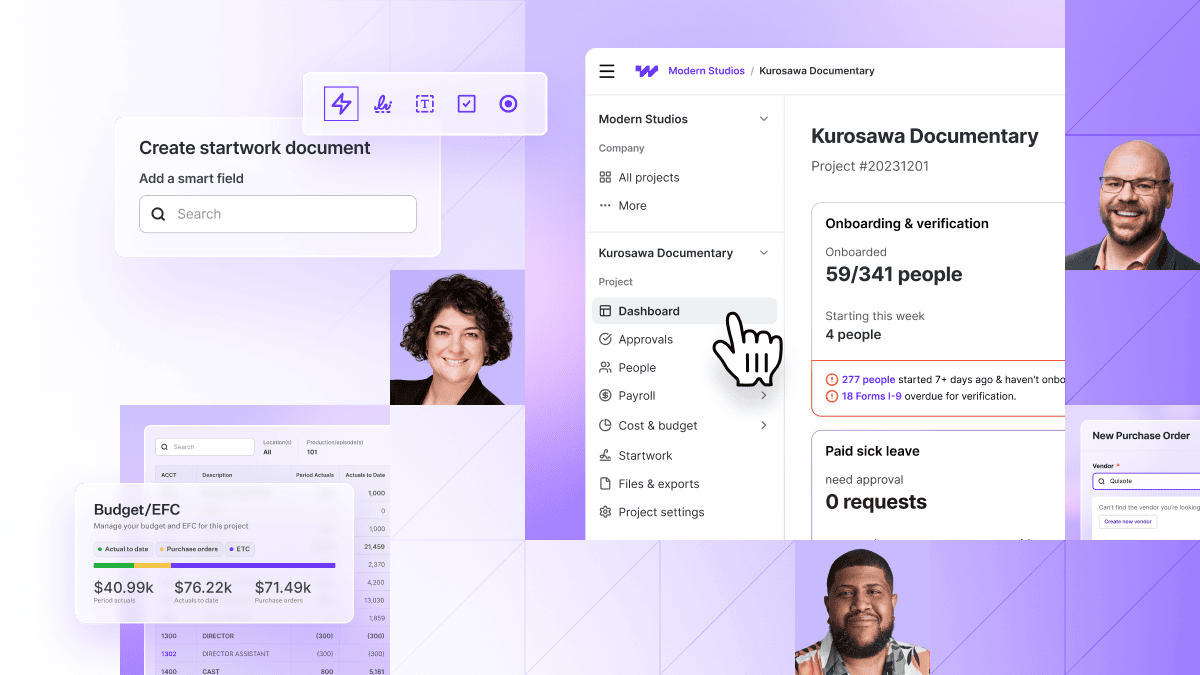
See what Wrapbook can do for you.
Ready to see how on-demand payroll can transform your productions?
Get Started