
Join the Crew
Get the best resources for producers delivered to your mailbox

Get the best resources for producers delivered to your mailbox
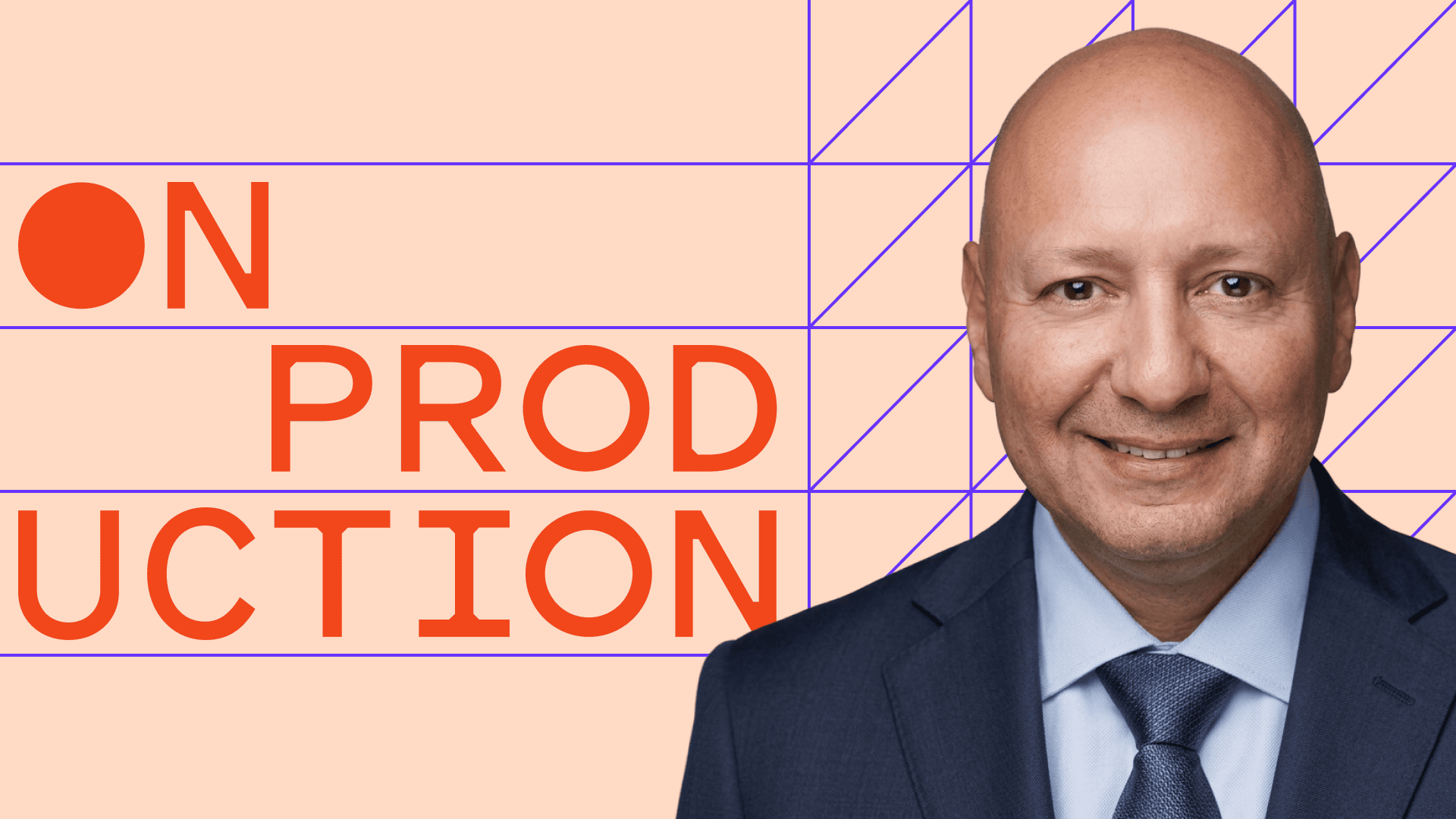
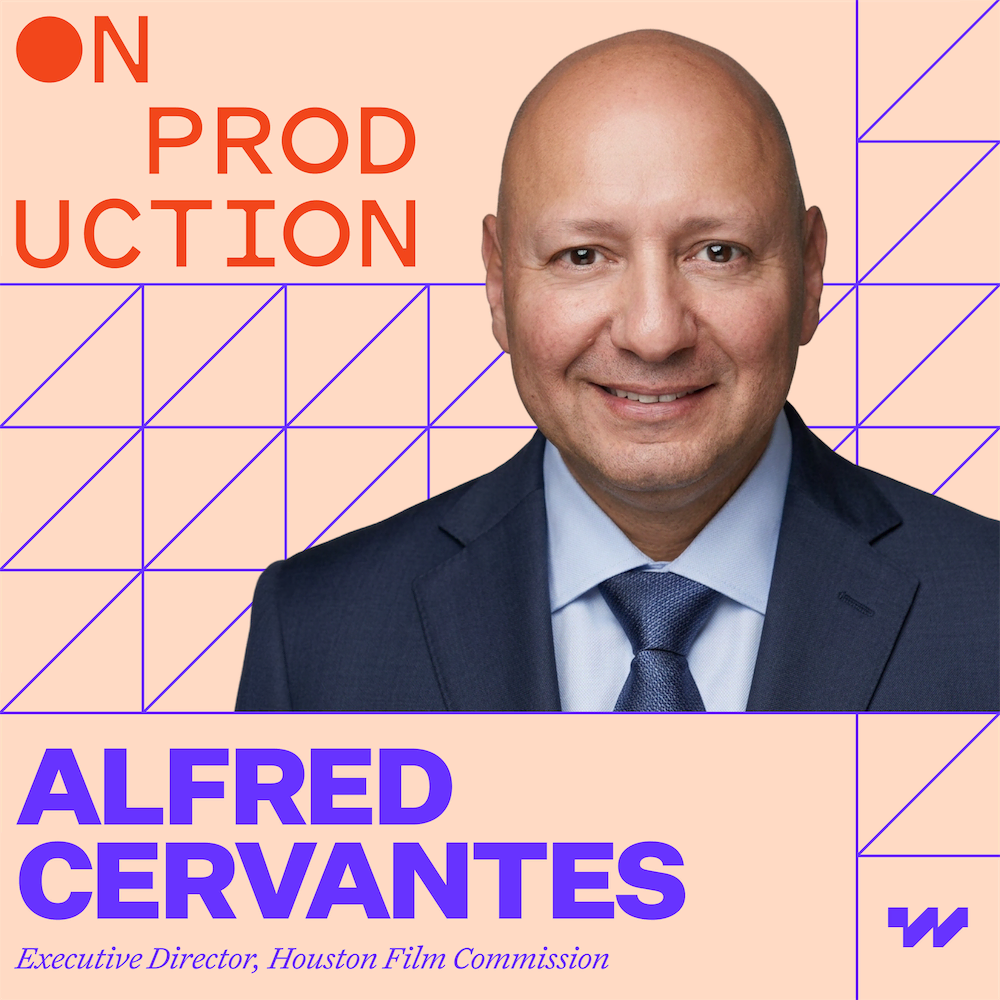
Cameron sits down with Alfred Cervantes, Executive Director of the Houston Film Commission, to talk about what a film commission actually does and how Houston is positioning itself within Texas' new incentive era.
Alfred is a native Houstonian who has worked in the Texas film industry since 1992. Before joining the Houston Film Commission, he worked as crew on productions including The Chase, Jason's Lyric, Reality Bites, Apollo 13, and Powder, giving him a ground-level understanding of what productions actually need when they arrive in a new market. That on-set background informs everything about how he runs the commission today.
In the conversation, Alfred explains how film commissions help productions navigate the practical realities of filmmaking: locations, permits, crew, vendors, municipal coordination, and the countless logistical challenges that determine whether a project succeeds. He also addresses what producers most often misunderstand about what a film commission can and can't do, and why building a relationship with the commission early in the process makes a meaningful difference.
The conversation explores the early impact of Texas Senate Bill 22, how Houston's local incentive stacks on top of the state program, and why affordability, infrastructure, and crew depth continue to attract both independent features and larger productions. Alfred also discusses Houston's diverse location palette, from urban downtown corridors to rural landscapes, and why the city's growing crew base is creating new opportunities for filmmakers who haven't previously considered Texas.
If you're thinking about filming in Houston or just want to understand what a film commission can do for your production, this episode's for you.
The views and opinions expressed by guests on this podcast are solely their own and do not reflect the views of Wrapbook, its employees, or affiliates.
Alfred Cervantes
I describe film commissions as the men in black of film production because we stay behind the scenes and help productions get made. We do love helping producers of all ranges find what they need to make their projects here in Houston.
Cameron Woodward
producers who haven't worked with the film commission before, what do most people get wrong about what you actually
Alfred Cervantes
As we know, making production is all about putting out fires and overcoming hurdles. What we do now is help productions with all those things. We've helped people over the years burn down houses, roll cars, flood streets, all these in the name of film production.
Cameron Woodward
Today's guest is Alfred Cervantes, Vice President and Executive Director of the Houston Film Commission. Alfred started out on set as crew and has spent decades on the other side of the table helping productions actually land in Houston. Locations, permits, vendors, crews, and the day-to-day mechanics that make a shoot possible. Can you walk us through what happens when a production contacts your office? What does the process look like?
Alfred Cervantes
We have an online Houston production directory, which is our online directory of crew professionals in the city. Producers usually find the proper crew or the proper cast they need in the Houston area.
Cameron Woodward
Texas now compared to Georgia, New Mexico, and Louisiana, those mid-budget productions. Where is Texas winning deals it wasn't winning before and where does it still lose them?
Alfred Cervantes
We have everything. We have great rental houses here that have all the latest gear that people could need. And I understand compared to other major markets in the United States, it's very affordable here to rent gear and find everything you need. We want to make sure that studios know and the bigger projects know that yes, you can do things here very affordably. So that's the goal. We're gonna keep shipping away at it until people consistently come here and we become, as it's been said many, many years ago, the third coast.
Cameron Woodward
So in this episode, we're going to get practical, what a film commission actually does, how producers can use one effectively, how Houston competes. This is on production. I'm Cameron Woodward. Let's get into it. Welcome to the show. So Alfred, you started as crew on productions like Reality Bytes and Apollo 13. Awesome, awesome projects. Before moving into the film commission work, how does having been on set change how you do this job?
Alfred Cervantes
Having been a freelance crew member for several years before coming to the film commission, I had done a number of production roles. And so I started off like a lot of people start off as a production assistant in the office. And then eventually on some productions, I became the assistant production coordinator, then production coordinator, production manager on some other projects, and then I started specializing in locations.
So I was in location assistant, then a location scout. And then the last freelance job I interviewed for was as a freelance location manager on a feature film. And so I told the person I interviewed with the only thing that would prevent me from taking the location manager job on this feature film was I applied for a position at the film commission, but I don't think I'll get it. And so that's the only thing I had pending. And lo and behold, I got the job at the film commission.
And I told myself when I started I would stay at the film commission. And honestly, when I started, I didn't fully realize what a film commission did. And but I wanted to learn and use my production information that I had to do that. But I told myself I would stay at the film commission maybe two years, three years as a freelance mindset, right? That it might be a temporary thing. And I've been here a long, long time now. But all my freelance jobs that I worked and all the production positions.
really informed what I do now all these many years later and still is help producers find what they need to have a successful shoot in the greater Houston area. So that's the bottom line. It's help producers find locations, crew equipment, help them put out fires. As we know, making production is all about putting out fires and overcoming hurdles. And so what we do now is help productions with all those things. If they need to shut down streets, control traffic,
We've helped people over the years burn down houses, roll cars, flood streets, all these in the name of film production. And so that's what I do now. But yes, coming from a production background, I do consider myself a film person still, and a film commission person as well.
Cameron Woodward
That's great. For producers who haven't worked with the film commission before, what do most people get wrong about what you actually do?
Alfred Cervantes
That's a great question because I speak all the time. I do presentations all the time for producers about what we have to offer in our area, but also I do panels, I speak to top universities across the country because I know for a fact that they do not teach what film commissions are at the major film schools at NYU, USC, UCLA, UT sometimes. So I offer to do presentations for these
schools because yes, we are I describe film commissions as the men in black of film production because we stay behind the scenes and help productions get made. Again, all the all the things you need to make make production. We all the film commissions are a free service in whatever market you're approaching. of course I cover the greater Houston area, which is a sixty mile radius of downtown Houston, but we are a free service. We're here to help. And again, it's still kind of a
it's surprising to be sometimes when filmmakers haven't heard of us or what we do and all these, but we do help we do love helping producers of all ranges find what they need to make their projects here in Houston. That's
Cameron Woodward
Excellent. Can you walk us through what happens when a production contacts your office? What does the process look like from first call to cameras rolling?
Alfred Cervantes
Well, the it usually starts if they they're looking at different places to potentially make their story. And it usually starts where if you're making traditional film or traditional telling a traditional story, the best way for us to help a producer is to receive your screenplay, we'll read it, and then we will put together a private email photo package from our location database. We have an internal location database of nineteen hundred locations in the greater Houston area that are
have expressed interest in being used in film or have been used in film production before. And so we have an extensive location library to share with producers on a case-by-case basis. If you look at our website, we only have, I think, like 237 locations. And that's really just to give a kind of a teaser of what we have to offer in the greater Houston area as far as locations. But again, the best way for us to help a producer is to contact our office. We'll read your script or your look at your storyboard, read your treatment.
Whatever you have to share creatively with us so we can know what you're aiming for, we can draw locations from our private location library and then go from there. So if you if there's something that is suitable for the story, then we will take the next steps and and find out if these are you know, hopefully the locations will be available at a certain point that the production's going to be needing that the those locations, but also help productions with finding.
sourcing locations, crew equipment, all these things. We have an online Houston production directory, which is our online directory of of crew professionals in the city. We also have a service on our website, which is our casting crew called board.
So if you're looking to source a Houston area cast and crew, you can put a paragraph on our cast and crew call website and we send that out to an email list that has over 9,500 people on that email list just in our area that are looking for film opportunities. And it works really well. Producers usually find the proper crew or the proper cast they need in the Houston area.
Cameron Woodward
That's fantastic. I actually want to ask you more about that. What does, you know, Houston offer a production from the operational infrastructure side, the crew base, the vendor ecosystem?
Alfred Cervantes
Well, Houston, as the fourth largest city in the United States, we have everything. we have great rental houses here that have all the latest gear that people could need. And I understand compared to the other major markets in the United States, it's very affordable here to rent gear and and find everything you need. But again, we we have all the crew positions you might need. One thing is that over the last few years, with ongoing independent film work and some studio level work.
Houston has been building our crew base. So we we're headed the right direction with having a multi-tiered crew base where you can find sometimes most productions, if they're multi-million dollar productions, they bring in their keys from New York or LA usually, and then they'll hire seconds and thirds here. And we have no problem with productions hiring seconds and thirds for multiple productions now.
Cameron Woodward
In 2024, your office was involved in productions that generated $81 million in economic impact, despite a 33% drop in total production volume. What drove that and how do you land studio level productions like Mo in 1923?
Alfred Cervantes
Well, we are very lucky that Mo Ammer is a huge champion of Houston. As you may know, he is from the Houston area. He started his comedy here and he's been doing comedy twenty plus years now. And he was he was really the driver who said
He wants to tell his Houston story and Netflix and A24 help make that happen. And we did work with the production to help them find everything they need. And if you see the program, the series, which I highly encourage you watch, the Mo series on Netflix, there are season one anyway, used Houston for three different countries. Not only Houston as Houston, but they used it for two additional countries.
cheated Houston for that. And you could do that here. Over the years, Houston has been doubled for New York City, Chicago, St. Louis. We've done Miami and Galveston Beach, which is 40, 45 miles away from downtown Houston. So Houston has a chameleon look that if you are a producer, director, and you need to achieve multiple locations in one city, Houston certainly has that within a 60-mile radius. But going back to your question, we had series season one.
and season two of Mo film here over the last four years, which is fantastic. And then of course, Texas is lucky right now to have the Taylor Sheridan universe. And so Taylor Sheridan came down and I worked with their scouts early on to help them find the period locations.
that they needed in the Houston area for the series 1923. So in that year, 2022, everyone was getting back to work after the strikes and everything. And so we had an uplift in production in our area, as did other areas where people were anxious to get back to work after the strikes.
Cameron Woodward
So Alfred, you had mentioned earlier that you speak at a lot of film colleges, but I know that you've made, you know, more than 200 presentations last year to reach filmmakers in new ways. What does that outreach actually look like? Who are you talking to and what's the pitch?
Alfred Cervantes
well, when we say presentations, it could mean speaking at a university or a film festival. It could also be location presentations for producers, things like that. So it's all encompassing. And I'm known as the person who's everywhere. So at a lot of film festivals and film events, I try to attend as many as I can to spread the word about Houston. I think it's very important to be present at these industry events to make sure that people are thinking about Houston as a film production destination.
Cameron Woodward
That's great. So let's talk policies. So SB twenty two has been live since September, eight months in. What's actually different? Are you seeing more inquiries, projects, different types of productions coming to the table?
Alfred Cervantes
Well last year in twenty twenty five, when SB twenty two was on the books and being reviewed and all these things, of course I went and testified to our state senate as as did some celebrities and producers and and anyone notable in the film industry, really spoke on behalf of the bill and it was passed last spring, spring twenty twenty five, and it became legal and effective September first, twenty twenty five.
And what happened during that year is a number of producers, or most producers, were waiting until after it passed, they knew it was going to become effective September first. So right away after September first, 2025, we had three sizable features gear up.
And shoot in fall 2025 here in the Houston area. And so two of them were like in the two million dollar range, two to three million dollar range. And then the biggest one was in the $10 million range. And so we had three feature films all at the same time in the fall. And that hasn't happened in our area in a long time, which is three sizable features all at once. And so we're very happy to have it. And I visited the sets of all three projects, and the producers told me that most of them crew.
drew their crew base from the Houston area. And so that was very promising that a lot of their seconds and thirds that they hired for these productions were drawn from the Houston area. So so we are headed the right direction. Now, as you know in film production, it takes a lot of elements for things to come together. So we had some features kicking around for just after the new year that they were going to start. And then these projects due to financing and talent availability got pushed till fall of 26 or so
late summer twenty six. So we're expecting some productions to be start pre production very soon.
Cameron Woodward
That's great, Alfred. So, you know, Houston also has its own local incentive layered on top of the state program. Walk me through how those two programs work together and what a production needs to do to qualify.
Alfred Cervantes
Sure. So we have a brand new local incentive that we announced concurrently with the state incentive that became effective in fall 2025. So what we've been developing over the last two years is a new local incentive called the Houston Feature Film Incentive Program. And what that is, is it's only for narrative features and narrative television series. But if you are a narrative feature film or narrative television series that aims to spend or spends
More than $500,000 in our direct Houston market, which means zero to 60 miles from City Hall Houston. If you spend $500,000 or more on your project, we're going to give you 10% back with a cap back per project of $100,000 back per project. But what that means is that if you're eligible for that full $100,000, that means you spent a million dollars on local cast, local crew, and local vendors.
within that zero to sixty mile radius of City Hall Houston. So any incentive program is a workforce development program. And so ours is the same. So we want to encourage producers that when they film here, they will hire local casts, local crew and and spend with local vendors that are based within a zero to 60 mile radius of City Hall Houston. So we had we've had three feature films go through that system so far. And we have enough funds this year, 2026
For three and a half projects, because 50,000 is already earmarked for one project that's getting off the ground right now. And then we will have enough funds for three and a half more projects or or four projects if one of them spends 500,000. Now, we love independent feature films. Again, what we've been having most of the last few years is projects between two and three million, 1.5 million to 3 million, something like that. And we are
known for I I'd like to think that we're getting known for our independent feature filmmaking. We had an independent feature film film here, Summer 2024, that won the Top Narrative Award at the Tribeca Film Festival in summer 2025. That movie was called Charlie Bird. And then we also had an independent feature called Do No Harm that has the actor Ronnie Chang in it. And that premiered summer 2025
Alfred Cervantes
at the Dances with Films Film Festival on Hollywood Boulevard in Los Angeles and it's gonna be out streaming soon. But we have independent filmmaking that goes on regularly and we want to help c make that continue to happen.
Cameron Woodward
That's awesome, Alfred. I actually I was curious to ask you, you know, how does Texas now compare to Georgia, New Mexico, and Louisiana for those mid-budget productions? Where is Texas winning deals it wasn't winning before and where does it still lose them?
Alfred Cervantes
Well, as you mentioned before, is that what our new state incentive is, it's really just historic because it's the best, most competitive program we've ever had. Our now the top tier of our state incentive program is that if you're a production that spends one point five million or more in the state of Texas, you can get a baseline of twenty five percent. But if you qualify for a number of uplifts, you can get a maximum of thirty-one percent.
So that jumped from 22.5% to 31% as the maximum. So that's a big game changer for feature film production. The other thing is that the state allocated 300 million every two years for the next 10 years. So both of those things are game changing because up until last September 1st or the new program, we as an industry had to go to our state representatives and
Ask for as much money as possible that they can allocate to the state incentive program. And that number ha that number has fluctuated wildly every two years. The lowest it was ever funded was 14 million split over two years, and that money went really fast. The most it was ever supported was the previous legislative session, which was 200 million split over two years, but now they've committed to 300 million every two years.
For the next 10 years. And so that's really a game changer for our state, especially when you are comparing it to our neighboring states that have generous incentive programs, but it's a different program because our neighboring states have a resellable tax credit system. We do not have that. people move to Texas because we do not have a state income tax.
And so we don't have that resellable tax credit mechanism to offer. And so ours is a rebate system. You get in touch with the Texas Film Commission, you tell them how much you're estimated to spend. They will earmark what you're estimated to get back, plus a 10% contingency in case you go over budget. You spend your money, you turn in your books after you spend your money, they audit it and they will cut you a check six to nine months later. And so ours is a rebate system.
Alfred Cervantes
And our local incentive is based on that. So our local incentive operates the same way. You get in touch with us, you tell us how much you're gonna spend, we earmark the money, you spend your money, we audit it, and we cut you a check back three to four months later. That's where we are with our local incentive. But I've spoke to many producers and they prefer the rebate system over the resellable tax credit system.
Cameron Woodward
Alfred really great explanation to that point. What do production accountants and line producers consistently misunderstand or need to look out for about how incentive qualification works on the ground? I mean, you mentioned the audit. Can you give us sort of a picture of all of
Alfred Cervantes
Yeah, for us, it's a very simple process. The productions we've worked with, we ask them at the end, they're gonna turn in a set of their books which accounts for all the payroll, all the vendors, they have all the vendor receipts, scans of everything, right? The productions we've worked with, two out of the three that have gone through our local incentive, have used the program Wrapbook, the accounting program. And so Wrapbook.
seems to be a a leader in that area product of production accounting. And so it comes very clean and organized and everything. So we can go through all of these things and verify the expenditures and all this. And then of course, if you if a a production is using the state incentive, the employees have to sign a form which which verifies their Texas residency because that's where you get money back on. The more Texans you hire, the more money you get back from the state incentive program. And so the crew people have to sign a form verifying that they are state residents. And so that's also how we verify if they are local crew or not. They put their permanent address on this form. And so that's how we do that. And so again, we've been working for our local incentive to get producers back a check within three months.
if we can do it. And then the state is publicly saying now, I believe they're aiming to get producers back a check around nine month mark.
Cameron Woodward
That's excellent. you've spoken to this in some of your preceding answers, but you know, how do you feel like you best differentiate Houston to producers who default to other markets, whether in the state like Austin or Dallas or Georgia or New Mexico, how do you kind of think about
Alfred Cervantes
It depends on what you need, of course, creatively, because but within a 60 mile radius of Houston, we do have piney woods, rolling hills, flat farmland. We're lucky to have Galveston Island 45 miles from downtown. And then as you go east, it gets swampy, right? So we have a lot of different looks within those areas for what you need. And again, we are the fourth largest city in the country. So we do have infrastructure and all the great things that a large city has.
that producers might need for that. But here's an example. Houston is super affordable for the fourth largest city in the country that has everything you could want in a big city. It is still very affordable here. One thing we've been experiencing the last five and six years is is that well, one thing we learned from the pandemic is depending on what you do, you can live anywhere and work anywhere. So we have a lot of new film professionals, film professionals that live in the Houston area that did not live here five and six years ago.
They have relocated from California, from New York, from Chicago. I've met people from London that are film professionals in our that live in our area now. So that's been really interesting. And all these new professionals definitely want to live and work where they live now. And so we've seen some new residents actually make films and make
content here that they did not live here six years ago. So that's been really interesting having new film professionals in our market that are expressed interest in wanting to work here just adds to our creative community and our film professional, our professional film base, which is fantastic. But again, going back to the affordability, I know that the Netflix series Mo, they got a for their crew and the people they brought into town.
they got a full service hotel in the galleria area for eighty dollars a night, which is very low cost for what they got at a really nice hotel for their casting crew when they were filming here. And so I had another producer in my office about a month and a half ago that is gearing up to film in Houston. And she told me that she had to call our our largest local rental house to check her numbers.
Alfred Cervantes
double to double check and and triple check her numbers because they were so affordable. And so compared to New York City or Los Angeles, she found it to be super affordable. So she relayed that story to me. But but yes, Houston is a very affordable place to make film productions.
Cameron Woodward
That's fantastic. So, you know, I feel like that's a very good articulation of, you know, why Houston is a great choice. Are there any types that should probably go somewhere else?
Alfred Cervantes
Any types of production? Yeah. Well, you know, we have a company here that has a video wall, you know, an LED wall, a studio. And I've been to their studio several times. And it's if you look at their Instagram, it's great because they have put jeeps in their studio to make it look like they're in the mountains with snow. So we're very flat here. We don't have mountains, we don't have desert, but we do have studios with video walls where you can recreate those things.
Cameron Woodward
That's great. So now that the incentive is live and you have some early results, both in the local incentive and the state incentive, what does the next two to three years look like for Houston as a production market, in your view? You know, what has to happen for this momentum to hold?
Alfred Cervantes
Yeah, I always say there can never be enough or too much production going on, right? That's the goal. And so we are consistently now working with producers that have projects in that two and three million dollar range. We want to keep those going, but also attract the bigger projects as well. And luckily, you know, Mo Amher says he's gonna be making more productions here in the Houston area. And again, we want to make sure that studios know and the bigger projects know that yes, you can do things here.
very affordably. So that's the goal. We're gonna keep shipping away at it until people consistently come here and we become, you know, as it's been said many, many years ago, the third coast. So we're working working away at that. I love
Cameron Woodward
Alfred, I have just one last question, and it's a question about questions, which is what's a question about film commissions that nobody asks but
Alfred Cervantes
should. Huh. That's a great question. Well, the number one question is what do you do? What exactly do you do? And that's a usual question, but again, it's kind of a interesting thing. You know, our office, the Houston Film Commission, we are a member of our professional organization, which is the Association of Film Commissions International. So we have conferences where there's film commissioners from all over the world get together and we share best practices and and stories about
productions and things like that. But but yes, still amazingly, we're still kind of the men in black to the greater film community, especially independent filmmakers. The studios know about us. We meet with studios when we visit Los Angeles regularly, but still
We always get the word out that we are a free service to filmmakers. We love working with all-size filmmakers, especially emerging filmmakers, because these are the filmmakers that are going to be making the bigger projects down the road. So our door is open to anybody. So we would if you're a filmmaker and a creator, so we would love to hear from anybody that's making something here because we're here to help.
Cameron Woodward
Fantastic. Alfred, thank you for joining me on production. it's really been a pleasure to learn more about your program and all of the great things that you do for filmmakers in Houston and in Texas.
Alfred Cervantes
Cameron, thank you for having me. Really appreciate it.
Learn how to maximize your Lone Star State savings with Texas film incentives. See what qualifies, how to apply, and what’s new in 2025.


Get pricing, see a product demo, and find out how much easier payroll can be.
