
Join the Crew
Get the best resources for producers delivered to your mailbox

Get the best resources for producers delivered to your mailbox
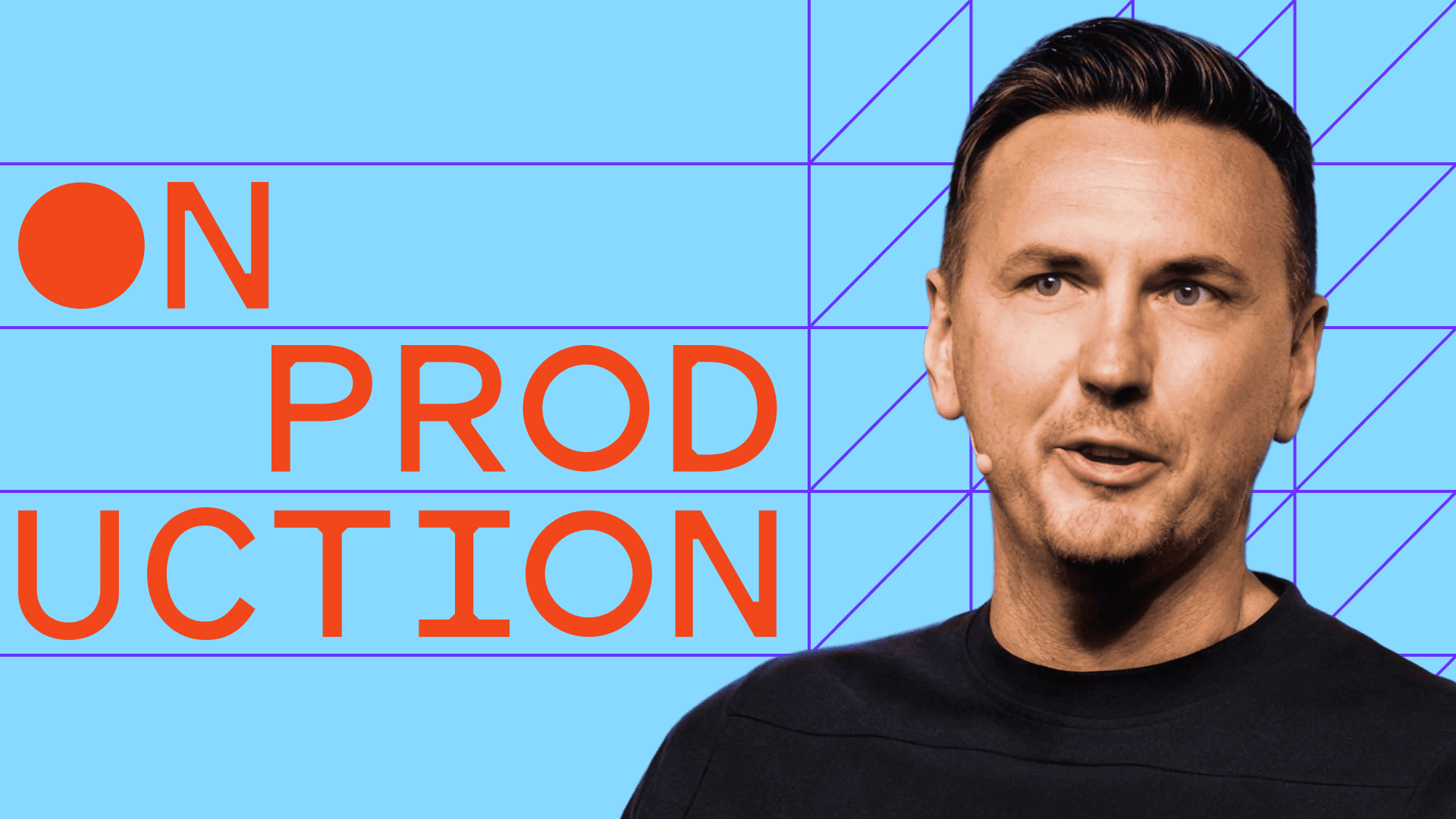
Cameron sits down with Nik Kleverov, Co-founder and Chief Creative Officer of Native Foreign, to explore what AI actually changes in filmmaking, and what it doesn't.
Before moving into AI-native production, Nik spent two decades in traditional filmmaking. He worked his way up from PA to editor and earned an Emmy nomination for designing the opening titles to Narcos. Today, Native Foreign produces commercial campaigns and original films with AI. Its work includes the Toys"R"Us spot Nik describes as the first true AI commercial, and Critterz, an AI animated feature Nik is directing.
Nik walks through how production has changed since that first commercial. Back then, getting one usable shot could take a thousand generations. He explains why AI-native projects still rely on teams of about a dozen specialists and timelines close to traditional work. The conversation covers where costs actually come down, from savings of around 20% on commercials to making an animated feature for roughly a tenth of a traditional studio budget. It also covers why world building, character design, storyboarding, and editorial review still depend on human creative judgment.
Nik also shares the story behind Critterz. It began as a short film that he believes was the first animated AI short to earn U.S. copyright. He describes building Native Foreign's proprietary workflow, Woven, and what happened when OpenAI discontinued Sora midway through production. Plus, he explains why Native Foreign is bringing artists in on profit share.
If you're interested in AI but want to hear from someone who came up through traditional craft, this one's for you.
The views and opinions expressed by guests on this podcast are solely their own and do not reflect the views of Wrapbook, its employees, or affiliates.
Cameron Woodward(00:00.046)
So Nik, you spent years designing title sequences, including Narcos, you got an Emmy nomination for it, doing motion design at the highest level. How does coming from like craft of filmmaking change how you think about where AI fits and where it does?
Nik Kleverov (00:14.382)
because we've been creating for many years now. And I do think that is something that differentiates native foreign from others. When we go in and talk to client partners, to Hollywood studios, one constant piece of positive feedback we receive is that, you guys are actually creatives and you understand storytelling and filmmaking and visual language. So I think that is absolutely critical here. And especially in a time when the tools are becoming more ubiquitous, there's access to these generative models globally.
Cameron Woodward(00:47.426)
What separates you from everyone else.
It was made using OpenAI Sora, the first commercial production to use it, and it became one of the most talked-about AI productions in the industry. The person who made it is Nik Kleverov. He's the co-founder and chief creative officer of Native Foreign, a Los Angeles-based creative agency and production company. Before AI, he was designing title sequences, including the Narcos, opening titles for Netflix, which earned him an Emmy nomination. He came from craft, not from tech. Now he's directing Critters, a $30 million AI animated.
Feature with AGC Studios handling world sales, Vertigo Films producing, and an open AI creative strategist as consulting producer. The Los Angeles Times asked whether it was AI's Toy Story moment. The production pipeline it runs on, called Woven, was built from scratch specifically to make it. I want to understand what 30 million actually buys you in an AI native animated feature, how the pipeline works, and what a filmmaker with real traditional craft thinks about where human judgment is genuinely irreplaceable in the
Process. This is on production. I'm Cameron Woodward. Let's get into it. Nik, you spent years designing title sequences, including Narcos. You got an Emmy nomination for it, you know, doing motion design at the highest level. So what I've seen is that a lot of people building AI production companies come from tech or business. How does coming from like craft of filmmaking change how you think about where AI fits and where it doesn't?
Nik Kleverov (02:15.586)
because we've been creating for many years now. And I do think that is something that differentiates native foreign from others. When we go in and talk to client partners, to Hollywood studios, one constant piece of positive feedback we receive is that, you guys are actually creatives and you understand storytelling and filmmaking and visual language. So I think that is absolutely critical here. And especially in a time when the tools are becoming more ubiquitous.
there's access to these generative models globally. What separates you from everyone else? And I firmly believe that's in storytelling ability.
Cameron Woodward(02:56.374)
One of the things I was really impressed by, and why I really wanted to have you on the show was seeing your panel at the PGA conference. Because like you have this like very sober approach to what the capabilities of these models are, as compared to like a year or two years ago, it was just this like all out media frenzy being like, it's gonna replace everything. And, you know, I have a background in production myself. And so to see you sort of
lean into these tools is truly transformative and and and excellent in some ways, but also limited in others to ultimately be at service of the story that you're trying to tell, I found was like really inspiring and interesting, which is why I'm curious to learn from you, like, when did you first see AI tools and think this changes what I can make in terms of the production lifecycle, you know, rather than like, this replaces everything. Like what
to you becomes possible that wasn't before.
Nik Kleverov (03:54.806)
Yeah, I remember when I first saw Dolly, which was OpenAI's text to image model. I believe I was in the first couple hundred, you know, alpha users. It was certainly a moment where everybody was making the silly frog on the skateboard in Times Square, whatever. But it was this moment of being able to say, OK, anything in your mind can now come to life. And that's how the original Critters film
short film actually came to be is we said, okay, we've created this world of woodland critters. But what if we made a little short film out of it? And especially at that time, every, I don't know why people just always go to dystopian sci fi, but they certainly do. in a world where there was a lot of kind of dark imagery, we made this really irreverent, there I say family friendly kind of piece that was
actually the way we pitched it to OpenAI was David Attenborough's Planet Earth crashes into a Monty Python sketch. And so you see this Woodland critter world with all these little cute critters, but then everything the omniscient narrator is saying is actually wrong. And they start talking back to him and it's just kind of some fun, silly banter. That short was made a hundred percent generative AI, meaning we made all the imagery with AI, but we...
brought it to life in traditional animation means because there were no video models back then. So it was also one of the first, and I believe it's the first animated AI short to achieve U.S. copyright because we kept such great record of the human authorship that went into it. I mean, we changed the eyeballs 40 times in the mouth and everything kind of went through this rigorous process because we're again, creatives that have been doing this for a long time. so playing with that technology.
was interesting and certainly the birth of our stay in the AI world. But for me personally, I will say that when I first got access to Sora, which was probably several months before it went live in March 2024, I was playing with it before it had a name. And as someone that thinks in sequences and thinks in motion,
Nik Kleverov (06:11.49)
That was the transformative moment for me where I was able to take a sequencer idea in my head and bring it into motion and bring it into life so quickly where I realized how transformative this would be.
Cameron Woodward(06:22.988)
One of the things that your studio got a lot of headlines for was like you guys have always seemingly been at the cutting edge of bringing something to market with these tools still sort of emergent. So like as Sora was coming to market, you guys brought the Toys R Us commercial. And that was I I believe it was the first commercial produced with Sora.
Nik Kleverov (06:42.582)
Not just Sora, but with AI. It was the first AI commercial, true AI commercial.
Cameron Woodward(06:48.098)
What's interesting is like this was not that long ago, and yet the workflows have changed dramatically since. But in other ways, they haven't. So can you walk me through what that production actually looked like operationally in terms of process, in terms of like the production side? How long did it take? How many people? Do you remember what it cost? How does that compare to a traditional brand film? And then maybe you can walk us through what those processes look like today.
Because native foreign is is still producing commercial.
Nik Kleverov (07:19.982)
Yeah, we actually just premiered a new campaign we did with Virgin Voyages at the Palais on the main stage at Canline. And so, you know, I certainly think we've come a long way in just, gosh, two years, but it seems like a lifetime ago, Cam, that it's like, it's crazy how much has happened in just a couple of years. the timeline was something like this.
March, 2024, Sora was announced. I was one of the Sora seven, as they called us that, you know, have come out. And I took the lane of kind of a brand or ad guy saying, okay, well, what does this mean for the future of agency work and brand storytelling? And I knew that to make a splash, I needed to have a big name involved. But I also work with brands all the time and I know how many stakeholders there are. It can get very bureaucratic and
to move at the speed of AI, especially back then a couple years ago, within the traditional brand world was not gonna be possible. Yet I knew I wanted it to be a big American name. Luckily for me, I just happened to meet the president and CMO of Toys R Us, which had recently kind of gone through this whole PE process. And so they were a much smaller team. And because they were a much smaller team that thought much more like in a startup way, we were able to kind of pushed the idea through on their end. And then also at that time I had to get OpenAI approval on anything that went out. So I had to kind of like toggle both the brand and the tech world, get everybody to sign off on this idea and put this piece together. I will not lie that the process of creating the piece was very painful. mean, you now we talk about ratios of creation, maybe like a 10 to one seems like a normal number. Back then it was like a thousand to one count.
Like it was so hard to make the simplest shot of like okay, and then he stands up and by the way for those listening I don't know so the the toys are us commercial is what we did is it's the story of how Charles Lazarus who is the creator of Toys R Us Came up with Jeffrey the giraffe and actually Jeffrey the giraffe came to him in a dream while he would fall asleep in his dad's bike shop And that's this that's it. It's a very simple story kid in the bike shop board falls asleep
Nik Kleverov (09:41.816)
Giraffe comes out, it's a magical world of toys, that's it, right? It seems simple enough. Probably 24 shots, something like that for a 60. So nice and decent pacing, nothing too crazy. And back then it was also only text to video. So there was no ability to edit an image or input an image. Everything was text. The pro of it was I got very good, my vocabulary got much better. I was writing in long prose.
The con and the hard part was, you know, there was no actual way to make the kid the same in all the shots. So I had to kind of map it out. And in the end, I think I only had four shots of his face and they were kind of spaced apart far enough where I'm like, it's kind of believable enough. Will the user suspend their disbelief as they go on along this journey with me? You know, wire framed round glasses, freckled, you know, kind of all these descriptive tools that red and blue checkered shirt.
try to cheat around, do a lot of shots behind. look, I knew when it would happen and when we would release it. I knew that it being Toys R it was going to be a big thing. was going to go viral. And it did. It nearly broke the Internet. But it also like people were popping up like, see, it's not the same kid and all four shots. was like, of course, like if you're dissecting it like that, of course, it's not going to be. But I was hoping that along the journey, it was like kind of got there or was quote unquote good enough to kind of
after the where the fireworks came up. Kind of good enough. It was good enough to kind of tell the story. So it was a grueling. There was about a dozen people that worked on it. It was very grueling. There were a lot of 3 a.m., 4 a.m. nights. There was generating over and over and over again. Back then, also generations took much longer, much longer. You would you would set a few to go and you'd come back like half an hour later to see. It was like that. It was not like,
processing, why is this taking a minute? It was a whole different time and pushed it as far as we could with the AI and the last 10 % came with some VFX because it was impossible to get certain things to work. So it was kind of this interesting pipeline and I can send you kind of a case study about it where we break down what was AI and which little bits came through with VFX in the ads.
Cameron Woodward(12:06.924)
Yeah. how about in contrast to today? I mean, you were just mentioning you were in France at Cannes. I'm I'm curious
Nik Kleverov (12:13.046)
Yeah, it's gotten so much more efficient. And I think what's interesting is people kind of talk about creatives and like, creatives necessary in this day and age? And my answer is absolutely of course, because you need creatives to drive these tools and, you know, 10 different people sitting down with the same tool will yield wildly different results, which is to me, how I know that creatives are more important than ever now.
And this new campaign that we did with Virgin Voyages was actually, so they have four ships and each ship is personified by a mermaid. So there are four mermaid characters. And we actually picked a different artist from each part of the world to kind of be the lead artist helping tell one of these mermaid stories. And we were, you know, we were able to do it with much smaller teams in general, but it's still kind of around, it's funny.
In some weird way, I feel like I've been trained for this with my main title experience, because it's about a dozen people as a good like AI team. And when we're doing titles, when we're doing Narcos, for example, you you have a tabletop shoot, so you're shooting some assets and you get footage from the show. And then you're doing you're pulling up old archives and, you know, bringing them to life and doing cool shit with type and design and graphics and overlays. And in some weird way, creating with AI is still like that. It's still like this does finish person team.
because you need experts in different subject fields to kind of bring what they know to it and bring their voice into something. So the team size hasn't necessarily changed. I know there's people that claim they did something by themselves in 20 minutes for two bucks or whatever online. I think that's not where we're at. We're definitely in the lane of premium storytelling and making sure we're really being thoughtful about our process.
Cameron Woodward(14:00.192)
You know, the you mentioned like the reaction to the commercial was polarizing. I've chatted with PJ Ace, who did the the Colchy ad, again, polarizing both externally from consumers of those advertisements and then also internally in the industry. What did you learn from those reactions about what the industry was actually worried about? I think you're sort of getting to this. And again, I I heard you describe this at at PGA as well. You know
And what did they get wrong? I mean, I think you're mentioning it. Like there's still people driving this creative work to get to a premium outcome. I I guess is one of the things I'm hearing from you.
Nik Kleverov (14:35.082)
I think that there's this misconception that AI means you press a button or write a one sentence prompt and go like this and everything's done for you. That couldn't be further from the truth. mean, timelines on our end for campaigns and commercials are still kind of similar to what they were before, two to three months-ish. know, maybe a tiny bit of time has been shaved off, but there's still, as I mentioned, so many people involved. And by the way,
I'm talking about a dozen people for a pure AI kind of short project. As soon as you talk about hybrid production, which we recently did with Paris Hilton and Carl's Jr. when we remade this or paid homage to this iconic Superbowl spot from 20 years ago this year, you know, that was a hundred, hundred people, you know, by the time you do a shoot and have this and that and do all these things, it's a hundred people. So the size of the cruise in many ways is still similar. The speed of production.
I have clients all the time asking me and then they point to, course, this like, you know, I made this in two weeks or whatever. And my answer to them is always like, well, can you respond to an email in two weeks? Can you give me a brief in two weeks? You know, there's still the process of working with client partners that is still very, very traditional in that sense of like the back and the forth and these people and these people have to all kind of weigh in. I think people are scared and I totally get it. I've lost some friendships.
because of my stance in AI. Funny enough, some of the ones I lost have come back now and have apologized. So I think I overreacted and it was not that big of a deal because people are still working. And in fact, we've actually hired more people than ever before because of all the AI stuff. There's so much more opportunity in my opinion. There's so much more happening. It's a little less top heavy and there's more opportunity. yes, the budgets have maybe come down a little bit.
If you look at things, the budgets have been coming down for the last decade plus regardless, independently of AI or not AI.
Cameron Woodward(16:36.376)
From light bulbs on Kino flows to LEDs, from exactly cinema to Ari Minis. Like we're compressing the costs of bringing stories to life.
Nik Kleverov (16:44.009)
Exactly.
Nik Kleverov (16:48.11)
Yes. And there is an ever increasing need for more and more stories. I mean, every brand is a studio now and there's such a demand for so much content that everyone has to make. So I really do firmly believe that there is room for all of us and that there's so much opportunity to go around. I think part of the polarization when we did it, of course, is just people worried that it was going to be over. mean, I think I have a frame in here hanging from a LA Times article I was interviewed for.
that said, you know, is something along the lines of, Sora the end of Hollywood? Right? Sora lasted two years. RIP Sora, it really did kind of throw a little wrench in our plans for the Critters project, which we can talk about later, because they were our exclusive partner on the tech side. But look, Sora came and went, and it didn't destroy Hollywood. Hollywood is still here. So I just think...
People get worried and then there's this kind of like media frenzy and people get a little bit too caught up in it. When the reality is always much less interesting and more subdued and more reasonable. That's just kind of what I've learned. There's these cycles and ebbs and flows of mania almost, but the reality is, know, it's the turtle and the hare. It's just slow and steady. Just keep plodding along, keep creating, and everything will fall into place.
Cameron Woodward(18:09.282)
Something that I've observed, Nik, and because I think about this a lot. Obviously, like I build technology to serve the industry at a different layer in the stack than you do, but I was hearing from people these like deep concerns, like, well, what's going to happen to the crew base in commercial? What's going to happen to the crew base or the creatives in in film and television? And as I think about it, the invention of the ability to like generate content at the snap of a of your fingers.
We have a pattern to match this to with user-generated content on YouTube. Like we have this like unbelievable volume of in some cases very good content, and yet Hollywood still persists and commercials still persist. And on the other side of that spectrum, we have bigger and bigger, more and more grand expressions of cinematic arts in these huge movies.
But then what's also seeming to happen that is really exciting in my opinion is this what I call like the ambitious middle, where you have movies like Obsession, you have movies like Backrooms, you have movies like Critters that you're working towards, where you can do these like really ambitious projects at a fraction of the cost. And it's not like that this is some like limited pie. The pie actually just grows. Like you can just make more stories to your point. So I mean, I think we chatted about this a little bit off camera at the PGA conference, but like I think.
You seem to be very aligned with this vision of actually more hybrid production, more crews, more volume. It's just that the life cycle and the and the like the workflows for production just simply shift. What was the vibe at Cannes this year? Like, because two years ago, like you mentioned, there were some very polarized views, some fear, and yet now it can, like we're premiering cool virgin content or we're seeing more and more interesting hybrid forms of production like the Wonder like you know the Wonder Project has shown some really cool concepts of, you know, using GPUs to do motion capture and generative experiences that bring to life really great mid-market content.
Nik Kleverov (20:20.502)
Yeah, it's exactly that. There is so much more opportunity now for seasoned storytellers and filmmakers that have an idea that's not just like small cracker Jack, you know, solo influencer or creator kind of on YouTube, but isn't also a hundred million dollar huge tentpole movie. And I think there's this interesting opportunity now for really strong stories with really seasoned groups of teams that can bring them to life.
And so it's a very exciting time. That is why I firmly believe we're going to see an absolute revolution of independent cinema, stories, filmmaking from all over the world.
Cameron Woodward(21:00.182)
It's really exciting. So I guess it was two years ago, year and a half ago. I remember seeing the headlines in the trades. I followed the major scalers and all the major labs like very closely. I remember when the press came out about critters with Sora. Sora's No More. That must have been very disruptive. Can you just tell me the story of Critters, Sora, the relationship with OpenAI, the pivot, what you guys are doing now? Like paint the picture for myself and our listeners, like
What was the vision for critters? How is it going? What's going on?
Nik Kleverov (21:34.516)
Absolutely. so I started telling this story earlier. I think I got up to the point where we created a five-minute short with Dolly and then traditional tools like After Effects, Parallaxing, Unreal Engine, and whatnot. Which, by the way, I mean, just to our point about technology moving forward, how is it that Unreal Engine is, which at one point was this magic in a box, is now like, yeah, it's a traditional tool, right? So I do think we move in that direction where
Five, 10 years from now, the AI tools is like, sure, whatever. They're AI Virgin tools, who cares? It's just part of the stack. So at that point, it was released in 2023 in April for actually the one year anniversary of Dolly. And we did like a little co-release with OpenAI that opened up our relationship with OpenAI. And Native Foreign actually started doing work for OpenAI.
Interestingly enough, lot of was documentary based about the benefits of AI. So we would shoot different people talking about their personal stories. We went that year in 23 to Tennessee with Critters, which we thought was going to be very confrontational, but was not. We got a lot of really positive feedback. Maybe it was because it was before Virgin Tools, and so the animators saw that we were using regular tools to bring it to life. And then we also did Tribeca.
we kind of had this really nice run with the short film where we went to a bunch of festivals, we won some awards. And obviously there was a lot happening in the industry at the time and we didn't want to be the guys that were like, yeah, great, we're gonna make this now. So we kind of took our foot off the gas a little bit and let all the strike stuff kind of sort itself out. And after that was resolved, we did say, okay, let's think about this as a bigger.
bigger story and how do we make this into a feature, which is kind of what we'd wanted to do. Obviously the story is totally different. It's not just the same gag from the short. It's a real, real feature. And we teamed up with a UK production company that had done a ton of features for to go. And they helped get the Paddington in Peru writers on board. And so then we, now we have this kind of AI native IP that has copyright. And now we've got real top tier writers.
Nik Kleverov (23:51.426)
you know, putting this this feature together. And that was kind of happening a little bit. And then at the same time, you know, we presented this to open. And of course, there was just a nice history with open funding the original short that, you know, it just made sense. So what you're thinking of when the big announcement was was fall of last year. So in fall of 2025, we said, hey, opens backing the film. We're going to make this film. And, you know, there was this kind of
big plan to push some stuff out of the can this year. Now, of course, halfway in the middle of our production, SORA was discontinued, which happened earlier this year, which certainly was a little bit of a blow for the project in the sense that the main tool we were building on was no longer going to be supported. Of course, they were keeping the API open for us, but we had to just take a really hard look at the reality of, we want to work on a tool or finish the film out with a tool that's
You know, yes, we'll, we'll, they'll keep it open for us, but essentially it's obsolete. Or do we want to, you know, find new tools because there are constantly new tools every day, every week that are getting better and better. And with all the eyeballs on this project, just make sure we're putting our best foot forward, you know, to, to make sure it looks as good as it possibly can when we release it. So we kind of had to, reformulate our plans a little bit. We partnered with this company, AGC.
who is very well known in the film world and have now basically, the one other good thing that happened is the day that Sora dropped out, every tech company called us to do partnerships and now we are doing other partnerships and going to be finishing the film out still, but it just going to be a little delayed from our original plan which was gonna be.
Cameron Woodward(25:40.799)
And then so no announcements as of yet as to like who those other partners are.
Nik Kleverov (25:44.622)
We're still keeping that a little bit under wraps, but people could probably guess who it is and we'll have some announcements soon. The other thing we're going to start doing is releasing kind of the story of Critters and publishing more kind of behind the scenes content and start showing clips and whatnot. We've been very, very secretive about it, but we've decided now is kind of the time that we're going to start sharing some more of it.
Cameron Woodward(26:08.674)
That's great. We'll have to get you back on the show when when you're in that sort of phase of of sharing the the the workflow. I mean, you know, the reporting out there has been that the budget is in like the $30 million range. That's not been verified by you or anyone else. But despite that, I I'm actually curious on the production side of it, which is like, can you walk me through where the savings actually come from? I would imagine having to pivot all of your
workflow off of Sora to a new provider was an expense that like let's just e exclude those. But how do the line items look different in this sort of AI native animated feature world?
Nik Kleverov (26:48.334)
Well, it's interesting because one of my hot takes is that as much as everything changes, everything does stay the same. And at the core of the film, you know, from the writers being top tier writers to the world design, to the character design, the people that worked on the film now come from, you know, the Harry Potter world and have worked on all sorts of really big properties. And we've done that work. And so I think that the world that we built
is very textured, is very layered, is very nuanced. So the truth is there's not a lot of savings in that. You know, a lot of that process still has to happen and happens for all successful films. And we've also put that process in. Now, where it benefits is specifically bringing things into motion. Once we've designed this world, we built the characters, we've set the look for everything. We're able to just iterate and try things out, bring them into motion, bring them into scenes much quicker.
And that is really where the difference is.
Cameron Woodward(27:51.704)
Another thing that has been written about that I've seen is is Woven, which is, I believe, a software or a worldview, you know, a production pipeline that you all built for critters. what did traditional animation pipelines do that Woven replaces and what does it still require human work to accomplish? I saw that on AI on the lot, there was announcements that Amazon has has built a similar sort of system for this. I haven't seen it, but there there does seem to be a reinvention of the the workflow and the pipeline for animation in particular.
Nik Kleverov (28:26.67)
Yeah, it's interesting as we were building the film on Sora, which was super powerful technology. What we realized is this is great. Man, I'm just like USA 250 over here. What we realized is there aren't all the knobs and dials on some of these foundation models that we as filmmakers need to be successful. And so actually, Woven was created out of necessity.
because as we were building the scenes and we weren't able to kind of get something just right, we had to build our own way of controlling outputs and controlling the way that the foundation models yielded the results that we need. So Woven was built initially on Sora, but now it works with other models to essentially add that extra layer of control that we as filmmakers and creatives need. And to your point, you know, the animation world is so specific. I do think it's funny.
calling it animated because I think at some point someone will point a term for this style film that maybe isn't done in the traditional animated way. But a lot of it is, right? We have turnarounds. We have character sheets and poses and all these different marks that you're kind of keyframing together. So there is an element of that. It's just the days of Mulan where there was 700 animators.
a small town basically, you know, working on a project, like those are done. They've been done for a while. But the benefit is, I think, especially for us and projects that we're gonna be doing subsequent projects is the model is yes, there's a smaller team now. Yes, we're doing it in, let's say a 10th of the budget from the before of the big animated films. Yes, we're doing it in maybe one year instead of three or four. But what we're doing is we're bringing our artists in on the profit share in a way that has never happened before.
And so we're allowing artists that work on this to be successful in ways that would have not been possible before. So if there are films that succeed, I think this is the new model is give everyone a stake in it and let everyone really win when the project wins. And I think that is one really exciting thing about the AI world that is different than ever before.
Cameron Woodward(30:42.328)
That's awesome. we were just discussing, you know, the film originated with open AI in their ecosystem. Things have shifted with Sora, but like what has it meant practically to have either OpenAI or at this point I'm guessing it is other you know, providers. I I'm you know, I'm not even going to hypothesize, even though I could, because we'll let you guys save that for when you're ready. But like what do these these labs contribute beyond the tools in your
Nik Kleverov (31:12.598)
It's interesting. We obviously have now partnered with a lot of the, actually almost all the tech companies in some shape or form at native foreign, you know, we're working on a variety of brand work of originals and we've, we've had the good fortune and pleasure of partnering with a lot of the leading tech companies in this space. And I do think it's encouraging that many of them do seem to realize that the tech isn't enough and that they need to put that tech in the hands of great creatives to put out projects, otherwise it's just kind of great tech that exists in a vacuum for no reason. They need case studies and to show what the technology is actually capable of. But I think, again, as we go further and further along, it's the job of the artist to actually elevate. Like let's say it gets easier and easier to make something, right? Let's say there are some services that a sentence creates a 60 second video. Well, when everyone can do that, it's not special anymore.
And the job of an artist and a creative is always to push the bar of what's possible. So as that becomes, let's say easier, what are we doing? What are we doing to step up creativity? And I fully believe in humans and I know that we're going to continue surpassing it and creating new opportunities and new storytelling and new ways of looking at the world.
Cameron Woodward(32:33.326)
Yeah, it's so funny. It's like none of this is that new, especially in the post production or in the animated feature side. I mean, I've had the great privilege of going and taking a tour of Pixar a few times, and it's like Renderman today versus Renderman 20 years ago. It's following a similar trajectory. Now, are we in an exponential today versus where we were then? Like for sure, without question.
People's emotional responses to these innovations are warranted because it's like everything is changing very quickly. But I mean, even in my experiences with the Pixar animators and teams, like they were constantly pushing for new innovations. In fact, I even had the chance to meet Ed Ketmull a number of years ago. And it was like they took a totally different approach at Disney animation, sort of to structurally have two different branches of technology to follow so they could push innovation on this stuff. So
What you're saying totally makes sense to me based off of what you're describing. can you dig in though? Like, were there Or are you experiencing just like genuinely different patterns in the workflow compared to the familiar patterns that you've, you know, been working in for years in post production?
Nik Kleverov (33:55.214)
will say yes to some degree, of course. And there is something that also should be said, which is I do believe we're kind of exiting the age of specialists. I think it's good to be a specialist. I think, you know, the jack of all trades, master of none, quote, does, you know, have kind of a bad rap because the second part is oftentimes better than a master of one. You know, I think knowing the world and myself even like how I came up in Hollywood is I started as a PA.
I went on runs, I got people coffee, I picked up trash. Then I worked in the art department and I was moving furniture around. I was a shopper, taking pictures, going around prop shops. Then I was loading mags. I was a second AC. I was a horrible first AC, could, pull focus at all. Then I became an editor because no one would edit my stupid short films that I was trying to direct. So it's like, I've kind of gone through this masterclass of storytelling, but it just took 20 very hard years of doing it.
I think it's really good to understand different departments and speak the language of storytelling and filmmaking and cinema. so also when college kids come to me and I speak a lot, obviously I've done over a hundred talks on just AI and storytelling. The most confrontational ones are always at colleges because obviously you're just graduating or whatever and you think that it's very bleak and dismal, but
I think that foundational knowledge of storytelling is more important than ever. And curation and taste and being able to create or direct something is so critical. And actually, a lot of the beef I have with what we'll call AI slop or some of the bad stuff is that they don't know what a 180 line is. They don't understand storytelling in a way that that's very painfully obvious. So I think one thing to kind of keep in mind as we progress into this news chapter is
we need to understand the basics and fundamentals of storytelling, but also I think we're going to find new stories to explore at the same time.
Cameron Woodward(36:02.983)
On the mean, I think you've made it very clear that like AI should remove friction, like any tool, not replace the human judgment. In some cases, it hasn't replaced professionals at all, that their jobs have simply compressed, they can do more with less, but they're still like fundamentally valued, valued and and needed for the production based off of like their tacit knowledge, their their creativity, et cetera. Can you give me a
specific example from critters in particular. And maybe we can save this for as you guys are digging in and sharing more and more of how you built this production, but like where have you said this is AI's job? And then where did you pull it back and then insist on human decision making? Like what are the jobs in particular that you've seen have been really transformed?
Nik Kleverov (36:47.064)
There's a human in the loop at every critical point of Critters and any project we're doing a native for. And anecdotally, I'll say that, you know, the storyboard artists who boarded out the whole film is a veteran of the space. He storyboarded the 1996 Space Jam movie. And of course, he came in a little grumbly about A.I. at first, but within weeks, he saw what is possible and how much more he can do.
and how transformative this technology is. And so I think I truly believe that it's just a matter of time of getting creatives involved on the different aspects of what's possible. And we're just able to iterate so much more rapidly. But at no point have we decided, OK, well, we don't need a human involved in that decision anymore. We're just going to automate and let that thing run. Absolutely not. Every single thing that happens is reviewed by people, editors.
writers, everybody's in the room. you know, we, by the way, we're working on a project in London and also here in Los Angeles. And so we've got this really nice cross collaborative process where we have people working and they're here on different time zones and everything's being reviewed. It's, it's so funny to me how it's so similar. There we go. Third time's a charm, but so similar to how
It's so much like the projects we've been doing for 20 plus years. Like, it's not that different. It's still this review process and going through things and refining and get a first pass out and then refine it and make it better and better and better. it's kind of funny. think a lot of the fear about AI will eventually dissipate. look, like, look at what happened with Sora. It's gone. Two years later, it doesn't even exist anymore. So I think things will...
It's still such early days in such the wild, wild west that, you know, things are going to have to get sorted out. And I think everything will fall into the right place.
Cameron Woodward(38:50.446)
I mean, as it stands, we do not have recursive self-improvement in these models. Maybe it comes, maybe it doesn't, but we do not have AGI as of yet. And we certainly do not have ASI as of yet. But we do have a set of tools that are really transformative and exciting. Jensen Huang from NVIDIA has said something really awesome, which is that like he'll talk to researchers and they are excited about being able to pull forward decades of research in their own lifetimes rather than, you know, having to die and
only wish in their lifetimes that they could see what the future would bring. And I was thinking about what Jensen was saying in relation to the filmmaker, which is like an animated feature takes years, years to produce. And based off of the current tooling, that's probably still a reality, but maybe you can cut the time by half, which means that in your lifetime as a filmmaker, you maybe have 50% more at bats. And think about how important that is in the career of a filmmaker.
Like there are a number of films that never reach the right audience or take years to reach the right audience or like some timing doesn't work, but like imagine having fifty percent more opportunities to get the hit that breaks you out. Like that is transformative. That's exciting.
Nik Kleverov (40:09.794)
Times about is exactly it. More opportunities to do more things is exactly what we're talking about here. And I remember there was a Michael Caine quote about one of his favorite things about being an actor is that he's just like, I get to make over 100 movies. Most directors might make 10. Now that's changing. And there will definitely be more opportunities for voices from all over the world to tell their story.
Cameron Woodward(40:36.386)
You mentioned like you really have been quite prolific and generous and chatting with people. What are the things that you're learning in that feedback loop of of sharing what you've been learning? And then also like, what are you seeing just out there broadly from students or from professionals? I'm just curious, like what what are you seeing from being so engaged in the conversation you're
Nik Kleverov (40:58.894)
yourself. I love seeing new talent, finding new talent. I love the AI community and going places and just seeing something that blows me away and getting the opportunity to kind of bring some of those people into the fold at Native Foreign and working with them. But I also love when I see industry veterans start using the tools, DPs I work with start to show me the composition for a scene or shot or a camera move that they want to do, or a gaffer actually even showing me how they're going to light something.
it's very, very exciting to be able to really dial in on the precision and creative control that we need. But overall, what I'm kind of, you know, have learned and what I impart onto people is that, you know, one, there's no magic button. The creative process is very similar to how it's always been. Two is that we need creatives, and I would say more than ever. And three, I think great stories and, you know, true storytellers will win in this space.
Cameron Woodward(41:56.418)
That's awesome. I want to talk slightly a little bit about your business, native foreign. You know, it operates both as a creative agency and a production company, has done so for years. How do those two sides of your business interact? Does the agency work fund original IP development? Sounds like you've pulled outside investors in sometimes, or is the relationship more complicated? And the I asked this because I actually I see this as a pattern emerging in the industry broadly, which is just as roles are compressing, the opportunities for production companies are expanding.
You can be a production company, you can create original content, you can do TV, you can do film, you can do all of it. So how does that work for you in your world?
Nik Kleverov (42:34.584)
I actually learned this at Digital Kitchen when I was a creative director there, and that's where I did a lot of the iconic title sequences. But you know, they had really great brand clients, and I think brand storytelling is really important for any healthy business. And so I think there's kind of this mix of brand work and, let's say originals or other exploratory and experimental work. And there's an ability to kind of walk the line with a lot of brands now too, because I think the agency world is changing. There's of course still the huge agencies, but what an agency is has been changing and brands have their own in-house agencies. And so I just think there's a lot of opportunities to work across the line to both be a creative partner on, you know, the campaign work and the strategy and the storytelling, but also the execution of it. And that's just something we've been doing for many years. And we've...
had success in finding great brand partners that are open to that kind of relationship. Of course, Co-Pros, co-partnering with brands on original projects is something really interesting and aspirational to us. And now that we're really more in Hollywood, of course, working with the studios on originals is something that's been pretty interesting and kind of a lifelong dream that's finally coming to fruition.
Cameron Woodward(44:01.506)
That's awesome. So economics question, which is w how are client conversations changing around payment? Because I asked PJ Ace about this at Genre AI, which is, you know, when I was producing commercials, we want to do reshoots. Well, look, we're gonna have to have a 10, 12 hour day. We're gonna have to bring the trucks, the cameras, we're gonna do all this stuff. Whereas in this world, we're training our agency clients in some cases to say, well, just reprompt it. It's fine. you know.
What does AI change what clients are asking for and what they expect to pay?
Nik Kleverov (44:37.762)
Well, as you know, we've been doing kind of animatics and board-o-matics of commercials. Now we're oftentimes making the full spot in AI and then going out and just shooting it again. It's gotten the creative process much more precise. But I will also say, you know, there are savings in both the time and the cost, but it's more in like the 20 % range. It's not the 99 % range that some people like to say online.
So there are savings to be had and yeah, like things like a reshoot where there's already all the data, you've gotten everything, but that shot of her turning around and walking the coffee cup over there, it cut too early, like can we just finish the stuff like that? It's a no-brainer. It's making it much more efficient or localization in a natural way. Being able to deliver to more markets on a global scale, that's also been really huge.
Cameron Woodward(45:35.598)
That's awesome. And again, we've talked about critters a lot. And I think the reason why is because it's exciting. Like it's exciting for technologists who are producing the tools to build this type of feature. It's exciting for producers who want to tell interesting stories. It's exciting to think about building new workflows for interesting animated features. So, you know, I I know it's being watched as a proof of concept for A and film, you know, feature animation. From your view,
What does a successful proof of concept actually open up? And what comes next that the industry can't quite do yet?
Nik Kleverov (46:14.904)
To me, a successful version of the film is people don't think about AI. They just watch a film and they like it and it's a good movie. families and people all over the world can kind of enjoy that. And however they consume media. I think if we're successful in it, it will kind of end the question of is AI good enough to implement professionally.
especially in an animated world. mean, also some of the stuff we're doing in the hybrid space now that stuff that shipped already to me, it's so clearly obvious that it is and we're here and we're in the time now. I do think also there's been a lot of tinkering and experimentation in 2026 really does feel kind of like year zero where things have started happening and people are actually putting their money where their mouth is in green lighting projects and spending real dollars on real
campaigns and commercials and pieces that are using AI in a pretty real way because also in part it's because the tools have finally rounded the corner of truly being usable this year.
Cameron Woodward(47:24.888)
What's interesting on that, Nik, you know, I live my life in code. We deliver software that is mission critical for our clients at Wrapbook. The coding models really turned the corner November, December of this last year, where it kind of went from proof of concept to, hey, this can dramatically increase our velocity. But a similar thing. This is not like a you press a button and it is done. You still need an extremely sus like
sophisticated software development lifecycle process. And so it's interesting to hear your perspective on this on the post-production side because those crafts, they're very different and yet they're sort of converging in terms of experiencing the similar sort of changes as these models are getting better. Was it a similar timeframe that you felt? Like was it dis November, December? Or I mean, I also know I I have an old acquaintance, Oliver Cameron, who's working on world models with a cool company called Odyssey. Like
They're they're only sort of just getting there where these world models are like really expressive in terms of what they're able to produce. Like what was the time frame that you saw? Yeah, interesting. So codes maybe a little bit ahead, and now we're seeing the gen side coming about. That's that's great. You had mentioned a a little while ago that like thankfully some colleagues are kind of coming back around and like, okay, Nik, maybe I overreacted. But what do you believe about AI and production?
Nik Kleverov (48:32.686)
It's been the last few months for us.
Cameron Woodward(48:51.5)
that most people in traditional craft backgrounds still think is wrong.
Nik Kleverov (48:56.472)
I think people think it's a one shot or some answer that is going to eliminate their jobs or eliminate the need for them. But I think the reality is what it does is help people be kind of more efficient, get through more projects faster, and think bigger. I think one of my most interesting things about AI is not just that, okay, there's some savings with this or that, but it's like, no, no.
Your imagination is the limit now. Like what else can we do with this project? Budget aside, let's just really think much bigger and create something more dynamic and more interesting. And that's what I think is I've been kind of working with my people to have them open up to and think like we've figured out how to do things in such a sequence in a way, which is fine. And we've gotten really good at it. But I think the next step is to then unlock and say, well, let's just think about this.
different way and that's been pretty exciting.
Cameron Woodward(49:57.474)
That's awesome. Nik, thank you so much for your time. Super inspiring and insightful conversation. Cannot wait to see the footage from critters. Cannot wait to go to a movie theater and hopefully open up my wallet and buy a ticket and entertain my kid with it. Thank you so much, man. This has been a pleasure.
Nik Kleverov (50:13.868)
And don't forget the plushie too, you gotta get one of those.
Cameron Woodward(50:16.639)
of course. I hope that all of you guys have back end on the toys.
Nik Kleverov (50:19.992)
Thanks, Cam. Appreciate it. Bye, Nik.
Advance your craft as a writer, cinematographer, director, or producer by checking out the best filmmaking podcasts of 2026.



Get pricing, see a product demo, and find out how much easier payroll can be.
