
Join the Crew
Get the best resources for producers delivered to your mailbox

Get the best resources for producers delivered to your mailbox

We sit down with Catherine Batavick, Acting Director of the Maryland Film Office, to explore what it really takes to attract and support major film and television projects at the state level. Catherine shares how a film office operates behind the scenes, connecting producers with locations, crew, permitting agencies, and community partners, and what makes a region competitive in today’s incentive-driven landscape.
Over the years, the state incentive program she oversees has helped generate more than $1 billion in economic impact through projects such as House of Cards, VEEP, We Own This City, Lady in the Lake, and Special Ops: Lioness.
In this conversation, Catherine walks through the practical realities of producing in Maryland: permitting timelines, local crew depth, location diversity, and how the tax credit actually works in real-world scenarios. She outlines an ideal application timeline for independent features in the $1–$10 million range, explains how the state supports both large-scale series and Maryland-based independent films, and details how productions can monetize tax credits to fund post-production. She also shares how Maryland balances limited incentive funds to support both major studio projects and homegrown filmmakers.
Beyond logistics, the episode explores the broader shift in the unscripted and independent production landscape, and how Maryland positions itself as an efficient, collaborative, and cost-effective alternative to larger production hubs.
Welcome back to On Production, a podcast brought to you by Wrapbook. Today we're joined by Catherine Batavick, Acting Director of the Maryland Film Office. The Maryland Film Office is a part of the state's Department of Commerce with a mission to attract film and television projects to Maryland and making filming in the state as easy as possible. know, so that's everything from supporting productions on things from locations and pre-production research to government and community liaison work. And under Catherine's leadership, the office also administers the Maryland Film Production Activity Tax Credit, which is a refundable incentive up to 28 to 30 % of qualified spend. That program has helped secure major projects like House of Cards, VEEP, We Own This City, Lady in the Lake, and Special Ops, Lioness.
generating more than $1.3 billion in economic impact for the state. In this conversation, we'll talk with Catherine about what it really takes to bring a production to Maryland from understanding the tax credit and qualifying your project to working with local crew, vendors, and jurisdictions across the state. We'll also dig into how Maryland positions itself against other incentive states, how the program is evolving, and what producers should know if they're considering Maryland as their next backdrop.
We're thrilled to have Catherine with us today. Let's get into it. Welcome to the show.
Catherine Batavick (01:44.632)
Hi, how are you? Thanks for having me.
For a producer with like a one to $10 million feature who may also be looking at other incentive states, how do you describe...
Maryland's specific value proposition, not just creatively, but in terms of the logistics, the crew depth, the permitting speed, and overall production efficiency.
Catherine Batavick (05:32.952)
Right, well our permitting is pretty low. You're not gonna get permitting fees like you get in LA or New York or some of the bigger hubs. And it's pretty quick. It happens pretty quickly. Not all, even not all areas of the state require a permit. So some places you don't even need to get a permit. So we work with our localities to make it a smooth,
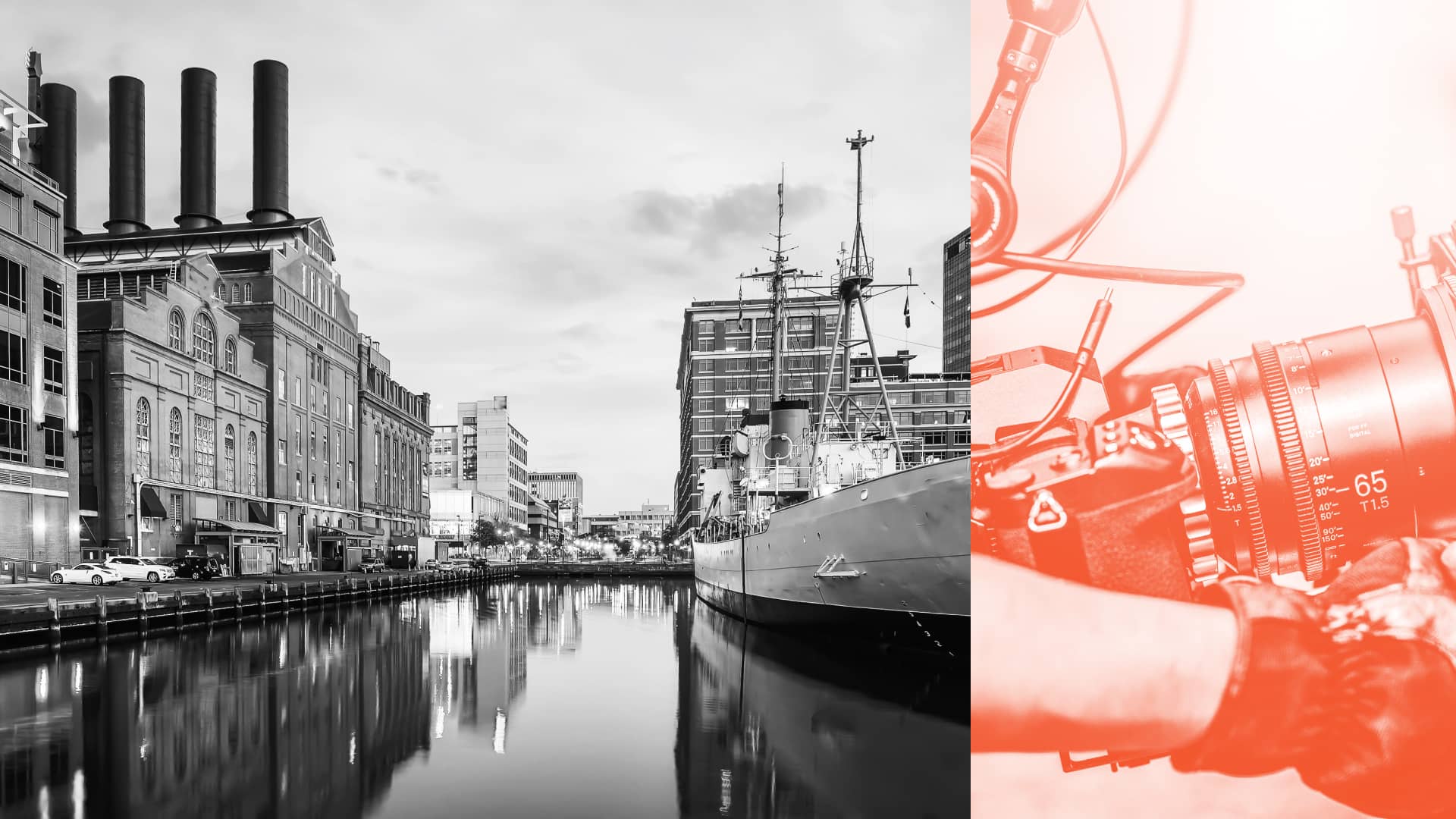
transition into that community. So we work with the localities for the permits, the locations within a very short distance of Baltimore, you can have rolling countryside. That's our main hub is Baltimore and the surrounding area. Countryside, the Chesapeake Bay, so big water.
lots of different looks and all sorts of different architecture within the city and outside of the city. So we've doubled for all sorts of places, Europe, the Middle East, oddly enough. So yeah, it's very simple to work in the city, in the state of Maryland. And even if going to other communities, we've had small films in Ocean City and Frederick.
the community really gets behind the productions and really works with it and supports it. love, for the most part, Maryland loves having projects filming. So.
Cameron Woodward (07:10.552)
That's great. know, so before we started recording, were talking about how, know, Maryland has had some absolutely massive projects over the years. You know, I mentioned in the intro that, you know, your office has generated, you know, over a billion dollars in economic impact, but the program has sort of shifted more towards the new reality of independent filmmaking in the United States, you know, more independent producers, smaller feature films. For folks listening to this, what are the most important things they need to...
understand about the film activity tax credit? You know, what types of projects do you think really fit with Maryland's program? And, you know, can you walk us through things like cashflow timing, eligible spend, the documentation and how, you know, predictable the process is?
Catherine Batavick (07:58.55)
Yeah, it's pretty predictable. And ours actually runs pretty smoothly and a lot quicker than some other states, depending on how many tax credit applications there are. We generally say you will have your money back within a year of the whole process. So people have been really happy with that. With the smaller productions,
So our sweet spot is between, you know, that 1 million and 50 million. Mostly we've been getting 1 to 5 million recently, where it's you make application as long as you have all of the you meet the statutory requirements, we qualify the production and reserve an amount of tax credits for them. Then they film, they put in all their
documentation at the end and we issue a tax credit certificate based on their actual spend. So it's 28 for feature 30 for a series of their actual spend. And then they file a tax return. And as long as they have no tax liability in the state of Maryland, they get it back as a refund from the state. So what we've done with a lot of productions like are really small. We also have a set aside for
Maryland small films, so local based productions where we know, and those are for budgets between 25,000 and about 500,000. We know they are still fundraising. So we say, you know, you only have to show you, and this goes for all independent films because part of our statutory requirements are showing financing and
being able to have evidence of national distribution. And we really work with the companies that don't have a distribution deal that are gonna go through the festival circuit. Send us a letter, what's your plan? How do you plan to get national distribution for this? Are you gonna put it on YouTube? That has changed from the inception of our program because the distribution methods for projects now is completely different from when it started, which was.
Catherine Batavick (10:18.68)
You had a distribution deal, you put it in a theater, but now you have international distribution just putting it on YouTube. So we work with the productions very closely to say, you only have to show financing through the production period, so through filming. So a lot of times productions will do that and then they'll file for their tax credit and then they'll monetize that to do their post. So they'll just get the credit on their...
Catherine Batavick (10:46.724)
production period, get that cash back and then use that to pay for post. So that's one of the ways that we've really worked with the independent film community to help them get their film made.
Cameron Woodward (10:59.15)
That's a great detail that you added. mean, this actually leads me to my next question, which is like, if you look at the guidelines, they note that like, for example, producers must apply before production, meet minimum spend thresholds, schedule principal photography within 120 days of receiving a letter of qualification, and then shoot at least 50 % of principal photography in Maryland.
and then you were just chatting with us about distribution. Could you walk us through an ideal real world timeline for let's say two to $8 million feature from the moment a producer first reaches out to your office to the point where they are officially qualified and ready to roll cameras?
Catherine Batavick (11:39.148)
Yeah, that's pretty quick. So our incentive, the date you make applications starts your clock ticking. So that's when you can start incurring costs. Depending on what's going on in the office and how busy things are, we say allow at least like 30 days to get your letter of qualification. So as soon as you put your application in, it gets reviewed. The goal is within 10 business days.
to make sure it's complete and accurate and everything is included, then if it's not, there's a lot of back and forth, hey, need your, you you need to give us a little bit more information on your financing or your distribution. If it's complete, it goes through a DocuSign procedure, a secretary signs off on it, and you have your letter of qualification reserving those tax credits for you. And that's typically within 30, 45 days of application. So it's pretty quick.
Then depending on, so then you have that 120 day window. We're very flexible. A production can have up to three 90 day extensions. So say your lead actor drops out. Help, we need more time. Send a letter, we can extend that date. And that can be on either end. So you have a timeline for the backend to submit your final application that can be extended as well.
So up to three 90 day extensions on any project at either end of the production period. So you're approved within 30 to 45 days, you film, you do all of your closing documentation. You have 180 days to submit all of that. The bigger projects take that full 180 days, some projects not.
Then again, depending on how many projects are in the queue, could be, we say allow at least 90 days for review and issuing the tax credit certificate. I'm very, Maryland is very open. I communicate with the applicants at all times, you you're number four in the queue, just finish this one. the production is very aware of where they stand and what the time.
Catherine Batavick (14:08.344)
at any given time.
Cameron Woodward (14:11.502)
That's great. you know, I've read that Maryland has, you know, of intentionally capped its program and carved out space for Maryland small films while still then occasionally supporting these larger projects. How do you think about allocating limited tax credit dollars in a way that prioritizes repeatable mid-budget features and independent producers rather than, you know, allowing just a few very large projects to dominate the annual pool?
Catherine Batavick (14:38.916)
Yeah, happened. Yeah, in 2018, we had House of Cards and Veep at the same time and they ate up every tax dollar. So a lot of the local productions were like, well, this isn't fair, we should be getting some money. So our legislature put a 10 % carve out for local, small local independent projects. And I think it's a great program. It's a lot to manage.
Because you know, the little ones are very, very needy. But those are, it's for projects between 25,000. It's a very low, low, low threshold to the maximum. I mean, you can be any budget and get and register as a Maryland small phone, but the maximum they can get is $125,000. So that's around $500,000 local spend.
Catherine Batavick (15:46.136)
Yeah, so for the local productions, they have to be registered to do business in the state of Maryland for at least three months prior to making applications. as applied, we've had local independent producers from Virginia open a business in Maryland and do their film or from West Virginia, do their film. But you really do have to communicate with the film office and figure out the timeline for applications. So you have to be aware of that three month window and then make application and then timing as far as filming. so being a local independent is, coming in as a Maryland small film has a few more bells and whistles that you have to handle than as a regular production coming in, which the.
The minimum spend for a regular production is 250,000. So certainly a lot of small million dollar, $500,000 projects could come in and still qualify for the bigger program.
Cameron Woodward (16:58.668)
That's awesome. So, you know, your office also maintains, as I understand it, like a statewide crew and resource directory. And then you're able to connect productions with, you know, the unions that are local to the region for like smaller productions without studio level infrastructure. How does the office help producers tap into Maryland's local crew and vendor ecosystem and manage their budgets?
Catherine Batavick (17:22.368)
Yeah, we typically will share all of the contacting crew lists from previous productions. So even from the bigger shows, we'll share those with folks that are coming in or interested in filming in Maryland. On our website, we also have our crew and resource directory, which people can search and find all sorts of crew members and resources tents and
caterers. We also have our location database on our website. So you can go in and search for locations and you can search by region. You can search by county. You can search by type of location. It's very user friendly. And then if you're interested in it, hit I'm interested in this location and it pings the film office and we can help you with getting a contact person. So it's a very useful tool for productions.
to search for crew and locations on our website. And we also work very closely with our unions, the Teamsters, our local IA 487 and our SAG-AFTRA, which is actually based out of sort of the Washington DC area. it's, people aren't aware, but it's the third largest SAG-AFTRA chapter in the country because we have a lot of political and...
federal stuff that happens around this area. So, and a lot of that is sag talent. So it's a very deep pool of actors in the area.
Cameron Woodward (18:58.498)
That's awesome. When you think about one or two past projects, what lessons stand out that you'd want future producers to understand about budgeting, scheduling, or rather working efficiently with Maryland's locations and communities?
Catherine Batavick (19:15.026)
wow,
I work so much with the tax credit side. My biggest thing is make sure you have all of your information, start gathering the stuff that you have to turn in at the back end, start that on day one because having to go back and which is why some of the projects take that 180 days. So that's a big thing for me is talking to them upfront and saying, make sure that you're collecting all this information from day one. As far as working with our communities,
We have a lot of really great locations and great communities. They haven't been a whole lot of issues with productions. We have great relationships with the other state agencies, natural resources, our state highway system. Baltimore City has closed down big streets to have diehard run cars through the center of town. So, very supportive.
governments and communities. So yeah, and I think even for the independent filmmakers, Maryland has a very robust local independent film community. So if that's the kind of production that you're doing, not a big, while we love having the big TV shows, we love having House of Cards and VEEP. If you're coming in and you're doing a small independent film, we have
really robust young talent here that is very interested in working on that type of production. I don't know if you're aware of the project Baltimore on Switch just came out was super low budget and just came in and shot right after the Sag Strike ended and just a great, great film and had such a wonderful experience here working with our crews and the community.
Cameron Woodward (21:19.68)
I love that. That's great. So the Maryland guidance really encourages producers to one, contact the state film office first and then be connected with city and county partners across Maryland. For a producer who has never shot in Maryland before and is coming in with a modesty sized feature, you know, they're perfect for the program. How do the state office, local jurisdictions and permitting agencies work together in practice to keep things moving?
and solve problems quickly.
Catherine Batavick (21:50.38)
Yeah, have, there's a few, so Baltimore City has a film office and Prince George's County has a film office.
So we connect directly with them and they will handle permitting in their areas. In other areas, it just depends on who our contact is there, whether it's through a tourism office or an economic development office. And we just connect the production with the local community. And we have just that, you know, I'm sure every state says this, but we just have really wonderful contacts throughout the state that.
support filmmaking and have worked with, know, House of Cards was in Hartford County for six seasons and they bent over backwards to help them do get whatever they needed. and Veep was in Howard County and worked with them to make sure they got what they needed. So that's really what we do is just making those connections between the different, so with the local.
community for permitting, with the state for closing roads, or getting within a park to film in park lands. So we really just sort of a connection.
Cameron Woodward (23:12.706)
That's great. So Mary, you were just mentioning this, you know, like this pretty dense ecosystem of film festivals and your office sits within the Department of Commerce alongside tourism. How do festivals and tourism fit into your strategy for sort of nurturing homegrown feature filmmakers, you know, whether that's helping them find audiences or?
encouraging producers to come back to Maryland again and again, not just for one project, but as a long-term creative base.
Catherine Batavick (23:42.306)
Yeah, we have some really wonderful film festivals. The Maryland Film Festival here in Baltimore. And then there's another one called the New Next Spring and Fall that are very geared towards local independent, but also bringing in other productions and filmmakers into the state of Maryland. Hear positive feedback from filmmakers who attend those festivals.
Annapolis Film Festival is another really wonderful film festival in the spring. thing with bringing in filmmakers, supporting local filmmakers. They have a great program called The Short Pitch, where you come in and you pitch your film and you get in kind. electric grip.
film, you know, film stock, if you're going to do it on film. So there's people that judge the short and then you get all these in kind donations. If you if you win that and it's it's a really great way to support up and coming filmmakers. And they've been doing that for several years. It's a really, really great program. Ocean City has a wonderful film festival in the off season. Fun place to go and hang out on the beach, even if it is chilly.
And then we have Prince George's County has one. There's festivals across the state supporting local films and bringing in films from outside of the state and just showcasing the wonderful different diversity that we have here in the state of Maryland.
Cameron Woodward (25:28.482)
I love it. Catherine, to make this concrete, if I'm a producer listening right now with like one to $5 million feature film, what are the first three steps you'd want me to take to determine whether Maryland is the right fit? And at that early stage, what are the most common misconceptions or mistakes you see independent producers make when evaluating the state?
Catherine Batavick (25:52.814)
Well, first thing is call the film office, talk to the film office, find out what it's actually like to film in Maryland, and make sure you share as much information as you can about your project. So then getting us a list of your locations, what do you think? I mean, we'd be pretty honest to say, hey, this is set in the Rockies. Well, we really can't do the Rockies. Now, if you need just a cabin and woods, and then you'll put the Rockies behind it digitally,
We can do that, but we would be very honest about whether or not we think we can have the setting for your production. So that would be one and two, call the film office, let us know what your project is. And then most everybody is gonna go after incentives. So talk to us whether you need incentives and make sure that you contact us before you start doing anything really in the state.
We find that with the local ones is they already started having contracts and prepping and that disqualifies you for the project. contact the film office first thing, that's the most important.
Cameron Woodward (27:10.446)
Are there any others? That's one. We have two more.
Catherine Batavick (27:12.42)
Now I said, then let tell us, know, the next step after that. I've been going through the application process. So it was one locations and then two was the tax credit. Well, depending on, you know, your level of project, we provide the contact information for the unions. We recommend that you talk to them. They're very,
Catherine Batavick (27:42.766)
flexible and willing to work with production. So contacting the correct folks for filming, don't recommend just coming in and going somewhere and filming without contacting anybody. So that's,
Cameron Woodward (27:57.678)
That's awesome. All right, well, Catherine Batavick from Maryland, thank you so much for telling us about your wonderful program, your awesome state. You all are doing really good work and bringing in some really cool productions. Thank you so much for kind of walking us through the program. Really appreciate it.
Catherine Batavick (28:14.798)
Sure, my pleasure.
Find out how the Maryland Film Office fosters a thriving film community in a unique production environment.


Get pricing, see a product demo, and find out how much easier payroll can be.
