
Join the Crew
Get the best resources for producers delivered to your mailbox

Get the best resources for producers delivered to your mailbox
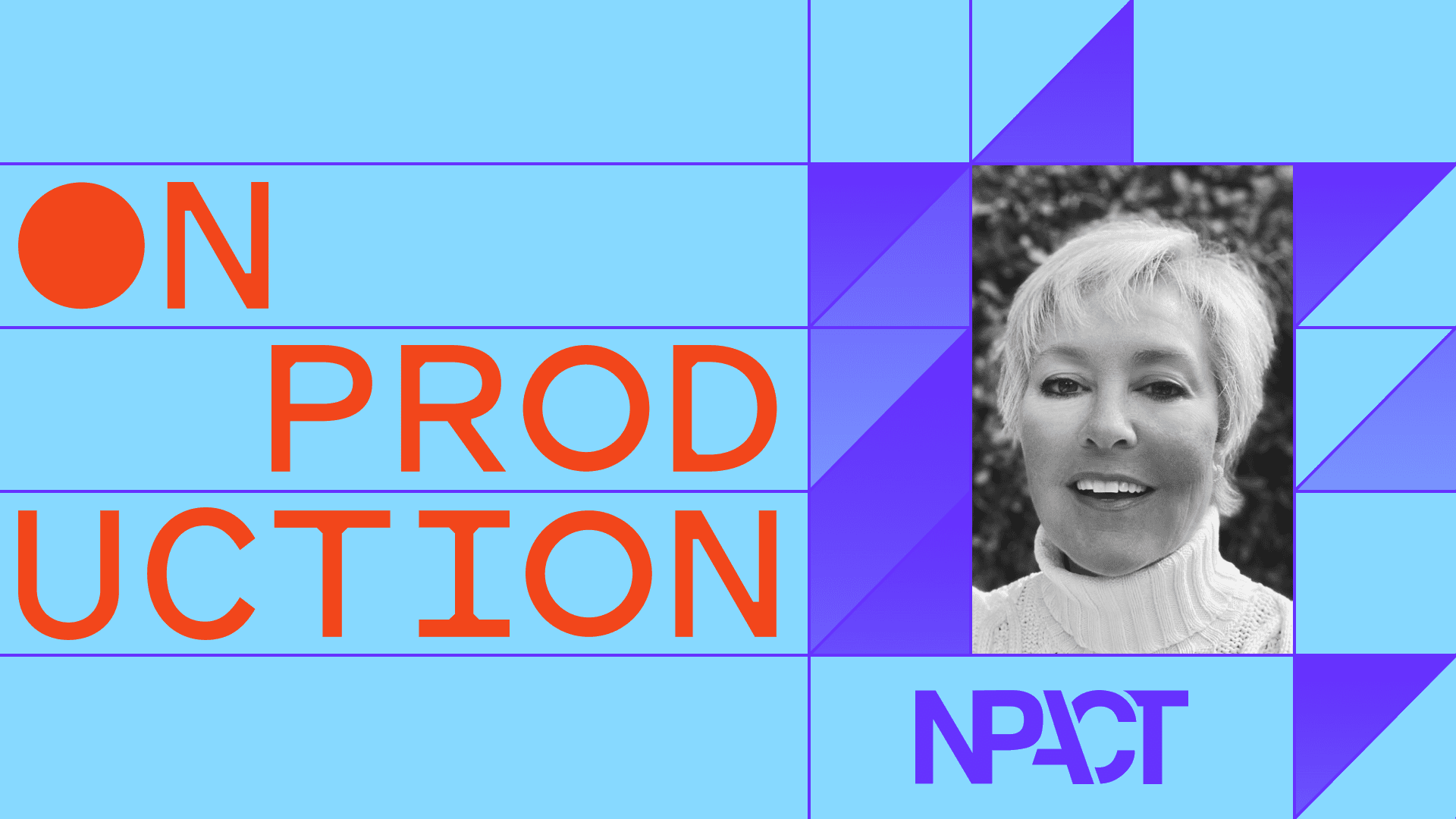
We sit down with television producer and NPACT General Manager Michelle Van Kempen, whose career has helped shape the unscripted landscape for nearly three decades. As an executive at FilmGarden Entertainment, Michelle oversaw more than 2,000 episodes of television, developing and producing series for major networks while learning firsthand how to run unscripted shows at scale.
Now, through her work at NPACT and as founder of Women in Nonfiction, Michelle supports the production companies and professionals behind much of the U.S.'s unscripted content. In this conversation, she shares what it takes to keep shows on time and on budget, how to lead production teams with flexibility and foresight, and why the producer’s role is often about planning for spontaneity. She also reflects on the evolution of the unscripted business model—from a commission-heavy era to today’s shifting mix of buyouts, co-productions, brand partnerships, and short-form experimentation.
Whether you’re running shows, pitching buyers, or trying to build a long-term career in nonfiction, this episode offers a look at the challenges and opportunities of producing in a fast-moving, post-streaming world.
Welcome back to On Production, a podcast brought to you by Wrapbook. Today I'm joined by Michelle Van Kempen, a veteran television executive and producer who's helped shape the world of unscripted entertainment for more than two decades. Michelle spent nearly 20 years at FilmGarden Entertainment where she oversaw more than 2000 episodes of television and served as executive producer on series like Taste of America and Hillbillies for Hire.
In that time, she mastered the art of scaling productions, think everything from managing teams, budgets, and creative operations across multiple shows and networks. But today, Michelle serves as general manager of N-PACT, that's N-P-A-C-T, it's an awesome trade association representing the producers and production companies behind much of the unscripted content made in the U.S.
She's also the founder and executive director of Women in Nonfiction, a national organization advocating for the advancement of women in the nonfiction entertainment industry. In this conversation today, I'm hoping that we'll be able to dive into what it takes to run unscripted productions at scale, everything from managing crew and budgets to adapting for new formats and platforms. I'm also hoping that we'll explore how the business of nonfiction has evolved.
and what producers need to know to build sustainable careers in today's rapidly changing landscape. I'm thrilled to have you Michelle with us today. Let's dig into it.
Michelle Van Kempen (01:35.556)
Thanks so much, Cameron. Looking forward to it.
Cameron Woodward (01:38.218)
So you've spent much of your career producing and overseeing unscripted television. What first drew you to this side of the entertainment industry and what about non-fiction storytelling continues to excite you after so many years?
Michelle Van Kempen (01:52.9)
Well, OK, first of all, you're making me sound really old, Cameron. But I have to say, the real world, the world that we live in and the people in it are just endlessly fascinating and always have been to me. I've always loved the fact that you can just scratch the surface of any topic or idea or area of knowledge, and there is a full rich world.
there to explore. And that's what unscripted content is really about. And I've always loved it. And additionally, I would say I personally am better suited to this relatively faster pacing and turnaround time of the unscripted world. That just is more for my personality than years long scripted projects. So
That's why I'm in it and that's why I have stayed in it for actually almost 30 years and still love it.
Cameron Woodward (03:01.592)
So to that point, I I mentioned this at the top of the show, but at FilmGarden Entertainment, saw, oversaw rather, more than 2,000 episodes of content. What did you learn about scaling production? Keeping multiple shows running simultaneously while maintaining consistency and quality.
Michelle Van Kempen (03:22.842)
I have to say, first and foremost, you need a great team of people that you trust. And it takes some time to put that together and really find the people that are of like sensibilities and like-minded. But it really is all about having a great team. In addition to that, ideally, would say scaling gradually.
is sort of the wisest way to do it. Back in the early days of film guard, so we started in one little bungalow that was around a courtyard. And then we expanded into two bungalows and then three and four. And then we took over the entire space as we got more more shows. And then we opened a satellite location as we got more shows. And then we opened a second satellite location.
you know, really grew gradually until we got to that point where, you know, it was too many satellite locations then, okay, now it's time to invest in, you know, taking that leap for the bigger overhead to get a bigger space. And, but we tried to always be wise about that, not over-investing in the short term.
to anticipate growth, but rather letting us grow more organically and then making those investments. It's a tough balancing act because back in those days when the shows were coming hot and heavy, you had to be really nimble. But I would say,
The wisest thing is to not over invest in the short term and be as gradual as you can.
Cameron Woodward (05:23.618)
That actually brings up a question I had around the fact that producing unscripted producing often requires moving fast and adapting constantly, as you were mentioning, which is this thing that's in balance to your point about, you know, not scaling too quickly, being sort of conservative so that you enough room to maneuver considering how fast a show can scale up or new opportunities can come through.
But when you think back to your time running productions like, for example, Taste of America, I'm curious what, from your view, separates well-run unscripted shows from those that struggle? And what systems or practices have you seen that made the biggest difference for you?
Michelle Van Kempen (06:40.206)
Let's see, mean, obviously a clear vision for the execution of the show is key. And sometimes I will say, think even in the best of circumstances and with the best producer, sometimes it takes getting well into that first season to get it right. So, you
in some ways it's more difficult now because those, you know, there tend to be fewer episodes in an order than there used to be. And it's much more difficult to get that second season order than it used to be. But I think as far as systems and practices, think well-produced shows are extremely
well planned. And you want to take advantage of, as you get more shows across multiple shows, you want to use the systems that you have to their maximum effect. know, amortizing resources across multiple shows,
But I think it's the most successful way to run those kinds of shows and kind of get them on their feet is, like I said, to start out with a clear vision. Use the systems that you know work. Use the resources that you have across multiple shows to help all of your shows.
and maximize everything that you can as quickly as possible. It's not a great answer. There's no magic bullet, but I think that's what we did with some success.
Cameron Woodward (08:54.38)
With unscripted series, they seem to rely heavily on field coordination, like you were mentioning, like tight turnarounds. How did you approach kind of balancing the human spontaneity? I mean, you're capturing sometimes more authentic than other, but unscripted moments, just broadly. And I'm curious, how did you all think about structured production planning needed to keep all these shows on time and on budget?
Michelle Van Kempen (09:24.922)
Well, that's definitely a balancing act, it is shows have to be very well planned and very well produced to get those spontaneous moments. A good producer knows how to produce
scenarios that invite action and spontaneity. And then it takes very good teams on the ground that are good storytellers that can recognize quickly, you we've set up this scenario. It's not going the way we expected, but it's going in a good storytelling direction. Let's pivot, follow it and get the story.
So I think it's a combination of extreme planning and then the ability to pivot in a spontaneous moment. And typically, if the production is very, very well planned and planned by good storytellers who know how to set up reality, we all know that reality television is the
framework of it is very produced. Good reality television allows those spontaneous moments to happen within that very structured framework, right? So, you know, you need a very well structured and a good team that recognizes how to follow the story. And typically you can pretty much stay on your schedule and budget within those parameters.
It tends, I will say it tends to be the shows that go off the rails budget and schedule wise tend to have not been as, you know, of course there are circumstances that are weather-based or, you know, things that are outside of your control, but in general, they're the less very well-planned shows that run into those kinds of problems.
Cameron Woodward (11:47.545)
I would imagine this is like a mixed answer to the question I'm to ask, but have you seen scenarios where things go off the rails in terms of the schedule and budget, but it's because the spontaneity of the action of the subjects is so good that like you just want to keep filming or is it actually the reverse that you see, which is like the better planned unscripted formats just work better?
both from a production standpoint and from a storytelling standpoint. Or maybe it's a mixed bag.
Michelle Van Kempen (12:19.194)
Yeah, it's a little bit of a mixed bag, but I tend to lean more into, know, if you're following a good, you know, you're pivoting to follow a good unfolding story that you didn't anticipate, typically that's not going to be a big long thing that's going to extend your schedule. You know, you just...
change what you're following instead of completely throwing everything, the baby out with the bathwater. But having said that, there are certainly circumstances where something big happens that changes the trajectory of things and does cause delays and legitimate delays that, there are always circumstances that
affect budget and schedule that are either outside of your control or are because of a better story. But, you know, I would say with 90 % of productions, probably, if they're extremely well planned and it's not something outside of your control, you can pretty much keep it on the rails.
Cameron Woodward (13:38.863)
In relation to that line of thinking, I know that you've worked across a wide range of formats, like from lifestyle and then of course reality series to docu-style programming. How does the producer's role shift depending on the type of unscripted project? And where do you see the biggest challenges in adapting production models across genres?
Michelle Van Kempen (14:01.518)
Well, it's interesting. I am more of the mind that a well-told story is a well-told story is a well-told story, no matter the genre. And I feel like there's a bit of a...
an idea that if someone hasn't produced a specific genre, they probably can't produce it. if you haven't done true crime, you know, you we want someone who's done true, true crime, that kind of an attitude. And, you know, we run into that kind of thing all the time. I am more a believer that there are certainly techniques.
and system things and tips that you can learn in any specific genre that might streamline things, know, help in certain ways. But I feel like a good producer who knows how to tell a story will tell a good story and that makes a good program no matter the genre.
Cameron Woodward (15:08.632)
That's awesome. I want to pivot a little bit. So like, I think I've just asked you some really great questions for a part of our audience that is maybe curious or interested in Unscripted, but maybe they're in film or they're in commercial and like they just think it's interesting to be able to sort of tune in and understand what, you know, our Unscripted brethren and sisters are doing. But for the other part of our audience that maybe do work in Unscripted and...
Cameron Woodward (15:35.02)
They have their own worldview and theories as to how to produce. Maybe your answers are just not as dialed in for them. They have their own opinion, right? That's fine.
Michelle Van Kempen (15:44.986)
or they may disagree with me, I may be making some people mad.
Cameron Woodward (15:48.271)
Exactly, but where that audience will be most interested is actually in your awesome experience as the general manager of NPACT. You now represent many of the companies behind much of the unscripted content in the US. I'm curious with that hat on, Michelle, what are some of the biggest production issues or challenges you hear about most frequently from members today?
Michelle Van Kempen (16:10.244)
Well, I have to say, I mean, we are in a period of seismic shift in the industry. Because I'm old, I've been in almost 30 years in the industry, and I've never seen anything like this. So I feel like the challenges now are existential in a way they haven't been before.
The way you have to do business is drastically changing. Production models are changing. Revenue sources are changing. Budgets are certainly, by and large, being lowered. There's a tier of premium unscripted programming that will continue to exist.
But there probably isn't enough volume of that premium programming to keep the number of production companies alive that need to stay alive to create all the content that needs to be created. So.
I would say the biggest challenge is facing companies and every company is facing these challenges. It's how do we stay alive? How do we thrive into the future? And it's all about being entrepreneurial and figuring out, know, paving a whole new path.
Cameron Woodward (17:52.239)
Can you help maybe set the stage for those that are curious? Like how has it shifted? And talk about how shows are getting financed, scheduled, produced, what that story is that is leading to this incredible evolution of the industry.
Michelle Van Kempen (18:11.844)
For the last 20-ish years, the model in the United States was that networks commissioned programming. 90-plus percent of all shows that were aired by the networks and streamers in the US were commissions. production companies would absorb the cost of
creating and developing shows, creating the materials, the sizzle reels, the materials to sell those shows, pitch them, get a network or streamer to buy, but then the network would pay for those shows to be produced and they would own the rights to those shows, all rights worldwide in perpetuity typically. And that model, like I said,
was going for about the last 20-ish years, we saw a huge surge in programming period, but certainly in unscripted programming because of the advent of the streaming wars. So Netflix continued to grow and grow and grow, and other networks that had cable or
broadcast networks saw into the future that, there are viewership on cable and broadcast is, you know, people were cutting the cord, right? They were starting to just watch more streaming. The viewership is dropping for broadcasting cable. So companies felt like we've got to get in this streaming world.
Michelle Van Kempen (20:10.67)
big acquisitions happened to Amazon bought MGM, Discovery bought Warner Brothers so that they would have libraries so they could compete in this streaming world. And Wall Street valued these companies on their growth, their subscriber growth, right? So even though...
Many of these companies were now billions of dollars in debt because of these acquisitions. They were still able to order a lot of programming because they wanted new programs all the time to draw subscribers so their stock value would go up. Right. So then the great Netflix correction happened where Netflix, which is, you know, a driver in the entertainment marketplace, their viewership started to plateau.
And Wall Street decided, so it's not about growth anymore. It's about profitability. So now companies had to put the brakes on, do a 180 and say, oh, OK, we now have to be profitable. We're carrying billions of dollars in debt. What are we going to do?
the brakes were really put hard on buying programming. Over the pandemic, companies realized people will just watch old shows that we put back up on streaming. They will watch shows from Korea. They'll watch shows from Europe. So companies realized we don't have to invest as much as we've been investing in programming.
and we can be more profitable and then have our stock price be healthier if we don't invest so much in programming. So all of these things sort of came together and we are now seeing that the volume that we once enjoyed, you know, for many years, it has shifted. I think we're not going to see again the volume from
Michelle Van Kempen (22:28.93)
these buyers, network and streaming buyers that we've seen in the past. So production companies are trying to figure out, you know, how do we stay alive? How do we employ people? How do we make content if we can't just develop shows and sell them to buyers? That model, you know, there's still a part of a business there, but it's not enough to sustain.
you know, multiple companies long term. So they're looking at different platforms, different types of programming, different production, you know, revenue models, co-productions, brand relationships, doing vertical shorts, putting instead of developing for a buyer, developing a show and just putting it up on a platform and
seeing how it does. you know, so it's, it's, it's kind of the Wild West out there in the same way that it was at the advent of cable in the, you know, late eighties and early nineties. So, you know, I feel like when there is big change, there's also big opportunity, but it is, we are smack in the middle of the transition period.
where everyone's trying to figure out what those new opportunities are. And as things are shaking out into what the new normal is gonna be.
Cameron Woodward (24:05.6)
It's interesting. You know, it's interesting, Michelle is like, I came from the background in commercials, which is a similar concept, right? Which is, Hey, you have an idea. We'll execute the idea or we have an idea. We'll execute the idea. We'll take some margin and we'll use that to get to the next project and continue to grow our business. One of the things that really surprised me many years ago is I got to know NPACT and the industry at large was just how many independent production shops were.
Michelle Van Kempen (24:13.294)
Mm-hmm.
Cameron Woodward (24:34.51)
coming up with these just amazing ideas and some of them become these massive hits, but their benefit from that is that they just have the right to produce. And not even necessarily indefinitely.
Michelle Van Kempen (24:42.938)
Right.
Exactly, it can be taken away. Yeah.
Cameron Woodward (24:49.326)
And that always seemed to me like a huge challenge for unscripted studios or unscripted production companies. And so it is interesting and sort of exciting while still very volatile and sort of drastically different. It's interesting to try to manage how to survive and extend your runway through
a business model and a revenue model actually changing, but then also this new opportunity for like potentially like ownership for like actually. I'm curious what new skills are you seeing or NPACT members discussing in terms of what producers need to do to thrive in this environment as it's changing.
Michelle Van Kempen (25:38.553)
Well, it's interesting. And that's one of the roles that I feel like is very important for NPACT. So I produce, executive produce this, the Unscripted Executive Summit every year now, which Wrapbook has been an integral part of and love that. Thank you. I feel like it's a really necessary event and the
Cameron Woodward (25:59.439)
It’s a great event.
Michelle Van Kempen (26:06.542)
focus has really been on trying to provide information about things to look at, different ways to approach it. I recognize how hard it is when you're a company trying to stay alive, you're basically treading water as fast as you can to try to stay alive. It's very hard to look up and around and look at what other options there are, decide how to go about exploring those options while you're, you
the train has left the station, right? So you don't have relaxed time to explore new ways of doing business. So that's how the summit came about and why it came about. so I completely agree with you that there's an exciting opportunity and opportunity for ownership. When we started Film Garden back in the mid 90s,
About 75 % of all the shows we sold were co-productions. We owned them and we got an international partner, sometimes a distributor, sometimes a broadcaster, someone from another territory. We did a license deal in the United States. Then we owned that programming and we relicensed it. over the 20 years of Film Garden's existence,
That's sort of the gift that keeps on giving. And then we saw the…
Cameron Woodward (27:39.214)
Does that still have economic positive ramifications for you or the equity holders of FilmGarden even now, these years later?
Michelle Van Kempen (27:51.961)
a little less just because of the technical changes. Those were in the days before HD, right? So it's the actual physical, the stories are still relevant, but there are many fewer places that want something that's not in HD. it's the technical changes that affect its value now.
Michelle Van Kempen (28:22.138)
All of that to say that we saw and lived through the changes, the shift 75 ownership 25 commission to 100 % commission. What's difficult now for producers is if you've been around 10, 15 years, you're a seasoned producer, but you've only done business that one way, right? You've never made co-production relationships.
that hasn't even been on your radar. So through the summit and through what NPACT provides, we try to provide information and contacts about that. You here, this is how you go about a co-production deal. These are who the distributors are. These are territories that are looking for co-productions with US partners. This is the branded, you know, you say you come from advertising, it's interesting to see
the changes that are happening concurrently in advertising, right? They're looking for, they're seeing the standard 30, 60 second spot maybe not hit their demographic in the same way that it used to, right? So brands are looking for different ways to reach their targets through content. So there's potentially, you know, a really great
synchronicity there for content producers and brands to work together. we try to provide those kinds of resources and information to assist companies make this transition. One of the other things that's fairly new that I think is really interesting is these vertical shorts. These are these 60 to 90 second episodes.
we've seen so far is kind of telenovela-like, right? Or almost soap opera-like content that, you know, will air a 60-second episode with a cliffhanger. And then after you watch a few of those 60-second episodes, there's a charge, 99-cent charge to watch the next episode and the next and the next. I think there's a big opportunity there for unscripted.
Michelle Van Kempen (30:44.81)
Even taking, know, if you own some of your content, can you cut it down into cliffhanging short episodes that could be monetized in a different way? So there are all of these kind of entrepreneurial ways of looking at the future of the business and where it could go.
Cameron Woodward (31:04.618)
It's interesting from my vantage point here at Wrapbook, I'm very privileged in that I get to sort of jump into all of the different segments of entertainment. And like this is happening also in like film and television as well, where the deal used to be like you would get some points on the backend, you would take on some risk and you would get some equity. And then the streamers came out and they would do these full buyouts, which, you know, in hindsight, people are grumbling about it. But as one really astute producer said,
at the PGA conference. Look, we're not idiots. Like they were sort of doing these massive buyouts and we don't know if the show is going to be a hit or not. So, you know, yeah, we went for it. I'll take it. Right. And, and now we're sort of pivoting back towards maybe a new contract, a new social contract on how this content gets made. And so it's interesting to see that that corollary.
Cameron Woodward (32:00.653)
sort of emerging in the unscripted world as well. And even on what you're describing of like, NPACT coming in to help production companies figure out how to navigate these types of deals or look at new formats. I mean, it is super interesting. Like you think in unscripted, this almost interesting confluence between the absolute massive scale of TikTok and meta reels. Like if you look at the like revenue run rate on reels, it's incredible.
And then you think about that confluence as well with not just like unscripted storytelling, but you see around the COVID era, a big revenue opportunity for like unscripted cast members through like tools like Cameo. Like you could imagine the confluence of Cameo, Reels, unscripted formats, sort of all coming into one form for production companies to like figure out a new revenue path. But yeah.
Cameron Woodward (32:54.538)
It's a lot to navigate and I'm really curious, you know, from your perspective, like what advice would you give to like early career producers about building the skill set needed to navigate this complexity successfully?
Michelle Van Kempen (33:10.63)
Okay, I'm not going to say to early producers, run.
Michelle Van Kempen (33:22.554)
The best opportunity that you have is to be as knowledgeable about, you know, the broad, as broad a spectrum of whether it's unscripted or within script, be as broad as possible. Having said that, I think you want to start out being, making sure that whatever job you have, you do as well as you can, you know,
learn it and do it as well as you can and be that trusted go-to person in the job that you have before you start to express interest in other areas, So, you know, that's number one. Be the trusted go-to person in your existing job. I also think it's, you know, one of the things that working remote has
has great benefits. But I think one of the things that people don't realize, especially early in their careers, is what a great benefit it is to be in a location, in a building with others, you know, especially with a production company where you see how post works, you see how the production management works, you see how the planning
part of producing works. instead of in a remote environment, we tend to work just with our team, right? I think there's a great benefit. If you have the opportunity to work in an office, absolutely do it. Because you want to be as curious as you can be about everything else that's going on. And the best way to do that is if you're in the building, you go see what's happening in the post department, see what's happening in an edit.
you'll be a better producer if you see what happens in the edit, because you see how the story comes together. You see the pieces that need to be gotten in the field to build the story and post. And so I would just say be as curious as you can be and ask questions and talk to others and and, you know, find out as much as you can about the entire process, because you never know.
Michelle Van Kempen (35:48.588)
what part of it you're really gonna love.
Cameron Woodward (35:51.361)
Absolutely. So, you know, in your call for folks to sort of look ahead and be broad in their knowledge accumulation to figure out how to ride the wave, I'm curious, Michelle, any predictions about the future of unscripted producing, whether it's new formats that you mentioned or new audiences or how producers themselves are shaping the next phase of the industry?
Michelle Van Kempen (36:16.58)
Gosh, I hesitate to make any specific predictions. Look, there is now and there will always be a voracious appetite for content. and like we've talked about, I feel like there is big opportunity. It's gonna be very different from how it was in the past.
And I can't emphasize enough how I feel like it's so important to be entrepreneurial right now, to bet on yourself, bet on your skills, be willing to, you know, instead of expecting someone else to pay for your work or to buy your show, put your show up on a platform in some form and see how it does. Look at different ways of monetizing it.
look at different, to me it's all about partnerships in the future, whether it's the kinds of partnerships we've talked about with a brand or with a co-production partner, someone international, a platform, partnership with a platform, are, I just feel like it's a combination of.
being entrepreneurial, making good partnerships and betting on yourself.
Cameron Woodward (37:41.462)
I love it. Michelle, thank you so much. I mean, I know that that can feel like, there's a big wave, but the thing is, like, what's interesting, if you look at the trends, right, it's not just Netflix winning or Disney plus winning, it's YouTube and creators and people building interesting stories on their own. And I think there's no better group of filmmakers than the unscripted cohort to offer.
Cameron Woodward (38:08.622)
some of the most like creator driven content in the market. So it makes a lot of sense and I really appreciate your perspective and all the great work that you do with NPACT. Thanks for coming on On Production and sharing a bit of your past and your story as a producer, but then also as really this like community builder and liaison between all of us folks that work in and around the unscripted space.
Michelle Van Kempen (38:32.804)
Well, thank you for having me, Cameron. Really fun to talk to you today. And here's to much success in the future. Let's keep it going.
Cameron Woodward (38:43.115)
Absolutely. Thanks, Michelle.
Industry expert Michelle Van Kempen shares her advice for selling in today’s unscripted market.


Get pricing, see a product demo, and find out how much easier payroll can be.
