
Join the Crew
Get the best resources for producers delivered to your mailbox

Get the best resources for producers delivered to your mailbox
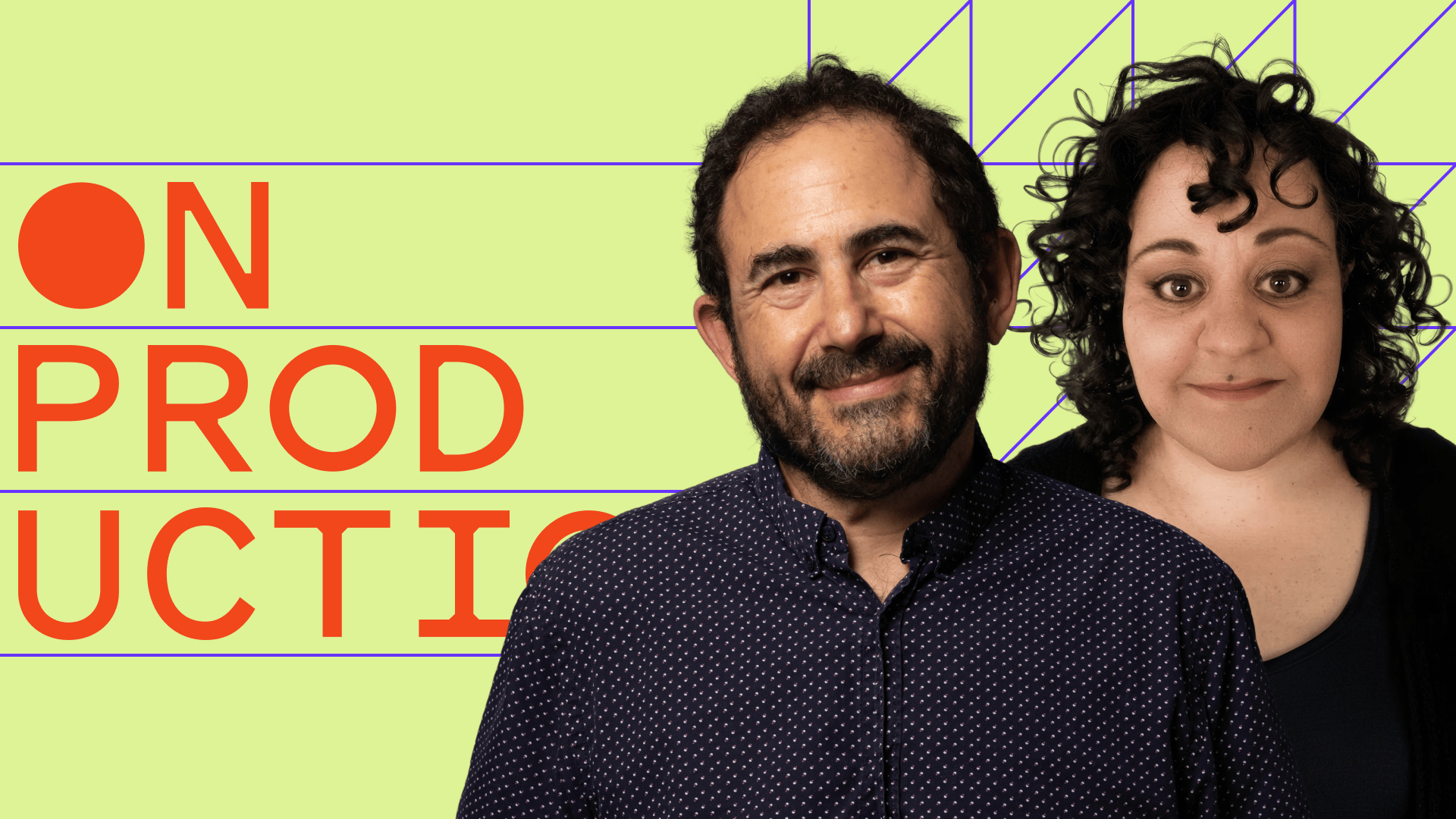
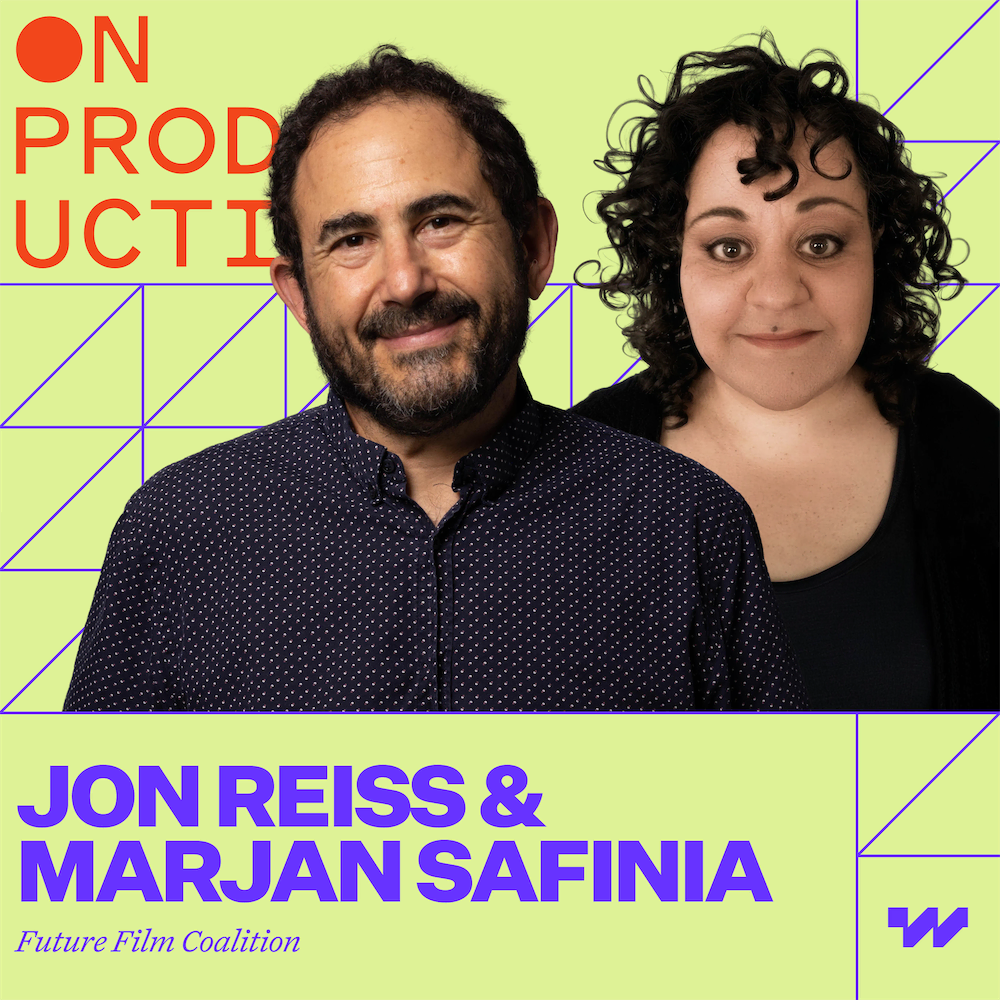
Cameron sits down with Jon Reiss and Marjan Safinia to examine the structural challenges facing independent filmmaking—and why many of the assumptions that shaped the last two decades no longer hold.
Jon is a filmmaker, author, and media strategist whose book Think Outside the Box Office has become a key resource for independent filmmakers thinking seriously about audience building and distribution. Through his company 8 Above, he creates custom audience-building strategies, theatrical experiences, and digital release campaigns for independent features and documentaries—and actively distributes films himself, most recently bringing The Librarians to over 200 theaters. He has consulted with hundreds of filmmakers and organizations worldwide, helped run the IFP/Gotham Filmmaker Lab for a decade, and founded the 8 Above Distribution Lab to teach filmmakers how to distribute and market their work.
Marjan is an Iranian documentary filmmaker whose work—including Seeds and But You Speak Such Good English—has played at over 100 international festivals and been broadcast across North America, Europe, and the Arab world. She is the longest-serving president of the International Documentary Association and the only woman of color to have led the organization since its founding in 1982. A member of the Academy of Motion Picture Arts & Sciences Documentary Branch and a Sundance Catalyst Fellow, she is also a board member of Chicken & Egg Pictures and co-hosts The D-Word, a leading online documentary community.
Jon is also the co-founder and board president of the Future Film Coalition, formed in 2025 to unite independent film professionals and organizations in building collective power, securing visibility, and shaping public policy that ensures U.S. independent filmmaking continues to flourish. Marjan is an active member of the coalition. The FFC has already notched a meaningful early win, helping secure an independent film carve-out in California's expanded tax credit program.
In this conversation, Jon and Marjan discuss how financing, distribution, discoverability, and audience behavior have fundamentally shifted—and why the biggest challenge facing independent filmmakers today isn't simply getting a film made, but building a sustainable path for that film to reach an audience. They explore why distribution thinking needs to begin at the earliest stages of development, how marketing and audience strategy have become inseparable from production, and why understanding who a film is for long before it premieres has become essential. The conversation also covers the changing economics of streaming, the realities of theatrical exhibition, and the growing importance of filmmakers building direct relationships with their audiences.
Finally, Jon and Marjan discuss the Future Film Coalition's broader advocacy work, including efforts to address media consolidation, strengthen tax credit programs across the country, and make the case to policymakers and regulators that independent film is a significant economic force in communities across the United States.
The views and opinions expressed by guests on this podcast are solely their own and do not reflect the views of Wrapbook, its employees, or affiliates.
Cameron Woodward (00:00.046)
When you look at independent film right now, what is the biggest structural pressure producers are facing? Financing, distribution, discoverability.
Jon Reiss (00:08.992)
I would say it's all of the above and they're all related to each other. Because of the problem with distribution and acquisitions for independent film, financing has become difficult.
Cameron Woodward (00:19.082)
What is materially different for independent producers today compared to the streaming expansion era of twenty fifteen to twenty eighteen?
Jon Reiss (00:26.52)
There's no one coming to save them. To create that hope and dream that you make a good film, you take it to a festival, you sell it, your career's made, your investors are happy. That kind of is gone.
Cameron Woodward (00:36.002)
You were both mentioning this illusion that if a film lands on a major platform that the hard part is a
Jon Reiss (00:40.766)
Most filmmakers end up on a platform, they're probably pretty happy. But what they would probably realize is that they probably need to drive audience to that platform and the platform has given them no marketing dollars because the platform has their own way of putting that film in front of audiences.
Marjan Safinia (00:55.118)
We still wanna hold on to this like nineties fantasy of how things were once. I think we need to wake up.
Cameron Woodward (01:03.598)
Today we're joined by John Reese and Marge Safrenia, two leaders working at the intersection of independent filmmaking, distribution, and industry advocacy. John is a filmmaker, author, and media strategist whose book Think Outside the Box Office has become a key resource for filmmakers thinking seriously about audience building and distribution. And Marge is a filmmaker and field leader whose work spans documentary storytelling, equity, and structural.
Change in the industry. Her films include And She Could Be Next, Seeds, and But You Should Speak Such Good English. And she has held major leadership roles across the documentary field, including serving as the first woman of color, president of the International Documentary Association. Together, John and Marge are part of the Future Film Coalition, an organization focused on strengthening the independent film ecosystem at a time of consolidation, platform dominance, and serious economic pressure. Today,
going to talk with them about what has changed for independent producers, what old assumptions no longer really just hold, and what practical strategies, individual and collective, can help filmmakers build more sustainable careers. Thanks for joining me. Great. Absolutely. So I want to start with the big diagnosis. When you look at independent film right now, what is the biggest structural pressure producers are facing? You know, is it financing?
Marjan Safinia (02:17.848)
Good. Thanks for having us.
Cameron Woodward (02:31.32)
Distribution, discoverability, or something deeper in the business model at
Jon Reiss (02:35.736)
Solve? I would say it's all of the above, and they're all related to each other. So because of the problem with distribution and acquisitions for independent film, financing has become difficult. And part of the problem with distribution is also discoverability, but that's a side-related issue, but it is related in multiple ways. So we find that, you know, just in terms of films that are made within the United States by American makers or just films that want to get released in the United States.
There aren't generally traditional distribution deals, or what would be considered a traditional distribution deal, or even a deal where a streamer is acquiring the rights and paying a chunk of change back to the filmmakers in some sort of sustainable way. Those have kind of somewhat gone out the window. And combined with that, so what a lot of the programming that's being made by the streamers that are now dominant in the space are in-house productions.
That they make on for lower and lower rates, pushing down everyone's salaries. But additionally, a lot of that production is going overseas because of tax incentives that are offered overseas by overseas governments and also labor that is cheaper overseas. So there's a compoundment of factors that are affecting our industry across all pretty much all sectors.
Cameron Woodward (04:00.844)
Marge anything for your side.
Marjan Safinia (04:02.414)
I mean, I think I don't have much to add. I think that's that's exactly right. I do think attention capture is a real challenge in this landscape. And I don't think it's only film. It's everything, right? Everything has become so fractured and atomized. And as an individual consumer, it's kind of becomes a a full time job to track track and find the content that you wanna watch. Often you're having to pay for it at each stop, right? Which becomes also challenging.
And then there's the big structural stuff, right? Which, you know, the corporate consolidation, reduced number of buyers, reduced number of gatekeepers. For me as a documentarian in the last couple of years, the decimation of the corporation for public broadcasting and those dollars which flow onto public television, which is the some of the best documentary in the country. So it's a a structural, underlying structural thing as well as all the things that John just listed. So it's really kind of a cataclysmic moment, or it feels like a cataclysmic moment, a kind of
crashing together of forces from all sides that, you know, are sort of pushing us to have to innovate in ways that, you know, really come up with new solutions rather than hope that what we used to have is going to come back. I don't believe that's going to happen. N not while I'm still have enough energy to be making work.
Jon Reiss (05:20.13)
But also in it on top of that, and we can get to this later, but it's also, you know, organizing to, you know, to not only defend certain aspects of our industry that are still able to be s saved and to save, but to also, you know, break those economic structures that are causing the difficulty in our in our industry. So that's the and which is the the reason that the FFC was created in a sense. And we can get to that later, but
Yeah, just wanted to chime in on what Marjahn was saying.
Cameron Woodward (05:52.044)
Yeah, that's great. You both brought up attention. and John, you know, you've been teaching distribution strategy for years, which is really an attention problem to be solved. What is materially different for independent producers today compared to the streaming expansion era of, you know, let's say twenty fifteen to twenty eighteen?
Jon Reiss (06:10.87)
Yeah, I would say that more filmmakers now, and I would say now it's ninety-nine point nine percent of filmmakers that are making independent contact content need to be aware that they need to be responsible for the distribution and marketing of their film. There's no there's no one coming to save them, you know, and to to create that hope and dream that that is produced out of this mythology of independent film, that you make a good film, you take it to a festival, you sell it, you know, your career's made and
Your investors are happy. That kind of is gone. And it was gone, frankly, in 07 when I got started in this current path of mine. And then it kind of came back and the streamers gave the illusion that they were going to be that solution in a sense. But, you know, it was to me, in a sense, it was a strategic smoke screen by them and served their purposes. They, you know, had to fill libraries. So they filled their libraries and then they realized, our libraries are now full. And
And actually now we know what kind of content we need and why are we paying these prices for this content? Let's make it ourselves for as cheaply as possible. And then we own the IP and we don't have to deal with filmmakers who want ownership of their IP and want any cut in what their creativity has created. And so we're going to just own it all and extract it all. And what we're suffering under is I firmly believe that we're moving to a tech feudalist structure and that we're all becoming their serfs.
And that's not only film surfs, it's as Marjan said, the entire economy. It's the uber uberfication of everything. Like you see software and this happening to even software and engineers, where people would say to their kids, go into computer science, because then you'll have a career. No more. You know, that's out the window for most for not most, but many of them now. And you see it, it's the serviceation and uberfication of the entire economy, and film is part of that. Where
Cameron Woodward (08:06.466)
Do you see producers behaving as if the old economics still
Jon Reiss (08:10.03)
I see them every day. I teach a distribution lab and where I teach filmmakers kind of intensively over six months how to distribute and market their films. And what the the heartening shift I've seen is that like in this cohort's fiction lab, there's six films at the script stage, fiction films at the script stage, and there's four documentaries in development. So it is shifting, but and it's shifting pretty dramatically from how it was.
Marjan Safinia (08:12.078)
All the time.
Jon Reiss (08:39.319)
15 years ago, but you still you run into people all the time, as Marjan was nodding, that they didn't budget for distribution and marketing. They're burned out, they have no resources, they made a great film, they have no way to connect it, and no no unfortunate thought for many of them of how to connect it to an audience.
Marjan Safinia (08:58.648)
Yeah, and a real kind of reliance on you know, on this old idea that John described. I'm gonna get into Sundance and then I'm gonna get a Netflix deal. I mean, I read a lot of grant proposals for documentaries and shocking that that that this what is your distribution and marketing strategy question? That's basically the answer. Over like whatever the project is, right? And it has been for a really long time. And I do think that there's
I think I probably met you, John, around those early two thousands, right? It's when I came to the States and made my first film and and you were entering this sort of discipline and it was like this for a long time. And and then we all got like our heads turned and like I live in LA of driving down Sunset Boulevard, giant billboards on Sunset for documentaries, full page ads in the New York Times. So we we sort of felt like like our the tides have turned. They've recognized our value, right?
And it was just a bubble. It was a bubble for a minute, but a lot of people got really high on that bubble or the pr the promise of that bubble. And so now we're sort of back to what it was like when when I started. In fact, from that perspective, we're better than we were when back in the early 2000s, because we've got internet in a way that we didn't have before. And we've got data and social and all these other ways to kind of build and understand who your audience is and where they are and what how they're responding to your content. So we're better armed.
But the fatigue level for a filmmaker is just off the charts, right? Because you you finally get to the if you can get to finishing your film, which in and of itself is like, I remember the first time I finished a film, I thought, like I I finished a marathon. And then I was like, sh, it's a triathlon. Nobody explained to me it's a triathlon, right? Like I had finished a marathon and now I had to swim. And then I had to like do, you know, whatever the next task was, climb a mountain, right?
And it's just very tiring. And to from a budget perspective, from a spirit perspective, right? From a morale perspective, it just feels so daunting. So if you're not going in thinking that that's what the end of the race is going to look like, you're really only one third of the way through the process when you finish the film. If you don't have that clear in your head, it becomes a very disappointing burnout kind of situation. And because creative people take everything personally, it becomes sort of like a
Marjan Safinia (11:18.722)
People read it as a judgment of themselves, of their value, of their am I good enough? You know, all the imposter sys syndrome. And really it's a systemic problem. And I think we don't spend enough time thinking about the fact that it's a systemic problem, you know. So sometimes I'm heartened. I have a good friend who I I did some research a while ago and and I spoke to a good friend of mine who is a filmmaker. I won't
invoke her name. But she said to me, My kids don't listen to any music on traditional channels. They have like a really cool underground network where friends are sending each other cool things that they found and it's not on like traditional platforms. And that's kind of what film is gonna be, like independent film is going to be, you know? And I don't know how we get there and I don't know how we monetize that. And we're sort of adjacent. We rub shoulders with our friends in Hollywood. And so we have sort of expectations of, you know, tuxedos and silk gowns on red carpets. But like
we're not in the same boat as them. And so I think it's just being clear eyed. I think if the more clear eyed you are and realistic you are about what you have, I think there's absolutely an audience and you can find it. But it's work. And it's not as simple as like, I'm gonna put my creative masterpiece on the silver screen and they're gonna come flocking to find me. That whatever whoever wrote that marketing line copy
you know, she got paid very well, but like did us all a disservice. It was a don drapering of what we what we should expect.
Cameron Woodward (12:44.236)
Marge, you you know, you spent your career both making documentary work and then leading within that field as you're discussing, but like what pushed you from focusing only on, you know, making the work to also trying to change the conditions around the work?
Marjan Safinia (12:57.548)
Yeah. I mean, I've never really considered a distinction between these two things. And I think increasingly the field is catching up with with how I've always thought about it. But like if you know, if you come to if you're gonna make a great meal, let's say you're gonna do Thanksgiving for your family and you're gonna put all this effort in, you're gonna spend three days cooking. If you walk in and the kitchen is a fing mess, a sensible person will start by clearing up the mess so that then you can cook, right? And so I think the field is a bit like that, right? Like when if I run into
a systemic obstacle and then I look around me and all my friends have run into that same systemic obstacle and we keep running into it. Well, it just makes good sense to try to shift that so that we can proceed collectively as a community, right? So I think for me, y you have to do both things. You have to clear the path ahead and and clear the path for the people behind us too, right? The the the ones coming up.
So that you can make work. I'd love to be able to just sit back and be like, there's funding for every film I wanna make and it's gonna have this it just doesn't work like that. So unless we fix it, you know, we're it's impossible to work. So I think that's I also I just love a good fight. So if if someone is being unjust, I I I'll like to get into them get into it with them. I can't help that about myself.
Cameron Woodward (14:14.284)
That's great. You know, you were both mentioning this like illusion that if a film lands on a major platform that the hard part is over. I'm curious, John, from your view, what actually determines whether an audience sees that film once it gets there?
Jon Reiss (14:26.882)
Well, I actually we were saying that that filmmakers think when they're finished making their film, they think the hard part is over. and the, you know, if most filmmakers end up on a platform, they're probably pretty happy. but what they probably realize is that they probably need to drive audience to that platform and the platform has given them no marketing dollars because the platform has their own way, usually algorithmic, of promo putting that film in front of audiences.
So I think it's important for filmmakers to understand who their audience is and how to connect with that audience in any case. The problem is that very, very few films are being bought by the streamers these days. I heard from one person that it's basically each streamer is buying two films, two independent films a year now. And, you know, there's you can kind of see how the effect of that on the industry. So I just think that, you know.
I one of the things I've been saying lately is that I've been always saying that distribution is easy. It's marketing that's hard, which is getting to what you're talking about in terms of you know, connecting with an audience. But in a sense, now I'm saying making a film is easy. It connecting that film to an audience is the hard part. I mean, I guess it I used to say that it's fi it's like the new 50-50, 50% of your time, money, and energy making the film, 50% of your time, money, and energy connecting it to a to an audience.
Whereas Marge is like 3367, you know? But you just kind of think the the fundamental thing is if you're making a film these days, chances are you need to be responsible for the just connecting it to an audience. And even potentially if you have specific audiences that you want to see that film, even if it's on a streamer, you're gonna probably need to connect it to an audience. And one thing I was gonna say about that you and Marge both alluded to.
I don't think this is just for in the we're not in the situation just for independent film now. I think people within the studio system, there's layoffs, massive layoffs happening. There's so many people out of work that normally had work. There's writers out of work, there's directors out of work, there's crew people out of work that normally have work and who wouldn't consider themselves independent film, but they're still film workers in one way or another.
Marjan Safinia (16:45.664)
And also it's just in other industries as well, right? Like I I I'm like good journalism. So many journalists have become atomized now, right? And so it's like subscribe to my Substack over and over and over again if you want that quality journalist that you you really sort of rely on what they have to say in the world. So it's just a s it's like a system thing, right? It's a game-changing paradigm that is across the board. And, you know, we still want to kind of hold on to this like nineties fantasy of how
things were once, right? And I you know, I don't know. I think we need to wake up if we are gonna keep on doing this.
Jon Reiss (17:22.621)
And you can subscribe to my Substack. Thank you Mark for teeing it up. It's J O N R E I S S at substack dot com. I don't know whether the wrap book will allow that to be broadcast, but maybe it can be in the session notes. But yeah.
Cameron Woodward (17:38.648)
Think it's refreshing and encouraging to me to hear you two as practitioners really thinking about how to build the new world of distribution, whether there are strengths or weaknesses to it. It's sort of irrelevant as it is what it is. And like you need to just figure out how to get your film seen. And I'm curious, you know, where do indie teams tend to underinvest early? Like, is it the audience? Is it marketing? Is it legal data?
Delivery, impact, is it something else like that creates problems later? Like, how are you guys actually blocking and tackling to get your your movies seen?
Jon Reiss (18:16.002)
Well, I think it's essential to create a distribution and marketing plan from inception or as as close to inception as possible and to create a budget for it. Like it should be part of the budget and it gets pushed. I've seen filmmakers even try to do that, even raise the money for it and then spend it on production. Like you have to raise that money and put it in escrow and and if you don't budget for distribution and marketing, how are you ever going to get the money? Right. So
It's, you know, I lived in LA for quite some time and it's like you have to let the universe know that you need that money so that the universe knows to get you that money. But if you don't think about that and don't plan for it, you're in pretty bad shape.
Marjan Safinia (18:55.712)
I just think also, I mean, I, you know, I'm lucky to be asked often to consult or mentor filmmakers. And I always start by asking for you, what is success? Right? Because it's the answer isn't the same for everyone, right? Some people just need to get this story out and told because like they can't sleep at night unless they do, right? Some people are looking for a career ladder, right? Like I wanna be noticed so that I get an agent so that I can go and, you know, pitch this.
like show I wanna do that's a big buck, you know, whatever. Some people want to make career. Some people want to make change, right? I want this legislation, this piece of legislation to shift or I want people to understand whatever this about mm immigrants or whatever their causes, right? So to be really clear eyed about that up front is very, very helpful because if you know, you know, if I get in a boat
If I know where I'm going, I can use whatever resources I have efficiently to get me where I'm going. If I don't know where I'm going, then I still have the limited resources and I'm expending them without clarity, right? And so just to be like super real with yourself up front, what have I made here? What do I want to make? And what piece of this is important to me? And while this doesn't like make anyone happy when I say it.
The process of finding your audience and being in a direct relationship with your audience can be, as a filmmaker, a really gratifying piece of the process, even though it's exhausting and like you're not going to get paid for a lot of that work and it's just like tiring. That's when you actually experience what your work just did to the person in front of you, right? If it's just broadcast, you have no feedback. There's no like there's no interaction. And I think we still make art.
I mean, last time I checked, we're still doing that because we want to share a sense of being human with with other people, right? So there there are ways, I don't know, maybe that's just I'm just spinning it to make people feel better. There are ways that I think it's actually genuinely good for us to to really invest in this like discipline of understanding your audience, how they act, what they care about, where you find them, where do they already exist, how can you tap into that, all that sort of stuff that John teaches. If you're a
Marjan Safinia (21:08.918)
thing is like I'm gonna I'm gonna do a Ben Affleck and Matt Damon, you know, that was a thing of that moment. I don't know if Ben Affleck and Matt Damon made that film again now, would they even get distribution? It's hard to say, right? So things have shifted.
Jon Reiss (21:25.066)
I totally agree with Marge. The one thing I usually say, and it's also for like, what is your goal? Money, career, change the world, or audience? And so Marge just left out money, but she's a documentary filmmaker, as I. But you gotta remember some people just want to make money. But I also say that's the hardest thing to do these days is in this landscape. But you can do a lot of the other, you can there's a lot of goals you can achieve in the landscape. It just takes proper planning.
You know, kind of like including everything that we're discussed we've been that Marge just kind of outlined.
Marjan Safinia (21:58.666)
And I think you can make money too. Like if my goal was just to make money, I'd be making true crime. I'd be making sports docs. I'd be making celebs. Those people are still able to make money and seek and get distribution, right? So, but that's like what the marketplace is currently dictating. So as an as an artist, if you consider yourself an artist, you have to decide am I making art for the marketplace or am I making art to please myself? And for a minute, we had this like little fantasy moment where you can make art to please yourself and hit the marketplace. And
is just different for a minute, right? So I'm not disparaging. I'm all about people getting paid for what they're doing. But if if your first goal is money, then you probably shouldn't be making that like weird experimental film about whatever, because that ship has sailed for now, right?
Cameron Woodward (22:44.064)
It's interesting. I mean, you were mentioning, you know, sort of the old model in the nineties, bringing able to bring some of these really great adult dramas to theaters. I mean, I'm curious, John, is theatrical dead for independent film or has it just been misunderstood? You know, what does a viable theatrical strategy look like now, even if it is smaller, more targeted, or or maybe even more event driven to marge your point about your really having and building a community around your story?
Jon Reiss (23:10.69)
Yeah, I mean, we're I'm a theatrical distributor as well. So I don't feel that theatrical is dead. I actually believe in. I think that theaters can be a great place of gathering for people. And we just released the librarians and that, you know, 200 theaters. I think it's gonna it's over three hundred and fifty thousand dollars at the box office, which, you know, if you look at a studio film is not much, but for a documentary, that's pretty good. More importantly, that
Those screenings turned into town halls about censorship in the United States. So I think people are really eager to come together in community. I don't think it's just older people anymore. I think it's Gen Z is also very interested in this. People want to see films on the big screen. People want to gather, people want to experience events. And so we for us and for people, I feel like one of the things that makes theatrical successful is to eventise.
as many screenings as possible. And we generally have like an impact event approach where we use impact and, you know, outreach on mostly social issue documentaries to bring audiences into theaters in an eventized manner. So I don't think theatrical is, you know, dead by any stretch of the imagination. I think it just takes imagination to make theatrical work.
Cameron Woodward (24:32.162)
That's awesome. That's fantastic. I am curious for both of you. Like I met you both through discovering about the Future Film Coalition, you know, and this is an organization that talks about building collective power for independent film. In practical terms, what does that mean?
Jon Reiss (24:49.386)
It means bringing together our entire field, our entire independent film ecosystem. So the Future Film Coalition is composed of six branches. So there's a filmmaker branch, a distributor branch, an exhibitor branch, a marketing and media communications branch, a artist support organization branch like IDA is in it. And then there's a at-large branch, which is funders, lawyers, agents and managers, academics.
and film commissioners. And it is our firm belief that it's important to bring the entire field together to first determine what needs to be done, to talk about what the pain points in the industry are and to hear from the collective our collected members like what are potential solutions to these issues. And then to bring people together to act on those issues. So a couple of things that we've been involved in, I mean we're a very young organization, only a year old.
And the first thing that we were able to do was to make sure that there was an independent film carve-out in the California, the increased California tax credit that happened about a year ago. And so us and we inserted ourselves with a number of other organizations. And some of the organizations at the beginning said, Who the f are you? Like we've never heard of the future film coalition. And but we were able to mobilize people to help make that happen. And then the campaign that
you know, actually are that we launched at Sundance was around the Paramount Warner Brothers merger called the Block the Merger campaign. And since joined forces with two very important allies, Committee for the First Amendment and Democracy Defenders and other organizations coming on board as well to try to say that this is not something that is a fact, it because it is not a fact. It is something that can be blocked. It
can't it doesn't have to be a feta compli. And if anything more important is to educate people on the how media consolidation affects our sector. To what we found is that many what many legislators and regulators don't really understand our sector whatsoever. And that was one of the first purposes for the Future Film Coalition was to make sure that the policymakers know that we exist, know who we are.
Jon Reiss (27:15.404)
And then importantly, know what we bring to our not just society, but what we bring to the economy. Like one of our next in while we launched the block the merger campaign and we're actively involved in the block the merger campaign, we don't want, we're not just the block the merger organization. So one of the other initiatives that we have is we're looking at how to support tax tax credit initiatives and make those initiatives better throughout the United States.
Eventually having a national film fund that all other countries in the world, not all other countries, but all other industrialized countries and many other countries in the world have to support film, the film in their communities, which is part of the reason the industry is leaving the United States, is because those other countries have that soft money to give to the studios and to give to producers. And then the other initiative that we're starting is we're going to do an economic survey.
Of how independent film contributes to the entire US economy, because it doesn't just employ the people on the film sets, it employs people supplying food to local film productions, hotels, travel, et cetera. There's a wide-ranging effect that independent film has economically throughout the country, which is mostly small businesses. I don't forget the pretty 92% of the companies working within the dependent film are 10 or fewer employees. So we're all small businesses.
And so what we saw was that the pain points that Marge and I have been talking about, and I'll stop in a minute or 30 seconds. Sorry, I'm taking up a lot of air. Was that what we're suffering under are structural issues. And that, as Marge mentioned, and unless you deal with those structural issues, we're we're always going to be at a disadvantage, an economic disadvantage. We're always going to be suffering economically. And so we determined that it was essential to come together.
as an entire field to advocate for our interests and to make sure that independent film was not only not only survive, but was a thriving media industry in the future.
Marjan Safinia (29:21.816)
Very comprehensive. You should run for office, John Reese. So since John had all the like important structural things, I'll add like a philosophical thing, which is that we define ourselves as an independent film in in industry business, you know, or myself, I in define myself as an independent documentary filmmaker. But in fact, the it is the independence itself that has created a landscape which makes us hard to be recognized as a co
Cohesive kind of piece of the industry, right? So we all live and die on the idea of being independent. And there's certain areas in which I, you know, would never give up that independence. But there is also a fundamental inter interdependence that we sort of ignore often, right? So on a on a practical basis, we're constantly reinventing the wheel, right? Like we're like every new production, it's a new LLC. We done new grew up in the thing. There's
You know, do I need a researcher, but I need a researcher for two days this week? But my friend is also making a film and she needs the researcher for three days. Maybe if we work together, we could hire a person, like you know what I mean? We could be more interdependent in how we make work and certainly interdependent in how we advocate for ourselves, right? And I think that in if you look at the landscape of orgs, and and and I we're we're much richer in the
Nonfiction and documentary. We have many, many more orgs than than we do in fiction in the independent space. But even when you look at those, they're very atomized. There is a structure that comes from funding, fighting for funding that kind of causes folks to need to be competitive with each other. Like it's our our solution is to invest in artists. Our solution is to invest in early development. Our solution, right?
And so again, we fracture and we atomize and we leave so much power on the table when we do that. So I think that the value of organizing and the value of coalition work is that we actually are a really significant force, right? Not just in terms of like dollars and cents and jobs, and I think that's all super important, and in fact in terms of like main street America.
Marjan Safinia (31:26.848)
Right? Because people go to art house theaters to see independent film. And art house theaters, when they when an art house is restored or invested in in a community in this in Main Street somewhere across America, we see that that main street starts to thrive. Cafes come, restaurants come, art galleries come. There's like Saturday open days where you bring your kids right. So it it's like a it gives to the community. So for all of these reasons, we sort of need to learn to link arms and we don't have the habit of it.
Right. And so part of it is building the muscle, learning the muscle of how to move in coalition with clarity without giving up your independence, but understanding that to you know that we have to like build this muscle. So like we're fighting this particular merger which is in front of us now, although it should be really clear that we also were disputing it when it was Netflix, because any consolidation is not good for our industries. And we may win this fight, we may lose it. Doesn't matter what we will.
walk away with is co is a strengthened coalition who has learned how to lean on each other and how to really bring out the best of each other's skills to to move forward as a unit. And I think that's what makes that I mean that's what gets me out of bed in the morning is to help us build that because we actually have power. It's it's the essence of democracy basically, right? Democracy is about individual people having power and stepping into their power. And our democracy needs some help, but it
it filters down because our our industry also has to sort of understand its democratic power. And so future of film is really great because it's bringing everyone together in a 360 kind of way that hasn't been done yet. And it's messy, it's difficult, coalition is difficult, people have to get into a new habit, you know, not everyone agrees with everyone. That's part of the work, right? But I do think that if we can push through and figure this out, we're gonna be a f a real force
Not a force to be reckoned with in like an aggressive Pete Hexethy kind of way, but a force to be reckoned with in in that we already exist and we contribute so much, but we're not very good at talking about it with one voice. We're not very good at having data to John's point that says, look, here are the facts, right? And so this is a a process to enable us to be to be stronger in all those ways.
Cameron Woodward (33:45.966)
Well thank you, Marge. Thank you, John. Yeah. Go ahead, John.
Jon Reiss (33:49.856)
If people are interested in the Block the Merger campaign, they can go to block the merger.com, which Marge, you know, very smartly reserved at the very beginning of all this. you know, g hats off to Marge for getting nailing that. But you can sign the petition there, which we encourage. We assume that most people who are listening to this are members of the industry or want to be members of the industry, and you can sign the sign the petition there.
And you can also what's important is we're collecting what we found from the lawyers and also from the legislators that stories of how people have been affected by media consolidation are very important and are actually pretty critical, even if they're anecdotal, even if they're anonymous, if they're a specific story about how you've been affected by media consolidation, even that you used to work more often.
And you used to have an active career as a costume designer, and now you don't because there is no work anymore. That's a valuable story.
Marjan Safinia (34:49.614)
Share I should we should use the word share, not post. It's going privately to Future Film Coalition. The data it's not b public on the website. Right.
Jon Reiss (34:58.42)
Exactly. But you you access that ability to share your stories on the website. And Marge has been very instrumental in the Block the Merger campaign. You know, she's actually more deeply involved in it than I am on a day to on literally I see
Marjan Safinia (35:13.902)
Hour to hour. You see my eye dart over as as the texts are blowing up.
Jon Reiss (35:19.282)
on it every single moment. It's just I I do not know how she does it, to be perfectly honest, because there are a lot of attorneys generals across the United States now that are considering this. They haven't agreed to do it, but they're all consider not all, but many of them are considering it. And we love to get some red states involved. So if you live in a red state and you, you know, if you were to contact your attorney general and specifically tell them why you feel like this is important to you, that matters.
And so that's kind of the stage that we're at now is to try to push the attorneys general into action.
Cameron Woodward (35:54.476)
Well, I mean, I've gotta say, John Marge, thank you both for joining me on on production. I mean, what I'm taking away from the conversation is that, you know, independent film sustainability is it's not just about making better films or finding better platforms, you know, it's aligned with the work that you're doing at the coalition, which is that it's about understanding that independent film is the economics and it's the building the audiences earlier and it's sharing information more openly and
Recognizing that producers and our product, our our entertainment, our movies, our art is really a part of a much larger creative ecosystem. So thank you for sharing. Really interesting. For listeners, be sure to follow John and Marge and the work of the Future Film Coalition. And as always, you can follow Rapbook for resources on production, payroll, compliance, whatever it is, the business side of bringing creative work to life. Thank you both for your work and what you're doing and if you're joining me today.
Jon Reiss (36:52.194)
Yeah. Thank you, Cameron.
Marjan Safinia (36:53.56)
Thanks, Cameron. Appreciate it.
Jon Reiss (36:56.233)
Hmm.
Cameron Woodward (36:57.934)
On Production is brought to you by Ratbook. With automated time card calculations, real-time production accounting, and payroll you can run with just a click, Ratbook makes it easier than ever to manage your entire production from one login. To learn more about how WrapBook is transforming payroll in production accounting, check out our website at wrapbook.com.
Learn how to turn your independent film dreams into reality with this guide to funding independent features.


Get pricing, see a product demo, and find out how much easier payroll can be.
