
Join the Crew
Get the best resources for producers delivered to your mailbox

Get the best resources for producers delivered to your mailbox
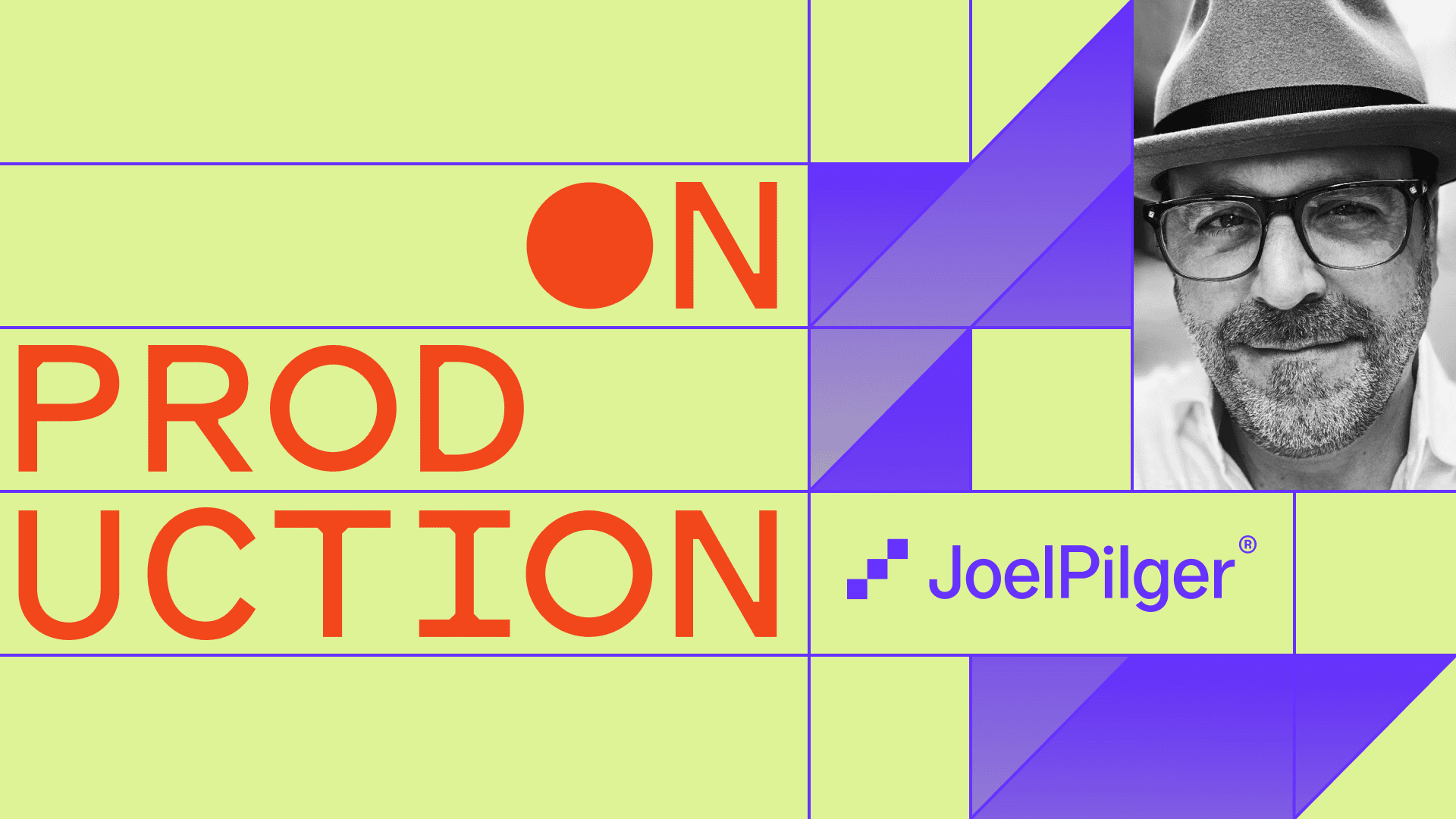
We sit down with creative entrepreneur and studio advisor Joel Pilger. After running Impossible Pictures for two decades—serving major clients like Disney, Nat Geo, and Ford, Joel now helps creative studios and production companies around the world build sustainable, purpose-driven businesses without compromising their creative identity. In this conversation, he shares what it takes to lead a creative business in today’s landscape of remote teams, tighter margins, AI disruption, and increased competition.
Joel unpacks the most common pitfalls creative studio founders face, especially around sales, marketing, and pricing. He explains why growth doesn’t have to mean dilution, how studios can structure their teams for creative freedom and financial discipline, and why the future belongs to lean, elite, highly specialized teams who know how to deliver at scale. Whether you're running a five-person shop or scaling beyond 20, Joel offers practical insights on navigating the “anxious middle,” setting smart financial guardrails, and focusing on what he calls your "genius."
This episode also dives into how studios can escape commoditization by shifting from order-takers to trusted experts, developing proprietary methods, and building community with both clients and peers.
Welcome to On Production. I'm your host, Cameron Woodward. My guest today is Joel Pilger, longtime creative entrepreneur, studio founder, and now a guiding voice in the world of creative businesses. After leading in possible pictures for 20 years, winning Emmys and working with clients like Discovery, Nat Geo, and Ford, Joel exited the operational side and now focuses on advising and building community with creative studios and production shops around the world. He's been helping founders build purpose-driven, scalable operations without sacrificing their creative vision. And in our conversation, we'll dig into what he sees as the future of studios in today's world of remote teams, brand direct work, high competition, and yes, even AI. Welcome to the show, Joel.
Joel Pilger (00:57.336)
So good to be here, Cameron. Thank you.
Cameron Woodward (00:59.926)
Yeah, great to see you, man. You're no stranger to me. You and I have known each other for a number of years as I've been building Wrapbook. You've had me on various podcasts as well from my side. So it's awesome and an honor to sort of dig into your story and talk about these things today for our audience.
Joel Pilger (01:15.884)
Well, that was a killer intro, very kind. And I'm excited, yeah, to get into the topics that you sort of fed me, because I think there's some really cool stuff to unpack.
Cameron Woodward (01:27.318)
Yeah, I mean, you're really at the forefront of knowing what's on the hearts and minds of producers specifically. Like, can you tell us for our audience sort of the types of studios that you typically work with? Because like you guys, you've been in this space for a long time over like, think like post and motion and these areas, like what kind of studios and businesses do you really spend a lot of time?
Joel Pilger (01:48.536)
So these are mostly studios, production companies, some are creative agencies and other hybrid, but they're all doing what I would call work for hire for clients. So they're doing projects, they're getting paid for projects, they're project-based businesses. But the disciplines like start with motion and animation, but expand into live action, experiential and experience design, music, sound design, that's sort of the center of it. There's a few other people that are on some
interesting fringes, but that's the bulk of it.
Cameron Woodward (02:21.996)
That's awesome. So before really advising and being a shepherd to these types of studios, you spent two decades running impossible pictures. What were some of the biggest lessons you learned about balancing the creative and operational sides of production and maybe help give our listeners an understanding of like impossible pictures sort of life cycle when you were running that business.
Joel Pilger (02:45.582)
Yeah, so it was a thrill to run that studio and we made a pretty cool dent in the world because I grew it to be about 25 people. We hit about five million a year in annual revenue, which for Denver, which is where we were based, was pretty remarkable. And we were doing project-based work for brands directly for some agencies, but mostly entertainment companies and brands. And I had a team of animators, editors, producers,
and other creative directors. And it was a thrill, and I will say this, probably the biggest thing that when people hear about my story is the first seven years that I ran that business, it actually wasn't awesome. Like I was doing great work, I had names like Disney and Universal Studios and Ford on my reel, but behind the scenes, we weren't making a lot of money, I was burning out, and it was in year seven.
that I started to do two things. I started to really grow my network and actually connect with my competitors. Okay, so don't think, you got better clients. Well, yes. But I started to connect with competitors, meaning build community with peers. And number two was I started to get really curious and serious about mastering the business side.
Cameron Woodward (04:06.402)
That's really awesome. With that, what were some of the biggest lessons you learned about maybe balancing the creative and operational sides of production?
Joel Pilger (04:18.198)
Well, I would say one is that we had to dispense with this notion that all that business stuff was somehow unsavory, right? Like I just want to be creative and do my thing because as I started becoming really curious and discovered that running any business and this is true of a creative business, there's these seven areas that we have to master and they're things like sales and marketing and production and
finance, operations, all this stuff. And as I started to master those things and I was then able to delegate them and build a team, like the mastery of the business became the unlock because it is what provided us basically bigger budgets. It provided us sustainability. And it also meant that our work was going to have, it could have impact and reach. So,
The balancing of it really came from understanding the different areas of the business and how they interacted. And frankly, for me as the founder, gaining a basic fundamental understanding and mastery of all of those different areas.
Cameron Woodward (05:35.222)
That's awesome. So Joel, I mean, I think I actually have a similar story before Wrapbook. Like I started a studio, a project-based studio. We would, we would earn revenue based off of working for clients, like many of your clients and studios do. And, you know, an observation I had is that a lot of producers rise through the ranks by being either great at logistics and production or storytelling and that running a studio is a different game. From your experience, what's
the most common or more common business challenges you see studio founders underestimate and how can they get ahead of it before it becomes a crisis.
Joel Pilger (06:15.502)
Well, I mentioned those seven areas, okay? One of those areas is creative. So that's actually where we all start. Like I've got this creative talent gift, right? I'm a great cinematographer or I'm a great animator, whatever. So those seven areas, if I had to pick one, it's really tough. It's hard to pick one because probably the single most difficult one that bites everyone in the ass is sales. Okay, but here's the weird thing about it.
is everybody kind of cringes, right? When I say sales, cause they go, I don't want to sell. But guess what? Marketing is probably even more nowadays. The problem, because if you suck at marketing, you're going to suck at sales. And nowadays you cannot be invisible. And this is the thing that I see so many studios and production companies struggle with is they just are really, they're, they're living in that old myth of, well, if we just produce this awesome
creative work, right? The rest will take care of itself. And I call that the myth of great work. But that doesn't create visibility and it doesn't create opportunity and it doesn't actually generate long-term sustainable, healthy client relationships.
Cameron Woodward (07:31.67)
That actually leads perfectly into the next question I wanted to ask you, which is like, many studios and production companies reach a point where they just, they need to grow. I mean, you even mentioned this in your story, you you're seven years in and just like not growing fast enough to have a sustainable career without burning out. But some people feel like growth can really dilute creative identity, like diminish the secret sauce.
Cameron Woodward (07:57.11)
How do you think production leaders can scale sustainably while staying true to their original purpose?
Joel Pilger (08:05.272)
So this is a really interesting question because I'm gonna actually say I'm a total proponent of growth but very intentional and purposeful growth. And when I say growth, I don't mean necessarily size or scale. That is definitely one way. There's other ways to grow. But that said, I think the answer to your question is making sure that you understand
that as a business owner, you are running a benevolent dictatorship. Because I went through this season and I think a lot of small companies do that as they're bringing on people and they're growing a team, it's like this awesome energy. We're a family and we're doing this together. The truth is it's not going to be a family. And as it grows and evolves,
you maintaining a strong hand on, have a vision, I have a dream, and I am inviting all of these people into this dream with me, both my team, but also my clients, obviously. It's really important because I think a lot of times these business owners get, they kind of get stuck because they want to make everybody happy. They want to keep the clients happy, they want to keep the team happy, and then they wind up
one day waking up and realizing, I just feel like I have 20 or 30 different people telling me to go in 20 or 30 different directions. So it's actually really important all along the way to remember as much as you wanna say, well, it's not about me. It actually is about you and own it.
Cameron Woodward (09:53.164)
That's awesome. so let me ask you this, Joel, the creative vision that studio operators have had for their businesses is changing a lot because the industry itself is changing fast. So everything from like smaller specialized teams, remote workflows. know that many of your studios are even international. They're in Europe, brand direct clients, AI.
How is the definition of studio or brand studio evolving and like, what does the studio of the future look like from your perspective?
Joel Pilger (10:30.806)
Okay. Such a cool question. I think about this all the time. One thing I'll say is my definition of studio is a creative organization that makes a big promise and it doesn't fail. It never fails to deliver. So the difference between like I'm a freelancer operating under a name is yeah, but if the freelancer catches COVID your project is in the ditch, right? And you kind of know this. Whereas a studio is
No, you pay us and you pay a premium because we don't fail. We deliver. So that's sort of the operating definition. What's changing I see, and this is the thing that kind of keeps me and a lot of people up at night, is there's this thing that I call the anxious middle, which is when you look at a lot of shops out there today, I would not want to be running a shop that is about
Let's call the range maybe between five and 15 people. This used to be a great business model. You could make good money and do cool work and be happy here for a decade or two. But what's changing now is at that scale, you still have to generate several million dollars a year. But guess what? You can't even at that size afford a full-time killer salesperson.
You can't afford a full-time dedicated marketing expert. You cannot afford a full-time operations person. You certainly can't afford a full-time financial, like CFO type person. But you have the burden where you're competing against shops that are 20 and 30 and 40 people that do have all those resources. And they're just going to smoke you. And here comes AI. So now, in a way, the bottom is kind of creeping up into these middle
size shop. So what I'm finding is a lot of those anxious middle shops are actually scaling down. They're saying, you know what, we're going to be a team of two or three or four absolute elite, super experienced, super connected, extremely savvy people that can walk into a boardroom and understand and pitch a solution to a big problem for a big round number that's probably six or maybe even seven figures.
Joel Pilger (12:57.816)
but it's a small company. And then they hire other studios, maybe overseas. They of course hire lots of freelancers. And I call this model the wolves model, if you will. And a few years ago, it wasn't really viable. And now I'm seeing it become very viable. So the thought is don't hang out in that middle ground. Like kind of be intentionally small and incredibly elite and pro.
and powerful or if you grow to beyond 15 and 20, you enjoy all of the benefits of scale and flexibility at that size.
Cameron Woodward (13:39.53)
Yeah, Joel, I mean, that's a really interesting and compelling insight into like what's happening in the middle and how, you know, smaller elite talent can still thrive in this age. What is it looking like for the more scaled studios with these new capabilities coming online?
Joel Pilger (13:56.963)
Well, I'm finding that some of the, again, I'll call them larger studios, which I'm just going to say is call it 20 people or above, which doesn't sound very big, but in today's market, those are the larger ones. They, I would say it's interesting that first of all, the opportunities for entry level and junior talent, unfortunately are not great. And this is a big concern because of
students and the younger generation that are coming into the industry, they're competing with AI and they're coming out maybe of schools and so forth, not really prepared. Those larger studios, I don't really see them hiring entry level and junior talent because it's just too risky. those types of studios are hiring their competitor in another country and
using that as their flexible model, right? Like I'm going to hire a studio in Buenos Aires, I'm going to hire a studio in Mexico or something because I can take advantage of that capacity and they have the expertise, they're just as good as the people here stateside, right? But there's cost efficiencies and flexibilities and so forth. And this is almost like the new way we're working. And then when, course, when we throw AI into the mix,
it gets really interesting because AI gives us certain capabilities that we just didn't have before. there's, I don't know, the narrative on AI is very much shifting already and we can unpack that if we decide to, but I'll leave it at that for now.
Cameron Woodward (15:38.914)
That's awesome. I'm gonna pivot back a little bit. So I mean, we were chatting a little bit about the tension between creative freedom and business discipline, really hiring out across these like core seven areas that you've sort of defined. Let's keep unpacking that. How do you advise producers and studio leaders to structure their operations without stifling their creativity or their vision or the type of work that they do that...
sort of has gotten them to the point where they're in a position to make these types of trade-offs, given the tensions.
Joel Pilger (16:16.622)
Okay, this is gonna be a kind of a weird answer, so you're just gonna have to hang with me on this. The big sort of magic trick that I've seen that works so well, and I only barely did this when I was running Impossible. I've since seen this develop and have continued to refine it. It's this basic idea that when money comes into your company, you split it. Meaning you take about half the money,
and you call that, this is the company cost. I'm gonna keep this money to run the company. And then the other half, roughly, we're gonna call that the creative costs. And what I do is I give all the creative costs, all that money to my producers. And the big word here is guardrails.
I know this sounds weird, what wasn't the question about creativity? But here's, here's the secret. The secret is if I give a producer a pile of money and say, you have a puzzle to solve called make the client happy, get the most awesome result out of the team, make sure the team is happy and spend all that money. Notice I did not say spend as little as possible. Okay. That's nonsensical.
You cannot make a project as great as possible and spend as little as possible. That will drive your producers insane and create tons of misery. So what you do is you create these guardrails. Now part of the secret here is the company costs. That's where the profit is. So I've already taken the profit away from the producer so she can't even spend it. I'm just saying here's all the money you need. Spend every dollar.
I don't care if you spend every dollar. In fact, I kind of want you to because that will make the creative better. The team will be happier. The client will be happier. And you know what? Producers love playing this game. They're like, just tell me what it means to win. And if I can create a formula and allocate resources and manage the client and figure out, you know, keep them out of scope creep and all these things, everybody is happier. And then as a business owner,
Joel Pilger (18:32.492)
I'm sleeping like a baby at night because I've already taken profit out. And I know I have the money I need to run my company. I know I have profit. And then my team is over there crushing it because producers get together with creatives. You've ever heard this old quote from Orson Welles that says, the absence of limitations is the enemy of art.
Joel Pilger (19:00.662)
It's this idea that as creatives and I'm putting producers in there with this group that when we give them limitations, boundaries, guardrails, they flourish. Like go to a producer and say, hey, you have 5 % less money or 5 % less time. Can you still get the project done? Man, their brains, they're genius at this. They come back and go, okay, I'm really pissed that you took away that extra five grand, but here's how we're gonna do it.
It's that kind of thinking multiplied times thousands and thousands of decisions over the course of a year that makes a really strong and healthy company. And by the way, produces really great creative work, because that was the question.
Cameron Woodward (19:44.788)
Yeah, I mean, it was really just about the discipline. And it's like, do the discipline upfront so that you can sort of give the illusion or the feeling of not being so disciplined and be as creative as you want with the given canvas and material.
Joel Pilger (19:57.933)
Yeah, yeah, it's so it's just so interesting how it is an operational thing that sounds very unsexy and doesn't sound like we're talking about the creative work at all. But what we're really doing is we're kind of giving we're putting all the kids on the playground and we're saying go nuts. Here are all the toys and here's the swing sets. But by the way, there's a fence around this because we're actually on top of a skyscraper. So I don't want you going over the edge because that's that's called death.
But if I can let you go nuts within these boundaries, we're gonna create something awesome.
Cameron Woodward (20:34.508)
Did you always do that at Impossible Pictures or did that take time for you all to figure out?
Joel Pilger (20:39.666)
I, it's more like I spent probably 15 years not doing that and got away with it for various reasons. It was towards the end that I started waking up to there's a better way to do this because for years what I did was I ran my company based off of rates. Like we had a rate card, which is the price you charge a client, right? You multiply that times all your hours and there's your price. What I learned was
actually it's way better to manage costs. know, price and costs are so totally different things. And of course I'm a big proponent of you give a client a big round number that's called a price and that they don't need to know your costs. And that's a whole another discussion, but it was, it's been actually over the last 11 years that I've been refining and retooling. And I just recently created a custom GPT to implement this method.
right, that I call studio flight deck of, of managing production and finance this way. And it's really fun. It's fun seeing it work out in the real world and really help people.
Cameron Woodward (21:47.958)
That's awesome, Joel. So, you know, when you were running Impossible Pictures, I mean, you all did work with major brands. I mean, you had mentioned Disney earlier, but like I've done my research, things like Pepsi and Ford and others. And I think we've talked about some of the creative elements, the operational elements of the studio itself. You chatted about marketing and sales, but let's say you're growing, you've got clients. What was your approach or is your approach or your suggested approach to building
long-term client relationships, especially in an era of short-term projects and super tight margins. I had heard a quotation once that if your business is not retaining customers, it's not a business, it's a hobby. So how do you retain your relationships? How did you make sure that you had retention in the era of one-off projects in a world where everyone's competing on more?
Joel Pilger (22:50.028)
Yeah, well, first of all, and man, don't want to be like, this is a hot take here, okay? But anybody that's competing on margin, I have to gently say you are replaceable. Like the reason people get studios to triple bid and compete on things like margin is because you are highly replaceable. You have to solve that.
How do we solve that, okay, is the question. The way we solve that and thereby create more retention, recurring revenue, long-term relationships with clients, I call it the journey of from order-taker to expert. Because the order-taker is the one that you don't actually respect. They bend over and they're service-oriented and they're gonna help no matter what and we'll meet that price. And you know what, as months and...
projects go by and turns into years, you don't really respect them and you discard them because they're quote, just the vendor. And I know I'm triggering people here because just know I live this life. But if you become the expert, you start to develop an offering that goes way beyond the replaceable commodities of things like what we do live action and we do editing and whatever. Those are just services. When you roll those into expertise,
And examples are things like, we are the experts at launching products, for example. Like, we help tech companies launch SaaS products. we just happen to use video filmmaking, whatever, as our tool of choice. That's an expertise. That's way more valuable. Those are much bigger budgets. Those are much larger round numbers. And that client
knows these people are solving our problem, not just servicing a project. And they're going to come back to you again and again, because guess what? The problems are not going away. The projects do. The projects, they're done. They're gone. But if you're on the receiving end of projects where clients come to you and go, we've got a project. Can you give us a bid? That's a warning flag that you are on your way to going out of business.
Joel Pilger (25:16.386)
Maybe not today, maybe not tomorrow, but you're on your way out of business. And I've just seen this happen over decades. So this is like history just repeating itself. And now with AI, the clients are going, gosh, maybe this project could just be done with AI. And you know what? Sometimes the answer is yes.
Cameron Woodward (25:36.385)
Wow, that is a good point. I mean, think that actually even ties to your earlier point of just like, how should a studio think about the marketing, the sales side of what they're doing rather than competing as a commodity? Like you gave the example of like, hey, like we're going to be the best studio at launching your SaaS product. But like you could think of 10,000 different enterprise focus areas that you could just become the
dominant studio over. I had an idea, you know, there's been these name and likeness changes, these rules for these athletes. And it's like, is there anybody out there right now being like, we just do name and likeness. That's it. In regional areas, global areas, like that's what we do. I'm like, that's a $20 million studio right there, possibly.
Joel Pilger (26:23.896)
I'll give you an example. I have a client. So I work with some studios and production companies one on one. And I have this one client in Uruguay of all places. And you know what they are the experts at? Mascots. They are, they are, they have created a method called the mascot of the future. And guess who they're going to go talk to? They're going to go talk to brands, sports companies, you know, you name it, pharmaceutical. Like if you have that
Joel Pilger (26:53.566)
abstract product and you need a character to represent it in a fun touchy feely whatever way we are the experts at that and I just know in my bones they're gonna crush it because they're so clear like the value the problem they're solving is quite sophisticated and quite challenging but if I was
I don't know, the new emerging sports team or maybe I'm the influencer and I say, you know what, I can't be in 10 places all the time. Can we create an avatar of me using AI? Maybe I'm the studio that says, that's what we do, Mr. Mrs. Influencer. We create the digital avatar of you. We build the whole GPT and the backend and you license the character that we designed for you, blah, blah, blah. Like I know people are like, what?
This is increasingly the game I think that we're playing if we want to run successful businesses in this world.
Cameron Woodward (27:56.458)
It's interesting, it's like every studio.
always has its own special sauce, its own secret sauce. And it's interesting, like in the world that we're marching into, like this, makes a lot of sense to me. You know, I mean, we were just chatting about how like, if you're competing on a commodity basis, maybe around speed or style, like probably you're on the path towards oblivion. And part of that though, I think is like the struggle that operators are.
feeling when they're building these businesses around their profitability, their pricing. I mean, I'm curious, what advice do you give studios on building a healthy financial foundation for production?
Joel Pilger (28:38.722)
Well, it would be that first of all, that sort of split your finances into the company costs and the creative costs. And there's a simple method there, which I'm happy to share that with anyone who reaches out. The other thing I would say is don't sell inputs. Don't sell commodities, don't sell services, don't have a rate card, don't price that way. Like providing breakdowns and God bless the AICP, but I do not like that bid form. And there's all sorts of right.
issues there because we have to be running a financial system where we're actually selling outputs and outcomes and results. And sometimes this is just deliverable. So it's not fancy, right? Like if you produce a 30 second commercial for $100,000, okay, you just sold an outcome called here's your 30 second commercial. But that pivot is actually so healthy compared to the triple bidding and let's look at all the rates and let's, you know,
pick everything apart, where you just lose control and you also lose all of the mystery of what it is that you do. And I don't know if you've ever heard this old phrase, I wish I knew the source of it, of where there's mystery, there's margin. And it's that thought of what you do is so much more amazing and brilliant than can be expressed on a series of lines and rates. And
Once you start realizing, right, it's the combination of all these things rolling up plus the risk. The studios and production companies I know that charge twice, three, four, five times as much as what everybody else wishes they charged. It's because they understand one, how to solve a big problem and then number two, they know how to mitigate risk. They know how
scary and crazy this is for their clients. Like we have to hit this air date or we, you know, we don't know how we're going to manage, right? This multi-day shoot and the helicopter and the insurance for the guy that's going to jump out of the whatever. Like the more that you can de-risk those size projects and problems for your clients, you're going to be around for a while because those, again, those problems are not going, going away. And let me throw in there.
Joel Pilger (31:04.706)
You start using AI, guess what? AI is like half the value you sell is we've taken the risk out of it. Because when you're working with somebody like Disney or whatever, they're like, whoa, whoa, whoa, whoa, whoa. You ain't going to be using no AI on my project. But if you can solve that, that is incredibly valuable.
Cameron Woodward (31:25.985)
I think framing it broadly as risk makes a lot of sense because between shifts in technology or audience expectations or budgets, production is constantly evolving and that's just a nice way of saying there are risks. To that end, I'm curious, I you've been in the game a long time, Joel, and you've really seen big successes, people fail, you've seen people kind of chug along for decades without ever really thriving, you've seen it all.
And you've also seen the world change around our industry and how creatives are navigating that. I'm curious, what are the biggest changes you've seen in how studios need to operate today? And I think you've spoken a lot about this already versus 10 years ago.
Joel Pilger (32:12.994)
Right. I mean, I think in broad brushstrokes, I would say a few things. One, we got through the transition from like way back in the day from analog to digital, and we got through the transition called, here's the internet. And then we got through the transition called there's here's mobile. Okay. Now, each time we go through one of these seismic shifts, right, it's this word that I love that was invented by Buckminster Fuller.
who coined this phrase called ephemeralization. And I feel like a broken record when I talk about this, but I swear it's just, it's such a, it's a horrible and beautiful concept all at once. Cause the definition goes like this. Ephemeralization is the ability to do more and more with less and less until you can eventually do everything with nothing. And when I got exposed to that quote, thank you Buck, I was at a
conference in Milan when I heard that and I about fell out of my chair. I realized, wait a minute, that was happening back in the nineties. And then it happened in the early two thousands and it happened in the late two thousands and so on and so on and so on. So this is actually totally natural and totally normal. And guess what? It still sucks. It still bites because we as human beings, we like comfort, safety, predictability, security.
The shifts now are things like the democratization, right, of all the tools. Like now, with AI, course, everybody has access to such incredibly powerful tools. You can also get all of the knowledge. You don't have to go to school or go work at a studio for 10 years. You can just learn it off of YouTube. And these sorts of changes, it basically just means we have to continue to, I call it escape the race to the bottom.
How we do that, I don't think people think about this much. We do this intuitively. But if we look at the pattern, it is what are all of the commodities and the services that maybe I had or have been using, and this could be my craft, it could be my software, it could be my computers, whatever. But we combine these things to create something more valuable, such as animation. But guess what? When we combine multiple services into something, we create
Joel Pilger (34:38.21)
this thing, we'll call it product launches for SaaS firms. Well, that's an expertise. Now it gets interesting because we start to go, so if we're going to escape this race to the bottom, we have to continually keep finding new forms of value by merging what we've got. So to take all these commodities and these services and wrap them into new things, yes, and maybe we plug AI into that and we strategy and we plug copywriting and we plug influencers.
and roll that into something new, what is that? I don't know, but whatever it is, it's probably really valuable and it's something the world needs. And guess what? They can only come to you because you invented it. And maybe there's even a trademarked, right, method there, a proprietary technology. Maybe there's copyrights or the influencer, right? That's a copyrighted thing. So you can sort of see this idea of always going against gravity by
creating new forms of value. This is, I know, highly conceptual, but this, I think, is the way to, in a sense, future-proof not only our businesses, but our careers.
Cameron Woodward (35:50.848)
I mean, I think what's interesting, Joel, is that you talk about this in different words sometimes. Like I've seen you describe building a business on purpose. So then to that end with what you just said, how do you see that successfully translate into leadership, especially when managing teams of producers and artists and freelancers under the pressure of, I think what you're describing is evolution, right? Like, sure, we'd love to be comfortable and get fat.
Cameron Woodward (36:20.565)
but we're under pressure, we're under the pressures of evolution and of change and of progress. So how do we translate the philosophy into leadership?
Joel Pilger (36:29.902)
Well, I think that is the journey, right? Like if you're a creative entrepreneur and you're running a company, you may not know it. You probably know it now that you signed up for a never ending lifelong school. You never get to drop out of school. You never get to stop learning and growing. And for anybody that's on this path, I would just encourage them to, you know, get okay with that, right? What they say, be, get comfortable with being uncomfortable.
And this is part of what it means to be a leader is you are the one running into the building, the burning building. You are the one always evolving. You're always a step ahead. You're always curious and your team is going to follow you. They're going to emulate you. They're going to, you know, go into battle with you. The other piece of it though, I would say is for the owner that feels overwhelmed, the, the unlock,
is to realize you actually do have a core few things that you do so brilliantly. I call it your genius. Some people call it your superpower, right? These kinds of terms. And what I would say is your journey going forward is an ever increasing focus on that genius and delegating everything else to that amazing team around you. Because there's no way
you are going to master all these different areas and run all of them. There's just no, you don't have seven brains in your head. So this is the journey of nonstop evolution and growth, but also a commitment to find your genius and focus on it and delegate everything else. This surprisingly makes so much value show up in the world because you hire a team where everyone is doing their part, focused on their genius.
And it's like this flywheel of like, wow, I've built this team, whether those are employees or, you know, automations or whatever, the, however you build that, it creates something enormously valuable and obviously dynamic and evolving.
Cameron Woodward (38:44.449)
That's incredible, Joel. And in some ways, you might have even answered my next question with that bit of wisdom. But for an up and coming producer or somebody who is thinking about building a brand studio or a project-based studio, and they want to build something of their own, what's one piece of advice you wish someone had given you when you started Impossible Pictures? And the world has changed a lot. think there's a lot of insights, even in the last
30, 40 minutes of our discussion, but what's the first step or what's something that you think would have really helped you out and made you maybe compound faster?
Joel Pilger (39:22.572)
Yeah, okay, so I know you asked me the one thing. I'm actually gonna give it two, but we've kind of talked about them a little bit. The one thing is to start viewing business as the most creative act that you will ever undertake. So think of your company, your business as the most interesting and the most creative act you can take on.
That's a cool moment when you start to realize, wait a minute, I work in a project-based business and I love doing these things called projects, but there's another project that's much more fantastic and interesting and trust me, never-ending, called my business, right? So this mastering the art of the business as I call it. And then really the part two is a bit of a tack on, but it's also just as essential. And it's this cheesy phrase I hear people talk about called your, your,
Your network is your net worth. Or your net worth is your network. I forget the order. But this idea, it's really difficult to emphasize it enough that all the answers that you're seeking and all the problems you're trying to solve, so is everyone else. So the shortcut is get into community. Yes, of course, travel and connect with clients.
get in front of the real problems, get out there, huge. The other piece of it is build community with your peers, right? So I'm thinking of Wrapbook. Obviously you guys have such an incredible base of users and people that if you're not hanging out with those people, and yes, these are your competitors, but trust me, I run a community of several hundred founders. What we are sharing and solving and figuring out in real time, it's so much faster.
Like I look at what I'm building now and I think, damn it, if I had built this 30 years ago when I started Impossible, I mean, you know, who knows what would have been possible?
Cameron Woodward (41:29.461)
That's awesome. Well, Joel, thank you so much for joining me on On Production. I think what's interesting is that I've had the opportunity to have so many excellent conversations in public, everything from indie film producers to film commissioners to finance execs all across the wild west of this creative industry. And I think there's actually a lot of wisdom and interesting nuggets that are relevant across the board, because like whether you're
doing a project for yourself and like you're monetizing it through a different system or whether you're in the brand studio business, there's just a lot of wisdom in these ideas of getting smart about what the future is bringing, evolving with the times and all of it. So thank you so much for joining us. This has been really a wonderful conversation.
Joel Pilger (42:18.854)
my gosh, I thoroughly enjoyed it. So thank you so much.
Cameron Woodward (42:22.58)
Awesome job. Bye.
What is a creative agency? Discover what these companies can provide for clients, such as advertising and digital services.



Get pricing, see a product demo, and find out how much easier payroll can be.
