
Join the Crew
Get the best resources for producers delivered to your mailbox

Get the best resources for producers delivered to your mailbox
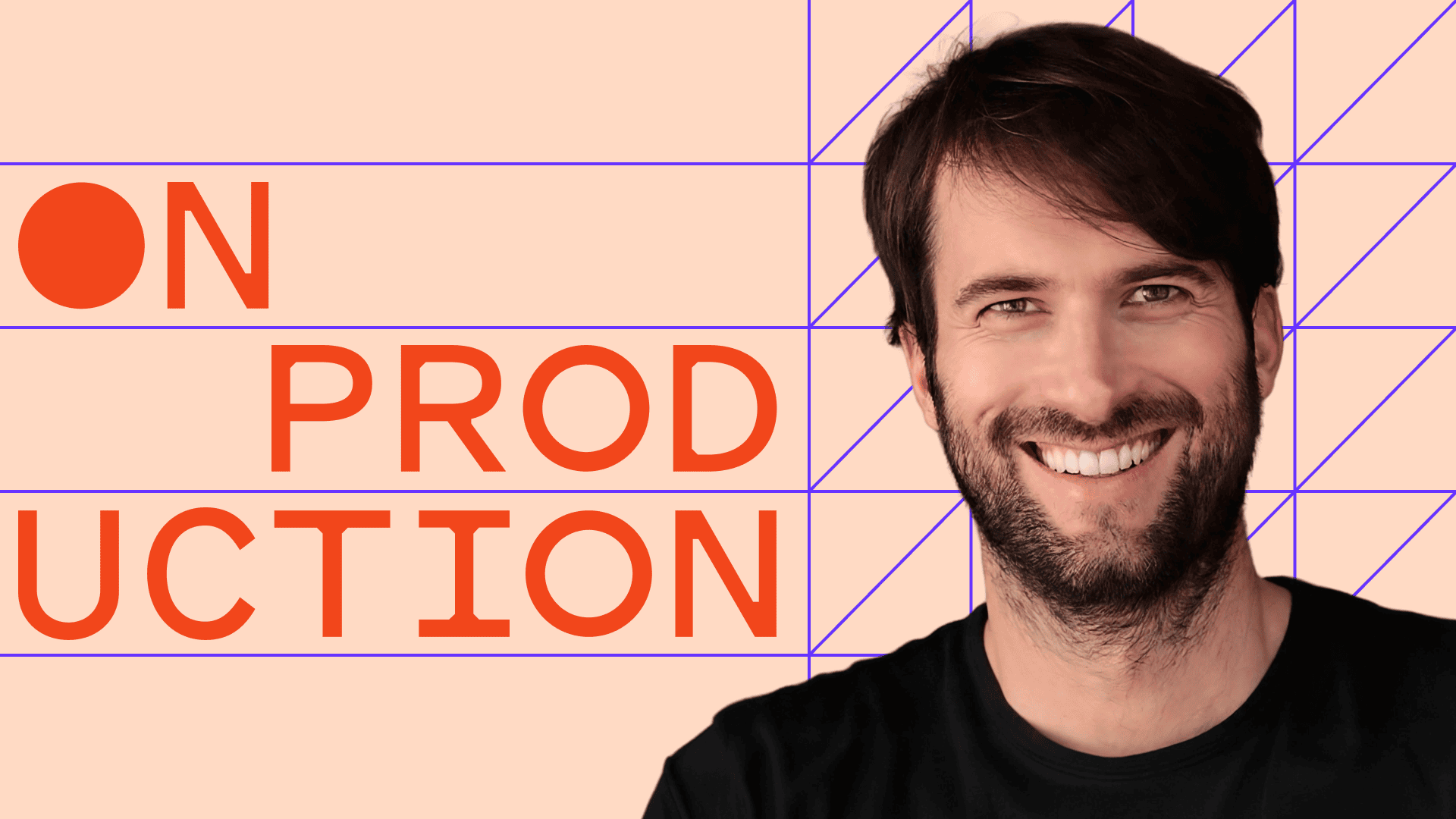
Cameron sits down with Tobias Queisser, CEO and co-founder of The Cinelytic Group, to explore how AI is changing decision-making across the entire content lifecycle from development and packaging to marketing, distribution, and monetization.
Tobias brings a unique vantage point to this conversation. Before co-founding The Cinelytic Group, he spent a decade as an investment banker advising on complex international M&A deals, co-founded a global investment fund in London, founded Arctic Pictures Limited as an international film production company, and co-founded Cosmo Media Labs, producing TV shows, games, and Web3-based brand experiences. That cross-industry background—finance, technology, and entertainment—is exactly what drove him to build the tools he felt the industry was missing.
While much of the industry conversation around AI focuses on content creation, Tobias argues that some of the biggest opportunities sit on the business side. Drawing on his M&A background, he explains why filmmaking has historically lacked the analytical tools common in other industries, and how forecasting models, audience intelligence, and decision-support systems can help producers better understand risk before costs lock in. Cinelytic's proprietary models have achieved 97% accuracy on early 2026 domestic box office forecasts and are used to track streaming performance, franchise trends, and predictive signals for sequel success across major releases.
The conversation covers everything from script evaluation and talent packaging to release strategy, windowing, marketing analytics, and audience sentiment, including a look at SocialSense360, The Cinelytic Group's real-time tool for tracking audience reactions to trailers and campaign content. Tobias also discusses how forecasting models should be used—not as a replacement for creative judgment, but as a way to test assumptions, explore scenarios, and bring more clarity to the business decisions surrounding a project.
Please note: The views and opinions expressed by guests on this podcast are solely their own and do not reflect the views of Wrapbook, its employees, or affiliates.
Cameron Woodward (00:01.699)
Welcome back to On Production. Today, I'm digging into how AI is starting to shape decisions across the full content lifecycle, not just should we green light this, but rather how projects get packaged, planned, positioned, marketed, released, and monetized. For producers and finance teams, the interesting question isn't whether AI can replace taste. It's whether it can make assumptions visible earlier, really help you pressure test, risk faster, and help
teams align around a plan before costs lock in. My guest today is Queisser, who is CEO and co-founder of the Cinelytic Group. Cinelytic builds an AI suite used by studios and content companies to support their decisions from everything from script evaluation and green light analysis through forecasting, marketing analytics, and write strategy. And they have tools like
Social Sense 360 for real-time audience reaction to trailers and campaigns. Tobias, great to have you here and really excited to sort of talk about what you're seeing as you're bringing these products to market. I'm also really curious to learn about how you see the wave of these hyperscalers informing what your product can do. Cause I know that the market has had these types of analytical lenses to production for quite a while. So I'm curious how it's changing, but
Overall, just really great to have you here. Thanks for joining me.
Tobias (01:29.74)
No, thanks for having me. And I'm grateful to have an opportunity to talk about AI in such an, I call it a hot potato. It's been, it's a topic where everybody has a very strong opinion, but only very few people, especially in the tech industry have an educator, only very few have an educated opinion, I feel. And so it's great to at least talk about how we apply it and shed some light on what we do. yeah.
so now as you said, we call ourselves, we're the Cinelytic Group, we have five platform, but that journey started in 2016 with CineLytic itself, which is the intelligence platform that we built and launched. And the pain point was, I spent, I was always very interested in film. was like a filmmaker at my early ages, but then I ended up in finance, studied finance and was an M&A for 10 years where it's all about assessing.
companies, evaluating management teams. was a lot of very analytical and sort of a process driven workflow. And then when I entered the entertainment industry, which was always sort of my, you know, something I always had in my heart that I wanted to do eventually after I was able to exit, I realized that a lot of tools that are very available in other industries are not available. And the problem that what happened, what that means for the industry is that
the business side of film was not as much as developed as it could be in that age. I felt like when you go on a film set, you see cameras that are super high tech, see drones, see amazing VFX and technology was always out of the main driver for storytelling over the last hundred years from silent film to color, mean, to VFX and so on. But when you looked into the business side of film, it was very basic. Like information sharing was a no-no. Like nobody should know what the budget is and like,
Like anything besides box office was like obscure and you know, and back then, especially even now, mean, home video is one of the largest drivers and nobody could tell you early on what your film is gonna make in home video. So to cut a long story short, there were numbers that I looked at when I came in industry, which were shocking. So only 3 % of indie films returned to investment or broke even their budget. 3%, that's way worse than venture capital. And then 80 % of films didn't make it to a screen. Meaning they got produced.
build it and they'll come kind of motto without much analytics. And then when, when, when the product, which I call a product, it is art, but in the end, if you want to sell tickets and you need to, or, or get somebody to watch it on the streamer, you need it. is, it is a product and it is a business. And, know, you need to understand the end market when you think of the initial idea, if you don't do that, this is what never happened. Then these numbers become reality, which were shocking to me when I first.
Tobias (04:36.802)
came, you 80 % of films never, you know, going anywhere, indie films, studios different, of course. And that meant, you know, the immense amount of capital waste that then meant you always have to find somebody. They always said the system of dumb money, they always have to find somebody new that could come in, they could, you know, sway them in with some, you know, filmmaking and actors and whatever, whatever not. And then of course, mostly they, everybody that came in stayed the first or only one time financier.
And so I saw a huge opportunity to improve the business side two ways, give better and more accurate information early on in the process that you can basically model out and understand the value of your film when you think about the idea, when you have a script and package it with an actor or director to understand, how can this play out? Is that something for theatrical or streaming? What should be the right budget? Can I sell this internationally?
and then even go into much greater details and really understand from the early on, this is my business case for the film next to the creative side. The creative side is where I used to be a producer back then is something you always start with. The script, is it a good script? Yes, let's try to find a director and an actor for it. But then it's key to understand the business side. And right now, at that point, it was very basic. was literally three creative comms.
giving people orientation on how it's going to end up. And of course there was weight up to missing the subjective. So it never worked out. And so what we built with Cinelytic is basically a tool that you can in minutes, inform yourself and your team about the potential and the economic value of your film. And then also use that information when you set up your film, negotiate with other third parties, such as sales agents or distributors. So it's really a very useful tool to help you be financially, economically successful.
when making film or TV.
Cameron Woodward (06:30.253)
I'm curious before we move on, like you started the business in 2016, you said, there's obviously been an unbelievable amount of innovation in terms of machine learning. We see this in terms of generative models, but what's actually more impressive is the backend compute that makes all different types of things possible. look at like tools like Alpha Fold from DeepMind. Have you seen more fidelity and tighteroutputs from your models since you you've had access probably to APIs from open AI or anthropic in terms of the use cases within your platform. I guess in simple terms, like have you seen the, the, level of improvement based off of the data that your system has already been collecting for years and years.
Tobias (07:19.372)
You know, I think when you talk about, when we talk about AI technology, they're very different AI technologies. So when you talk LLM, Anthropic Open AI, it's great for what we build for with these technologies as additional tools like script analytics or IP management. So we brought in other capabilities. So as you mentioned, pain points before. So ICR is a company as a, we really only, we exist to address pain point in the entertainment industry that exists with technology.
we evolve with technologies. We constantly assess what's the pain point? Is there technology that we can use to address that pain point? Yes, great. So that's why we started with Cinelytic, because it's machine learning based. So when you do financial forecasting, when it's number crunching, machine learning that we develop ourselves, actually, it's our own technology, this is still the best way that we think we can achieve accurate results around 85 % plus. The other AI technologies, especially around LLMs that came
very handy, but more in other use cases, I would say, rather than the pure financial forecasting. But we, of course, update our models. We're releasing a major update now in two weeks, which we worked on for a year. So we have had several large upgrades to our model where we really redone it and adjusted it to the market environment. But overall, I think what technology enabled us is to build various other tools.
Because when we became sort of the trusted, so Cinelytic launched, we were lucky enough to get good traction in the world, Studio Worlds became a trusted technology provider, which is not always easy in entertainment industry because nobody, there wasn't really a drive to improve things. People were happy where things were going, only then the pressure that came onto the business by lower revenues and higher cost the last year and consolidation, that forced people to think a bit more about how can we be more productive? So then technology became.
there was more focus in adopting technology because in the end, when I came in, people were literally like, la la la, they didn't want to hear about it. They thought last one years, everything went fine. So why should I change things? But one pain, one pain point that I'm what one people, and I want to address maybe the script, you know, people ask us, Hey, can you help us with something? A technology can summarize scripts. And before the LLMs there was NLP. So we worked with NLP, tried to build tools.
And it didn't work well. It wasn't just not good enough that we would ever launch it. Then once OpenAI and Anthropic launched LLM models, then that became a viable technology to build tools. But so to answer your question, we use these technologies to build around, for until now, our own proprietary machine learning technology that we upgraded, of course, over the year, that is still sort of the main and sort of best solution for predictive models.
Cameron Woodward (10:09.249)
Interesting. So let me ask you this, when these tools are adopted by an indie film, a mini major, a studio, what in your view is the real change? I mean, you've been able to see this since 2016. Is it just faster analysis? Is it fewer bad bets? How do you measure impact without reducing everything to the model was right?
Tobias (10:33.822)
it's really sort of, you know, it's a different workflow. you know, mean, Cinelytic addresses a very concrete problem, say in the studio, where oftentimes there's a lot of, there's a bottleneck for analysis. I mean, in the old days, one could say people just wanted to go after the, with their gut, right? And when relighting a movie and then, you know, studio guts got replaced every four years, it was like musical chairs.
Now it's a little bit more, I you know, I think now everybody has to be a bit smarter and figure out what's the right way of using technology to improve workflow, productivity, better inform ourselves while also making sure the creative side, which drives everything is protected or is, is you empower the creative side. And so this is the crux. It's like, how do you position yourself?
Leaving the creatives do their thing because they you know a strong director We always say directors IP a strong director with the right cast Driving creative is the key to everything because you need to make a good film That's where it all starts. But what we then come in is with our tools is helping with productivity something that used to be like
can you run these numbers and somebody comes back to three days later is now I'll do it myself in five minutes in a conference room where we can run real time scenarios, changing actors, directors, changing elements. What happens if we go early stage with this actor versus this? Or in your old days workflow in the analytics side was very bottlenecked because it was, please, there's a project. Let's run it. Our tools bring everything in the real time. So you can now.
forecast scenarios, different scenarios with different elements in real time. it's a very, so A, it's more accurate, yes, because on the accuracy side, the key is we're not relying on comps. Even if you use five, 10, 15 comps, it's very subjective. And comps in the past always lets you do, I see this film, I like to do the same. Like I have one particular outcome that I wanna kind of replicate.
With the tools like our, or the tools like our, can really, our predictive model goes around, uses like 19 attributes to drive numbers. That includes the budget, the genre, actor, director, writer, producer, very important. The actor is responsible for, let's say, or the actors for the main part of making sure the performances are good, so people enjoy watching it. Director, know, producer's responsible for the production.
writer is ensuring that this is a good story. so these 19 attributes that we use in our predictive model that you can input and then run in a minute or even 10 seconds allow you then to run more accurate forecasts in real time. And this is kind of the benefit. Yes, it's accuracy. Yes, it's very specific to a film. It's not replicating a film by choosing a few comps. It's putting the ingredients for your film into this and showing you
scenarios of how this can play out and then you can start iterating. So the workflow is very different. It just changes everything. It changes not only accuracy workflow, also how you think about film, right? It really gives you a tool that allows you to step away from paper maps like we used to do when we navigate in the car. We had to go through pages to Google Maps or Waze where you can interactively just change route and auto adopt and you can see the best route when you arrive. And it's about really navigating the industry with better tools.
Cameron Woodward (14:39.417)
So want to make it practical. So if a producer brings a script or a package into a system like yours, what are the first inputs that matter most? And then what can AI reliably output at the early stage?
Tobias (14:52.846)
Our tool is basically, it's going to take you through the whole process of running and thinking about your project. It of forces you to use a very methodical approach to assessing your projects. First is the talent analytics tool that allows you to figure out sort of how certain talent can drive value internationally. We analyze our talent by, you know, by country, genre and country, genre and media.
So just starting with talent, how valuable are they? Are they driving numbers for streaming or potentially for box office? You can understand that. And of course, there's different levels of talent for different levels of budgets, right? So you start to understand your talent in a very good way, the value, economic value. Then there's a comps tool, you figure out sort of, so that's where you go with the old school, but we created a very modern approach to it that you automatically understand. So how did similar films perform specifically in the past, which distributors do a good job? So where am I sitting ballpark? And then you take into the predictive model, which is the third tool. You can also jump straight there if you want, but I always think that going through the motions, spending five minutes here, five minutes here really educates you and you see the whole picture slowly because film is still a very complex.
Forecasting film is very complex and the more you understand the whole picture, the better. The predictive model that is really the producer literally types in, have a $2 million female protagonist drama based on a book. have these people attached. I might speak to Bleecker or Neon or maybe 500 theaters, click forecast and you see the result.
the most probable box office, home video, digital, physical, and TV, pay TV and free TV outcome, domestic, international. Then you can also go into pro territories if you think about selling it internationally. And so this gives you, and now you can change things. What happens if I change the budget or change the actor or maybe the release strategy. So early on you get a real good understanding of how the business of this film, the business case of film could work out.
Tobias (16:55.19)
And then there's a financial model at the end where the producer has two forecasts, one from coms, one from the predictive. So now you can really run a waterfall and understand, okay, I'm the producer. I might speak to a financier, A, now I have a much better way to pitch to that financier with the realistic business case that might convince smart money to come on board. But also when I negotiate with sales agents or distributors or whoever I need to negotiate to make this film happen.
I now have much more information, so I'm armed with more knowledge to bring the best outcome, not only for me, but also for the film and also for the financier. So this is kind of where this tool helps the producer immediately. It's just understanding how this can work out in this current environment.
Cameron Woodward (17:39.887)
Do you have an example of a packaging trade-off where the data clarifies the decision but doesn't decide it?
Tobias (17:49.315)
Yeah, it always never decides packaging, I would say. It's not a tool that's built for you building a film or making a film by using actors based on data. We always are very clear that you need to find a director that's talented, that you believe in, and then with together, that creative takes lead. You have a script, find the director, find the actor, but then once you have a few ideas,
You can see what the financial side says, but in the end, it's always the creative and making sure that the creative package in your opinion as a producer, that's your job, will make a good film. Right. And then what our data does is it helps you guide on the financial side or our forecast. Cause we are, we're, we're in.
Cameron Woodward (18:35.569)
It's super smart. makes a lot of sense overall. I'm curious. I mean, you've been doing this now since I think you said 2016, you've seen a lot of films go through the system. You've collected a lot of historical data. I imagine you have like some really excellent data in terms of context for really understanding, you know, after pulling levers where a film's going to sort of probabilistically net out, what outliers have been most surprising to you? Over the years? Like, I'm sure you've seen some outliers and then what was it in hindsight that allowed them to be an outlier?
Tobias (19:17.538)
You know, yeah, generally I would say this is a tool we license out. So we don't see what our clients do on the platform. You know, this is like a SaaS solution that comes. train our clients to use the tool, but we don't see. So there's a firewall. We don't see what's going on in the tool. So that means we don't know if they don't share with us, we don't know how they use it and what they do. So I can't talk much about what our clients do with it. Except some of them take us in for in a consultant capacity. But of course we ran a lot of our, we do it for marketing, Every year we run the entire slate of the year to forecast sort of the yearly box office projection. We come up with a yearly 2000, since 2021 boxes projection. And this, for this, we run like a hundred films in our system. And then from there, this covers like 90 % of domestic box office and then we extrapolate from there. And so.
It's our tool is really there to guide on the green lighting and for the most probably set up most probable outcome. And it's interesting. Like I wasn't a, I was in a, think the economist interviewed me in a short documentary. And of course the film that came out two months later of the shoot was Barbie. I was like, Hey, can we run Barbie? And of course, camera when I ran Barbie and it did forecast a great.
So it did forecast a very strong number, a great green light, fantastic. But it didn't forecast it making a billion dollars. This was an outlier, it hit the culture moment, so many things fall into place. That's something you cannot predict. So a tool like ours is never a crystal ball that you can predict outliers with. You can set yourself up, that you make money in the base case, and then hope for an outlier. So Barbie.
The way, so when you look at the pure accuracy, we're like not very accurate because we had forecasted 400 million, which was back then when we ran it, everyone was like, wow, that's a very strong forecast. But it made like, know, I don't know how I can remember it, but we were much higher. And so the fact is, yes, the accuracy is bad on this one, on the outlier, but it would have guided you to make the right decision. It would have guided you to green light this package with this actor and the IP, very strong green light.
Tobias (21:31.383)
And then great, if I make more money than I expect, fantastic. You don't want to just prohibit the other side around. You don't want to overestimate it and go the other side. So, Barbie's a positive outlier. We also saw other thrillers and it was quite interesting. were, we worked with a studio back then and this was one film we ran for them. was like a, it was a thriller that didn't work for them. And we ran it with, you know, the, all the elements we set with them. And then he said, Hey, the producer actually,
is not the main producer, because there was a big producer involved, but it was actually a young guy from the company being the real producer. So said, hey, can you switch this producer out? And when we switch a producer out to the real producer, the numbers came in much lower, because you could see this film was quite complex and it required a strong producer. So this was an example where we were actually pretty good at showing them a negative outlier, but just being very accurate and detailed about who was really involved in this film. And so,
Overall, you can find these things, overall, would always say we're not predicting outliers. That's a crystal ball, doesn't exist yet, but we want to guide our clients to sort of the most probable outcome and sort of give them, help them to make money in that instance. And if it's better than that, great.
Cameron Woodward (22:50.819)
Of course. And of course I asked what the outliers just cause it's always an interesting thing to see where, where the model breaks or how it breaks or why it breaks. so like Barbie's a great example. Like the software didn't say that it wasn't going to do well. It's just like, how can you predict for this just amazing moment in culture where the marketing budget of Oppenheimer meets the marketing budget of Barbie? mean, it's just, it's perfect. But, you know, in your view, what's the most important mindset shift for producers and finance teams? know, like what are maybe two or three assumptions that usually drive the biggest swings and outcomes?
Tobias (23:33.519)
The biggest is course budget talent and release strategy. These are the three out of the 19 factors These are the three key ones because budget tries production value right whether you make a two million when you make a two million action film It's tough and we have to really find the right story in a you know in one house one room in order to make it work Right so certain genres certain stories just require to write them on a budget to make the quality film to attract right talents or budgets very important not a big not another
No amazing relevations there. But then for talents, same thing, talent very important. And then of course, release strategy. You can have a Tom Cruise mission, possibly put it on hundred screens, it's gonna make up a million. So you put it on 4,000 screens, it's gonna make 200 million. So it's really that, and it's around understanding the thing where, at least producers or financiers that use our tool.
they become suddenly aware of these factors, right? And then you understand that these are the key inputs that determine the outcome. And with these, you can optimize and figure out how can optimize the budget for this. Maybe you have to bring it down a bit, I wonder, does it make sense for the script, Is the production value still good enough? And so it just gives you a lot of information to make better decisions. And this is things how they start.
they start to appreciate, to have this as a tool, not the main decision point, but a tool that can inform their whole other process, because they work on the creative side, now they have this, to have them on the business side, and so suddenly you become complete. Because what the problem is in the industry, and that's what I always say, is there is just, the entertainment industry is great on the creative side, but it really lacks on the business side. I think the entertainment industry,
made big mistakes on the business side the last 10 years after Netflix came, way too slow to react. Studios were set up in silos, they were fighting each other within the studios. And so now slowly it goes away because there's too much pressure from the market. But yeah, this was kind of the issue. Transparency was not really wanted.
Tobias (25:43.083)
And because transparency, you know, shows certain things, shows the reality. And some people wanted to obscure the reality. Not everybody, but some, because they, so it was just important for the industry, I would say, to professionalize on the business side to get, always bring the example of like, you know, Formula One in the seventies, you know, it was very sexy. It was interesting. You know, I had like Playboys hangover going into a metal box, strapped to a rocket. And it was like fun.
Look at Formula One now. They're super professional. They're trained. mean, so it's a very different animal. think the film industry is a bit the same. It's a very, it's a beautiful industry. It's a beautiful product. It's a fun industry. The business side can be fun as well, but I think it is fun. But the professionalism and the way you make decisions, the way you use insights and data.
That was, that I think is the key to bring that industry back into sort of a successful stage. Cause right now, as we all know, it's not easy out there. Revenues don't cost up. So I think this is needed, that kind of level. And it doesn't mean it's less fun. doesn't mean that data drives your decision. It doesn't mean that AI is the enemy. No, it's more, how can we make a better, how we can be a better industry where creative thrives. We see in our tools that,
originality matters, like people want to see original content these days. They had enough of, and maybe new IP, you know, but this needs to take risk taking, but if you can't forecast properly, then nobody will take risks. With better forecasts, you're able to take more risks. With our tools, they're actually much better to, you know, use original and forecast original content. So I think it's, we see ourselves as part of the solution to a better industry, and we're getting a floor. Now it's much more, there's much more traction and there's a better understanding that's necessary.
Then it used to be when we started, we were a bit earlier of course, people were like, what are doing?
Cameron Woodward (27:38.544)
You sort of mentioned this a little while ago, but like in a sense, I think you articulated that a green light is really a release strategy in disguise in some regard. How do you model the difference between theatrical streaming first, hybrid, international heavy strategies? And then what do you want producers to understand about how those choices change the map?
Tobias (28:01.294)
I think first you have to understand is this film actually, will this film actually work in theaters, right? Domestically, and is there a market internationally for this? Because the data can show you pretty quickly when you use it right whether it works domestically and whether it is in an international market. Once you know that, let's say it does, it should work well domestically and should have a decent market internationally. Suddenly, you can work towards a theatrical release. Nowadays, there are not many, you know, distributors in that space, you really have to think about it. What level of talent do I need for it? How can I negotiate for that? So that would be a great scenario. If you see that it doesn't work theatrically well, but it's more streaming title, and we do have streaming data as well on the platform that is in our own proprietary data we developed. And that will then also guide you towards this will actually not work theatrically. This needs to be in streaming.
And then you can think about, yeah, but could this be a hybrid? Could this be a day and day short theatrical and streaming? Or is this better as just straight to streaming? And will you find that straight to streaming? Cause it's not that easy to get that straight to streaming these days, right? All the, you know, all the, all the various streamers, have their own, you know, production slate. They, their acquisitions is a bit, they're limiting acquisition. So, you know, but this at least gives you information and insight pretty clearly to figure out what the best.
strategy would be for this particular title and then position it that way.
Cameron Woodward (29:26.703)
Do you think even further downstream in terms of where you guys want to go with the product? Like, do you think about even extending it to like YouTube and like algorithmically or like from a model perspective if content or how content should evolve there?
Tobias (29:41.365)
Yeah, we're looking into it because of course the industry is changing. YouTube is a gigantic force and a lot of like, there's still always, there's always yes. The answer is yes, we're looking into it. It's not easy to build something that really works well. we started looking into it, but for us, we do a lot of development. I'm sure you guys too, but then we only release a few.
tools that really make sense and that work, right? And so since we're not a Google or we don't have like a gigantic development budget and we can go anywhere and just see what sticks. We have to be very pragmatic about where is in need, where technology can play a role realistically and also where we can find adoption. With that YouTube, that's definitely something we look into, but it's much more like a B2C market because of course it's much more about catering to creators.
Cameron Woodward (30:09.913)
For now, right? It's interesting. It's like, if you look at one of the largest creators, Mr. Beast, he's like operating at a level that I think is maybe an early indication of how the new media landscape evolves. But he describes basically through painstaking work building through in his own mind, a heuristic set of levers that he pulls to determine what to produce or not, right? And so like, he just hasn't...
Cameron Woodward (31:02.723)
He hasn't set it down into a deterministic model that can be used by anyone. it's just, interesting to think about because there certainly is a distribution platform there. And I like what you're describing is that like the given inputs on a particular project, it doesn't mean don't make it if it doesn't work theatrically. It just means perhaps it should be displayed in a different way through a different distribution medium.
Tobias (31:29.006)
I think that is the key because especially these days, right, there's so many different, and I hope that, especially the indie side, as the distribution, hopefully in the next few years, there will be new ways to distribute independent film, right? And so, but this is kind of exactly what our system's made for, is finding that home, or really, if it's really showing this is gonna be disaster, think about it twice, because every producer has 10 projects in their basket, and you maybe wanna focus on something else, you know?
Cameron Woodward (31:55.632)
How do you think about cross-window momentum? When a film's performance in one window changes demand in the next, is that something tools can detect early enough to adjust strategy meaningfully?
Tobias (32:07.79)
So we do that more on the consulting. So we do have a monthly analysis that we publish, and windowing is, of course, an important one. You can do that in the tool, but it's sort of main use of the tool's project forecasting. But you can use it to run these analyses using our streaming data, and as well as sort of forecasting film on box surface and looking at it. And so we did certain forecasts, looking at windowing, looking at 0 to, I think it was 0 to 21.
days 21-45 and 45 plus, so these three main windows. And it became very clear that the one that's like 21 or 45 is the best window to use marketing momentum enough so that you benefit theatrical, but you also carry that momentum over into the streaming. So it becomes very clear. There are certain outliers, maybe like Barbie and Oppenheimer and now Chris Nolan's.
Odyssey is a gig coming out. So these kind of films, they can live long in theaters because they're really just made for the theater. And then they also have a home. So there are outliers to this rule. But generally when we look at the data, I think NBC just announced that they will stick to the, will enlarge their window to 45. totally made sense. It's right in our, right in the ballpark for these type of films. So I think, and so we can be very clear in most, and we can showcase very clear data analysis that confirms that that window around 30 to 45 days is the best for both worlds.
Cameron Woodward (33:36.067)
Very interesting. So then you guys also have a tool, Social Sense 360. So then this tool is about interpreting audience reactions to trailers and campaign content quickly. What's the practical value here for a producer? Like how should marketing insights influence earlier decisions without turning the process into like just chasing after noise?
Tobias (34:00.173)
Yeah, this is, so I would say social essentially 60 is probably more useful for distributors and studios. Really sort of an, what it is, it's a tool that once a trailer drops, let's say half year before the release, you get instant insight, not into just social listening, which everybody can provide like sentiment and all that stuff, but really like it extracts the core narratives that develop
around a certain trailer and it breaks out like three positive, three negative, three neutral narratives, especially negative ones can spin out of control very quickly these days with social media and then become a real problem for conversion to ticket or streams, right? To conversion to. So what this does, it immediately tells you the overall sentiment, but then it tells you these key narratives. So then it goes through the noise because the noise is immense. And this is what our system does, cuts out the noise. shows you under all that noise what the key narratives are that you have to think about, and then it recommends your marketing activation, so marketing actions right away of what you can do to counter sort of three negative narratives that are developing, or positive, enhanced positive, or counter negative. So it's really about controlling sort of the narrative around your trailer drop and making sure that you optimize for conversion in a good way.
Tobias (35:24.366)
This is more marketing, but we have, we have other stuff for producers early on. It's called, for example, script sense is a NRP management tool where can really quickly summarize scripts and ask a couple of questions and run a quick production breakdown, you know, just to not, not in a deep way, scheduling and, and, and, and, and running a full budget, but just getting a sort of an idea of if this is something complex to produce or not. So it gives you that early, early submissions that are that very cumbersome workflow of book, script, submissions, reading, thinking about it, this ScriptSense is a big helper for that.
Cameron Woodward (36:03.907)
That's cool. actually wanted to ask you about rights and IP. You know, a lot of the value in a, in a project lives in right strategy. Where do you see the biggest inefficiencies today? And you know, what can AI realistically improve?
Tobias (36:19.34)
We run a platform called Rights Trade. And what Rights Trade does is it helps producers to publish their content on Rights Trade and then generate leads globally. So we have 6,000 buyers globally on this platform.
So you put your screener on a trailer, secure trailer, secure screener and whatever that are going to show. And then either you can reach out to buyers or we can use matching algorithms to figure out and send, send your content to potential buyers that look for that specific content. So I think there's a lot of potential. We only scratch the surface there because we acquired rights trade. We haven't fully implemented AI on it. So it's certain like matching algorithms, but they're not full. it's, works.
It works really well, but I think there's a lot of potential. Now, this is where AI could be much more helpful than it used to be three years ago, where you can richly match rights. If you have a very detailed buyer profile, let's say somebody in Australia looking for specific horror films and you have the metadata from the producer that puts their film on the site and then I imagine these directly, sifting through hundreds of thousands of films on our platform, this could be a very strong application to help monetize. It could probably also help the process of selling libraries and monetizing rights.
Cameron Woodward (38:03.065)
That's awesome. I want to get back to the beginning. I want to talk about learning loops, which is after release, the industry now has more performance data than ever, yet many people I've spoken to feel like decisions are not necessarily getting smarter. I'm curious in your view, what does a healthy learning loop look like? Where does performance data inform future choices without narrowing creativity.
Tobias (38:34.838)
I think it's all about how you forecast, right? You can have performance data that's very deep, but if you run comms, it's just not a good way of forecasting anymore. It's a very basic, I mean, I used to do comms and when you're an investment banker or like I was an investment banker in M&A and we ran like four or five different models to do a comms, trading comms.
You do this DCF, so there different ways to analyze the value of a company and then you create like a median or average, only four valuations. It's fairly complex to go broad and narrow down. And for film, using comms is just basic, right? So I don't think it's about the data, it's about how you utilize the data. And as I said, the funny thing is when people talk about AI, they're like, hey, AI, what you use AI is just gonna recommend you to do a model of Marvel and it's just recommend you to will you just recommend you to do another IP and another prequel and sequel then I say no, it's exactly the opposite humans did that the last ten years there was no AI in green lighting and it was humans that that generated a theatrical slate that was like 90 % prequel sequel and IP base because of more simplistic forecasting is comms and looking at hey, this was a hit. Let's do something similar, right? So this is when
it falls flat, the promise of data falls flat when you don't use a good analytical methodology. What we've developed, dissecting a film, that's the much more complex way to build a forecasting model, but in the end much more accurate and rewarding also for especially original content is when you dissect a film in general and its variables to drive performance. And so now you can put every film together in a new, like a cooking recipe, in a new.
New special recipe, you have all these ingredients and then let's see if that soup is gonna be tasty or not. You can run a test, is that soup, is it a tasty soup? Will it find people that eat it? And so that's kind of what we build. We build a much more sophisticated way so then it allows you in a very nuanced way to focus exactly your title. That title could be original because when you have a certain director, budget, actor and so on.
Tobias (40:46.722)
That's when the film then gets forecast based on these variables. And I think that's the problem. With our methodology, you enhance creativity, you enhance risk taking for original content because you have a better forecasting methodology, that people can trust more. And we don't pinpoint a number, we provide forecasting levels for probability scenarios, you know?
So you get as good as an idea of how it is going to play out in different scenarios. And so I think that's the key. The key is not the data. The key is how do I use the data? And that's, think, where we develop something very strong. And I think that's also some of the misconceptions that exist in the industry.
Cameron Woodward (41:27.855)
Along that point, I'm curious, like for teams adopting this sort of forecasting or AI decision support, what governance practices matter most? Like is it versioning assumptions? Is it audit trails? Is it, you know, a human in the loop with a sign off? So basically how should teams think about using the tool in a way that increases trust rather than creating new confusion.
Tobias (41:59.567)
So yeah, I think it's a good question for us. It's really about understanding what the workflow is. So we have built in certain team management, team management backend. So it's really about what is your workflow? What are the stations? Something goes through in the green or any kind of stage. And then having a trail, we can track who chooses which column. also there's a lot like on the backend, you can check who does what. And then also we can have certain sign-offs if you want, you know, so you can really.
You can really, every studio is very different, I would say, in company. So small companies, you you have a CEO that makes the decision maker and somebody makes the analysis. In studios, it becomes more like who in the team does what and who signs off. So there's a clear understanding of what the journey was to get to that result.
Cameron Woodward (42:49.199)
That's awesome. If you could standardize one best practice across your clients using forecasting models, what would it be?
Tobias (42:58.41)
Use, like iterate, like try things out. I mean, just use the predictive model to work on different versions of your film to really understand the sensitivities, you know, and then based on that make the best decision because, you know, we're talking creative content. It's difficult to forecast creative content because in the end it is about the quality of the film.
And what we take is the ingredients, but then we give what we build in our tools to some certain level, because the AI doesn't know everything. If there's a phyton set or there's zero chemistry, P and the actors for some reason, you never know. Then there are ways to bring that into the outcome. And so that's also something that we think about a lot. It's like iterate a lot and just use a tool that interactive way that if you have certain elements that the two contact into account, there are ways to use these as well.
and make sure that it's taken into account in the output.
Cameron Woodward (43:58.82)
I'm also curious, you know, a workflow. I mean, you were speaking earlier just like broadly that you think that the incredible volume of sort of like IP driven sequels and prequels was probably human driven instead of necessarily driven by like good forecasting.
Which is interesting, I love the take. I'm curious if there's a workflow you think should be standard in filmmaking in 2026 that still isn't.
Tobias (44:53.358)
Hmm. Yeah, I think it's, it's, if we talk in the industry, it's like really thinking about the business side of it. I think that was what was neglected. The creative is of course takes lead. Yes, but that's not 90 % creative and 10 % business. It should be 60 for 60 % creative and 40 % business. Like you have to.
be smarter in the way you think about film business. And this is, think when you go to film school, still now, they don't even, some we're now bringing tools in, but they should teach AI tools in film schools, right? Sometimes they shy away from it because they're like, I don't know. And the professors, know, they're, sometimes also a bit older. So I'm not saying old is bad, but sometimes tech adoption is more on the, on the younger side. And I think it's just really important for the industry to be more, more educated on the business side because that's maybe the less fun side. But if this industry needs to be sustainable because in the end you can only make films and somebody gives you money for it. And if the numbers are now more more transparent and not good, there will be a lack of money. And we'll see that now already, especially now with interesting filmmakers and interesting ideas that do exist, it's more important than ever to find.
smart money and get money back into the industry to create these interesting stories to drive the industry. I think therefore I see the need on the business side. The business side needs to improve. I think they're following like something, some like our tool, having a methodological way to assess and forecast and repeat and repeat, repeat, that you can then build a slate on. That's kind of something I think that can help.
Cameron Woodward (46:33.953)
It's really, really fascinating work. And I really appreciate your time, you know, joining me and like grounding all of this and how decisions actually get made, you know, from green light to release strategy to marketing and rights. know, the theme I'm hearing here is that these forecasting tools, AI, they can really support sharper planning and clearer understanding of trade-offs so that teams can move with more confidence and a lot less guesswork. so.
Thanks again for being here. Really fascinating conversation.
Tobias (47:06.872)
Great, no thanks for having me, it was fun.
Cameron Woodward (47:09.485)
Yep, my pleasure.
What does AI actually look like in production finance? A practical look at where automation can reduce friction and where human judgment still leads.



Get pricing, see a product demo, and find out how much easier payroll can be.
