
Join the Crew
Get the best resources for producers delivered to your mailbox

Get the best resources for producers delivered to your mailbox
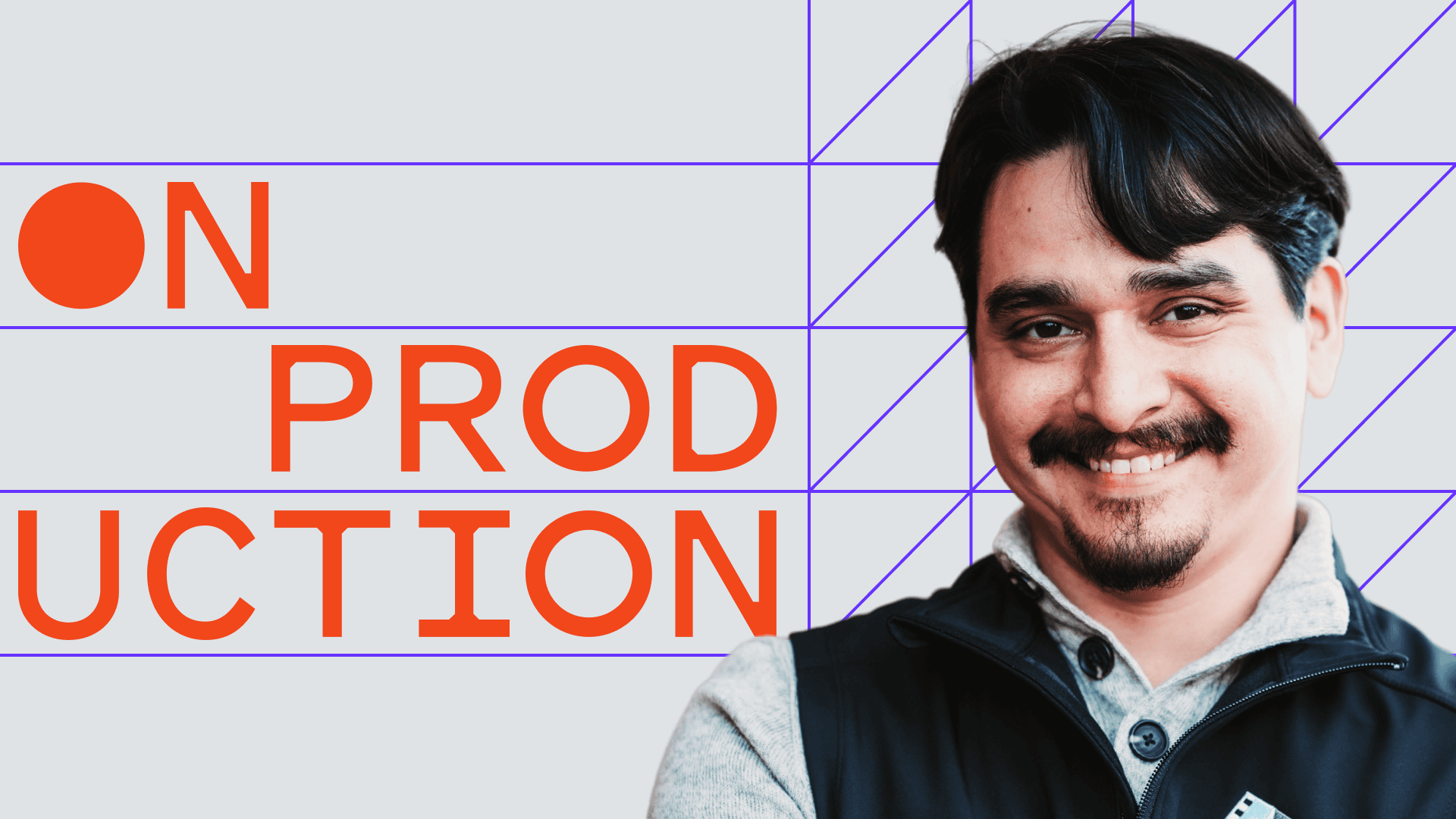
Cameron sits down with Andrew C. Griego of the Santa Fe Film Office to unpack how Santa Fe actually functions as a production hub inside New Mexico's highly competitive incentive system.
Andrew grew up in Las Cruces, New Mexico, and developed a passion for film and broadcast journalism that started in grade school. He went on to study filmmaking at NYU's Tisch School of the Arts, graduating with honors in 2013, before returning to New Mexico and building a career in the Locations Department. After joining IATSE Local 480, he worked his way up to Location Manager on large-scale features, television series, commercials, and documentaries, giving him a ground-level understanding of what productions actually need when they arrive in a region. He now calls Santa Fe home and brings that on-set perspective to his work at the Santa Fe Film Office.
While the statewide incentive often gets the attention, the conversation focuses on the operational layer producers encounter once a project lands in Santa Fe. From municipal permitting and historic districts to local crew depth, qualified production facilities, and the realities of shooting in a city with a strong architectural and cultural identity. Andrew breaks down how productions structure around the state's incentive uplifts, why Santa Fe works especially well for episodic television and contained features, and what producers often misunderstand about the region beyond the "desert" stereotype. They also discuss the city's production infrastructure, local crew culture, rural filming advantages, and how Santa Fe coordinates with the New Mexico Film Office to keep productions moving efficiently.
Welcome back to On Production. I'm your host, Cameron Woodward. Santa Fe is one of the most visually distinctive production hubs in the country, and it's operating inside one of the most competitive statewide incentive systems in the U.S. New Mexico offers a base incentive of 25 % to 35 % with additional uplifts depending on spend, labor, and geography, but the state level percentage is only part of the story. What often determines success is how a production navigates Santa Fe itself from permitting local crew depth, municipal coordination, tribal lands, historic districts, and the realities of shooting a place with strong cultural identity and architectural protections. And so to unpack how Santa Fe actually functions for producers, I'm joined today by Andrew C. Griego of the Santa Fe Film Office. Andrew, welcome.
Andrew C. Griego (01:08.207)
Hello, hello, thanks for having me.
Cameron Woodward (01:10.222)
Yeah, so when a producer looks at New Mexico's incentive, they're thinking 25 to 35 % at the state level. Where does Santa Fe fit into that equation? What changes operationally or financially when a project centers in Santa Fe versus elsewhere in the state?
Andrew C. Griego (01:30.928)
Well, Santa Fe, it fits right into the 25%. We can actually get up to 40 % here in the state, you know, with different uplifts and things like that. If you film within the county, Santa Fe County or the city of Santa Fe, and my office is a dual city county office, we're duly funded by both. And you film at a qualified production facility or a QPF, you can get an additional 5%.
So right there, you're already starting at 30 % within our municipality. And then if you go into a rural area, which is defined as 40 miles as the crow flies from either City Hall of Santa Fe or City Hall of Albuquerque, that's where you get your 10 % rural uplift. And that's how you get up to 40 % there. But here in Santa Fe, we can get you up to 30 % pretty easily. We have a lot of qualified production facilities here, seven Western sets.
not to mention the studios that we have as well. have three big studios here, Garson Studios, also called Aspect Studios, Santa Fe Studios, and the new Camel Rock Studios, which is the only native-owned studio in the United States.
Cameron Woodward (02:42.766)
That's really cool. My next question is sort of subjective, but I'm curious on your opinion, which is what do you think Santa Fe is structurally best for? Like full relocations, contained features, prestige indies, episodic scale?
Andrew C. Griego (02:57.699)
Well, you know, honestly, all of it, to be quite honest, we can handle all of it. But we do have a very special thing here in New Mexico for episodic. You can get a five percent boost for your episodic show if your series is greenlit for six or more episodes with a budget of fifty thousand or more per episode. You get that automatic five percent uplift for the entire show. So we get you a base 30 percent here in Santa Fe if you're shooting episodic.
Unfortunately, you can't stack it with the QPF uplift as well, but that goes for your whole production. the QPF, when you're filming at the QPF, you only get that 5 % bump for everything that's filmed while at that QPF. So the episodic, yeah, kind of stretches for the whole area.
Cameron Woodward (03:44.876)
I love Santa Fe, I've been, what a really cool place. You know, it has some of the most recognizable architectural and cultural identities in the country. How does that affect permitting and production logistics?
Andrew C. Griego (04:02.319)
Well, you know, there's some historical considerations for sure. You know, we have a historic downtown, of course, and here in New Mexico, especially in Santa Fe, we do pride ourselves on maintaining that historical significance throughout the city. But you'd be surprised what we can double for. You know, we can double for so many different places throughout the United States, throughout the world, really. And, you know, we will move mountains to get the look that you need. You know, when News of the World was filming here, they were filming
Andrew C. Griego (04:32.023)
in our downtown area on Canyon Road, which is a famous road of galleries and things like that. We dropped tons of sand down on the ground to make it old school, right? To get rid of that pavement look. Well, they only had like four hours to shoot this thing. the crew, municipal workers, our office, we were all out shoveling sand off of the road to get it back to the look that we need for our tourists and things like that.
We will do whatever's necessary to facilitate any kind of movie coming in and we're not afraid to get our hands dirty and things like that.
Cameron Woodward (05:09.836)
I love it. Do you come across any misconceptions that producers have about shooting in Santa Fe?
Andrew C. Griego (05:17.791)
yeah, it's got to be our locations that were only the desert, right? We're actually higher up than Denver, which is famously mile high and all that stuff. We're actually a few hundred feet higher than them. We have deciduous forest right at our doorstep here, right at the base of the San Diego, Cristo Mountains. We have mountains, we have forests, we have some lakes, you know.
We are very, very diverse in our landscape. don't just fall into that one category of desert, which I think is the common misconception about Santa Fe and New Mexico in general. New Mexico is one of the most diverse landscapes in the entire country. We can cover about four of the five climatic zones that are here in the US. Just the only thing you can't cover is tropical, a jungle. But you got to go to the jungle for a jungle most often. So we don't worry too much.
Cameron Woodward (06:09.086)
I was just going to ask, are there any kinds of projects that fit in your opinion seamlessly into the city, which you kind of mentioned about bringing sand in and being able to like sheet lots of different things. And then which, which productions struggle sounds like tropical based narrative has a hard time in Santa Fe.
Andrew C. Griego (06:26.499)
Yeah, I think your jungle based one is gonna be tough, but you know what? We have great IATS crew here that can build you a forest if you need it on a set. We did that with The Lost Bus, who was actually just nominated for an Academy Award for their special effects. That happened all here at Santa Fe in the Midtown campus. They built a bunch of trees that were made of metal with propane pipes going into them.
Andrew C. Griego (06:53.775)
We're lighting them on fire every day for a few weeks. So we can, you know, if we don't have it, we can build it. Our crews are top notch. They're world-class crews. I think any producer that comes here, that shoots here, will tell you that our crews are top notch. And I come from crew two, so I'm a little biased, but we are top notch. I'd say Santa Fe is really adaptable, to get back to your question. We can really fit anything except for maybe a major cityscape.
But we're actually working to change that. We just broke ground on a back lot, a city back lot that's a New York City sort of style, Chicago sort of style over at our community college. And the community college is working hand in hand with IATS 480, the local union here, to use set, excuse me, union construction workers and the like to build this city back lot, as well as teach the students at the community college.
the skills necessary to do that and help them get into the union as well. So we can cover everything but a cityscape, but again, we're changing that. just, like I said, we broke ground and it should be ready in a few months, eight months to a year probably, and it'll be up and running. And now, and we'll be able to facilitate movies that need that kind of cityscape.
Cameron Woodward (08:10.318)
That's awesome. So let's walk through some mechanics. So talk to me about the permitting flow. If a producer calls you six weeks before principal photography, what must happen immediately?
Andrew C. Griego (08:22.039)
You know, we just need to go through the scope of what they want. You know, our permitting system is very quick and easy. It's all online. It's a working document, so they can go in and add and change and adjust things as needed. And then I deal with the permitting personally, and we try and make it as quick and easy as possible. We give the same quality of work and attention to the smallest indie.
all the way to the big budget commercial production TV show. Everything is the same from our office and we pride ourselves on that. But again, very easy. You'll deal directly with me. I can walk through anybody through the permitting process. Our permitting fees are very, very low. They're $25 one time for a production under five million. It's kind of like our cap. Anything over five million, it's a one time $100 permit fee.
That's for all permits. So if you do multiple permits, one time for your production, and then it's $10 a day for filming. We're working even to get that down to zero. We're going to be rewriting some ordinances soon to hopefully get those permit fees to zero because the economic impact that a movie or a TV show or anything brings to Santa Fe far outweighs the benefit of those fees. So we're trying to move off of that right now.
Some of the considerations are, you know, for six weeks, if a producer came in six weeks, you know, some road, what kind of road work would you have? What kind of DOT considerations would we need to make for that? Because with NMDOT, you're going to need about 30 days to kind of, you know, to close down a state road or things like that. But a local highway or anything like that, deal on, excuse me, a county highway or things like that, we deal with on the local level and we can get those things processed very, very quickly.
Cameron Woodward (10:12.814)
That's awesome. was going to ask, know, if a production ever encounters friction in the process, you know, what is it? it like you mentioned the roads and some, in some scenarios, historic preservation or neighborhood approvals or environmental restrictions.
Andrew C. Griego (10:23.62)
Let's see, probably NMDOT turnarounds. That's probably going to be your biggest obstacle just because of the timing of it. In terms of historical preservation, we have variances available that we can work on. You know, our historic plaza, we can put in a variance to get a lift driven onto it or things like that. again, our crews, especially our location crews, they're top notch and they're going to take care of these places because
they live here and they work here and they want to make sure that New Mexico and Santa Fe stay beautiful. So we have ways around that. For neighborhoods, you know, we have a great, great film community here. There's everybody's kind of in on it together. And our office helps to facilitate that whenever we can and making sure that we're as transparent with the community as possible. And, you know, just trying to help them through their issues. My phone's always available for constituents when they need a call. They have a problem.
And if they have a big problem, we will call the production and we'll work with them hand in hand or we'll go down there and talk to them personally, whatever needs to happen. We're here for the production, but we're also here to make sure our community stays beautiful. it's really a partnership. It's working hand in hand with film. And I think New Mexico specifically has done that for decades, really, ever since we started the incentive program under Bill Richardson.
things have been going really, really well here. And we've been trying to foster that relationship and I think it's worked out really well.
Cameron Woodward (11:59.535)
That's great. Andrew, how does Santa Fe coordinate with the New Mexico Film Office to ensure the incentive process stays clean?
Andrew C. Griego (12:08.035)
Well, we work with them very early on in the process. You know, it kind of depends on the production. Some productions call the state office before us. Sometimes they call us first. And we always try and connect them as quickly as possible with the state office so that they can get a jump on their incentives and applying for those and things like that. But our state office is wonderful. They're really, really quick on pushing things through. You know, we got we had a logjam for a little while a few years ago, but we're past all that.
And we can often get productions a check in about six months or so. And don't hold me to that, of course, but producers who are listening, please don't. But about six months or so, we can give you a check. And because it's a rebate, that's what you get. You get an actual physical check with cash. There's not a bunch of hoops to jump through and things like that.
Cameron Woodward (12:58.968)
That's awesome. I mean, you were mentioning crew a little bit earlier. How deep is the crew base locally versus say like Albuquerque or Las Cruces?
Andrew C. Griego (13:06.873)
We were about on par with Albuquerque, I'd say. know, between Albuquerque and Santa Fe, our crews can basically host about a dozen productions at a time, at least. Like when we're busy, when we're full, we can easily staff about a dozen productions all the way through. But what separates Santa Fe, I think, in terms of crew in general, is gonna be our above the line crew. We have a really big above the line community. I mean, you mentioned...
Santa Fe is beautiful and all that. It really is. It's a wonderful place to live. We're up here in the mountains. It's a place full of art and culture and life and wonderful restaurants and world-class everything here in Santa Fe. our above-the-line folks, they love living here and we seem to be recruiting more and more every year. For Crucis, we're definitely, we're vastly larger. Crucis is a
one of the biggest proponents and benefactors of the rural uplift, that 10 % uplift, because there's a little less crew down there. So your crews often have to get driven in and stuff like that. But Albuquerque and Santa Fe and Las Cruces, are the big three in New Mexico. And our crews are, again, world class, world class crews.
Cameron Woodward (14:27.246)
That's awesome. That's great. You said above the line, but, and you also mentioned that you are in the crew, so you're going biased, but which departments, which departments are strongest in Santa Fe?
Well, since we'll start with the bias one, I come from locations originally. I did 12 years in locations before joining the film office, all the way from a PA up to a location manager. And so our LOCES crews are really special here. They have a special place in my heart because I come from them and they were my former colleagues. But, you know, we do locations differently here in New Mexico than a lot of other places. We get our hands dirty and we run a lot of equipment and things like that. A lot of other
A lot of other cities, lot of other jurisdictions, they are going to source those things out to vendors and the like. But we do it all here. And we pride ourselves on that, being very hard workers and the like. That goes into our grip and electric departments as well, our art departments. Those are all top notch, just off the top of my head. The RPAs and our AD lineups, they are also top notch. And I think it really
goes down to the people of New Mexico and Santa Fe, the people are special. And I think anybody coming from another place, whether it be another country or another state, they're gonna tell you that. They're gonna tell you that the thing that they fall in love with here in New Mexico, here in Santa Fe, is the people. that is showcased through our crew as well, because our local crew is excellent.
Cameron Woodward (16:04.374)
I love it. That's great. You know, what do you feel like a deciding factor should be if a project could float between Georgia, Louisiana, Arizona, or New Mexico? You know, like, what do you think makes Santa Fe the deciding factor?
Andrew C. Griego (16:22.537)
You know, we can double as all of those places easily. I mean, Georgia, Louisiana, Arizona. I mean, the only thing we probably couldn't double for from Louisiana is going to be New Orleans, you know, on the coast. We don't we don't have coastlines, of course, but here in landlocked New Mexico. But, you know, we can double as all those places. Our incentives, we have no minimum spend. You know, we had to mention that before.
No minimum spend on any of that. That really sets us apart, I think. And you can get their incentives on your hotels, your location fees, your above the line crew, all of your above the line that live here, all of your below the line that live here. There's no caps on any of that for your incentive. And even if you were in one of those other places and you wanted to bring some crew over, there's a limited amount of non-resident.
below the line crew that qualifies for a flat 15%. So even though they're not from here, we can give a little bit for that as well.
Cameron Woodward (18:40.59)
So I was curious, Andrew, like what infrastructure stages, vendors, posts should producers realistically plan to source locally versus from wherever they're based?
Andrew C. Griego (19:01.103)
Well, probably your stages and your vendors, they're all going to be local. We have excellent vendors that are constantly working with the film industry. We have an internal list here that we keep of local vendors that are film friendly. And new ones keep popping up every day. It seems like every week I get two or three new vendors or new locations or things like that. We do have two post houses here in Santa Fe.
I'd say post is probably one of the areas where we might be lacking a little bit. But these two post houses are very unique and they're very cool. One of them really focuses on narrative film, indie film, things like that. And the other actually just opened up like a few weeks ago. And they're going to they have more of a music background. And so they're going to be able to help with music production and post production for music and things like that. But in terms of
In terms of vendors, like regionally as well, Albuquerque is a very short drive away. It's like a half hour drive from city limit to city limit. So there's a lot of vendors that'll come up from Albuquerque as well. And vice versa. There's ones that come from Santa Fe that go down to Albuquerque. It's all a big ecosystem here and it really flows together.
Cameron Woodward (20:22.222)
That's awesome. Some quick questions for you. What's the best season to shoot in Santa Fe?
Andrew C. Griego (20:27.503)
Ah, well that depends on your movie. That depends on your movie. But it's probably the summer and fall are going to be your best. You know, it can get a little windy in the spring, but we do, you know, if you need snow, we got snow. Up here in Santa Fe, again, higher than Denver, we get snow basically every year, a few times a year. But really, I mean, it just depends on, it depends on what you need. And we got it. We get, we actually get four seasons here, which is, we can't always say for every.
That's great. This next question will also depend on the picture, of course, but I'm curious from your perspective, what is the most underused visual environment in the area?
Andrew C. Griego (21:08.855)
most underused. That's a good one. It's got to be our forest. Our forest right here, I think it's because people just they come and they don't know that it's here. So they want to, you know, they weren't planning on having it or maybe they had already written rewritten their movie to take that out or things like that. our forest and it's right here. It's super accessible and it's got to be the forest. Yeah.
Cameron Woodward (21:33.464)
That's awesome. How about one logistical reality that producers should respect immediately when they're coming to shoot in Santa Fe?
Andrew C. Griego (21:40.816)
you gotta get to know your locals. You gotta get to know your locals. All your crew's gonna be local. But we have great people here. Kinda like how I mentioned earlier. The people are really the lifeblood of our community and they're kind and they're helpful and they want to do good and they wanna have fun and they wanna be a part of something special. And I think that's why a lot of people come and they end up staying here in New Mexico when they come visit.
You know, our nickname is the land of enchantment, but the locals call it the land of entrapment because once you're here, you're kind of locked in. And I think Santa Fe has a way of attracting people that is special and it attracts good souls that want to do good for their community. And that falls into the film community as well. mean, who, you know, who doesn't want to make a movie? You know, how many times, I don't know how many times when I was a kid,
Andrew C. Griego (22:39.351)
I'd be like, I want to make movies. then every family member is like, have an idea for a movie. they tell me about it and they break it all down. And you'll find that a lot here that there's an appetite to help and there's an appetite to be a part of what's going on, a part of the community.
Cameron Woodward (22:55.768)
That's awesome, Andrew. Is there one local strength that you think surprises out of state teams?
Andrew C. Griego (23:03.403)
surprises out-of-state teams. Local strength, yeah, it's twofold. It's twofold. I think it's our permitting system. We get a lot of comments on that, on how quickly we can move, we can push through things and the amount of attention we can provide, how many things we can move and get moving for any individual production. And then it's the class of our crew.
you know, they're just they're pros through and through. And I think that's kind of a misnomer when people have been shooting in other places, you know, because a lot, know, LA will attract a lot of filmmakers and a lot of people that want to make their own thing. And I think that you'll find in New Mexico, the crews aren't held up by that. Yes, they're all filmmakers. Yes, they all want to make movies, but they're not so bogged that they're there to do their job and they're there to
make the movie that they're making and not necessarily like just, it's not just a job to get them into the director's chair. You know, they're there to be a key grip, to be a gaffer, to be a locations person, to be an art director or production designer. Like that's what they want to do. And I think you don't find that in a lot of different film communities.
Cameron Woodward (24:25.228)
That's awesome. It's really cool to think about Santa Fe as more than just this like beautiful backdrop, but rather as really a distinct production environment inside one of the strongest incentive States in the country. You know, the economics matter, but so do the, the cultural fluency, the municipal coordination, the practical planning of a production there. And so Andrew, thank you for.
clarifying how Santa Fe actually works, know, not just on paper, but in the field for filmmakers. And for producers considering New Mexico, you know, understanding the local layer at Santa Fe is awesome and not just from the statewide percentage side. And it seems like Santa Fe could be a real differentiator for the right project. So thank you so much for your time. This has been wonderful.
Andrew C. Griego (25:14.895)
Absolutely anytime you got any questions, let me know if anybody else, know, you want to send them our way We're happy to chat with anybody and everybody and hopefully make their movie here in Santa Fe You know, we're a film hub. We've been named best city to live and work Four years in a row by movie maker magazine and that's for a reason it's because this film community is top-notch it's world-class and We're here for the long haul and we're here to make your movie happen
Cameron Woodward (25:44.302)
That's awesome. Thanks so much, Andrew.
Andrew C. Griego (25:46.34)
Thanks, Cameron.
Learn more about New Mexico film tax credits. Explore generous credits, production partners & breathtaking landscapes in the Land of Enchantment.


Get pricing, see a product demo, and find out how much easier payroll can be.
