
Join the Crew
Get the best resources for producers delivered to your mailbox

Get the best resources for producers delivered to your mailbox
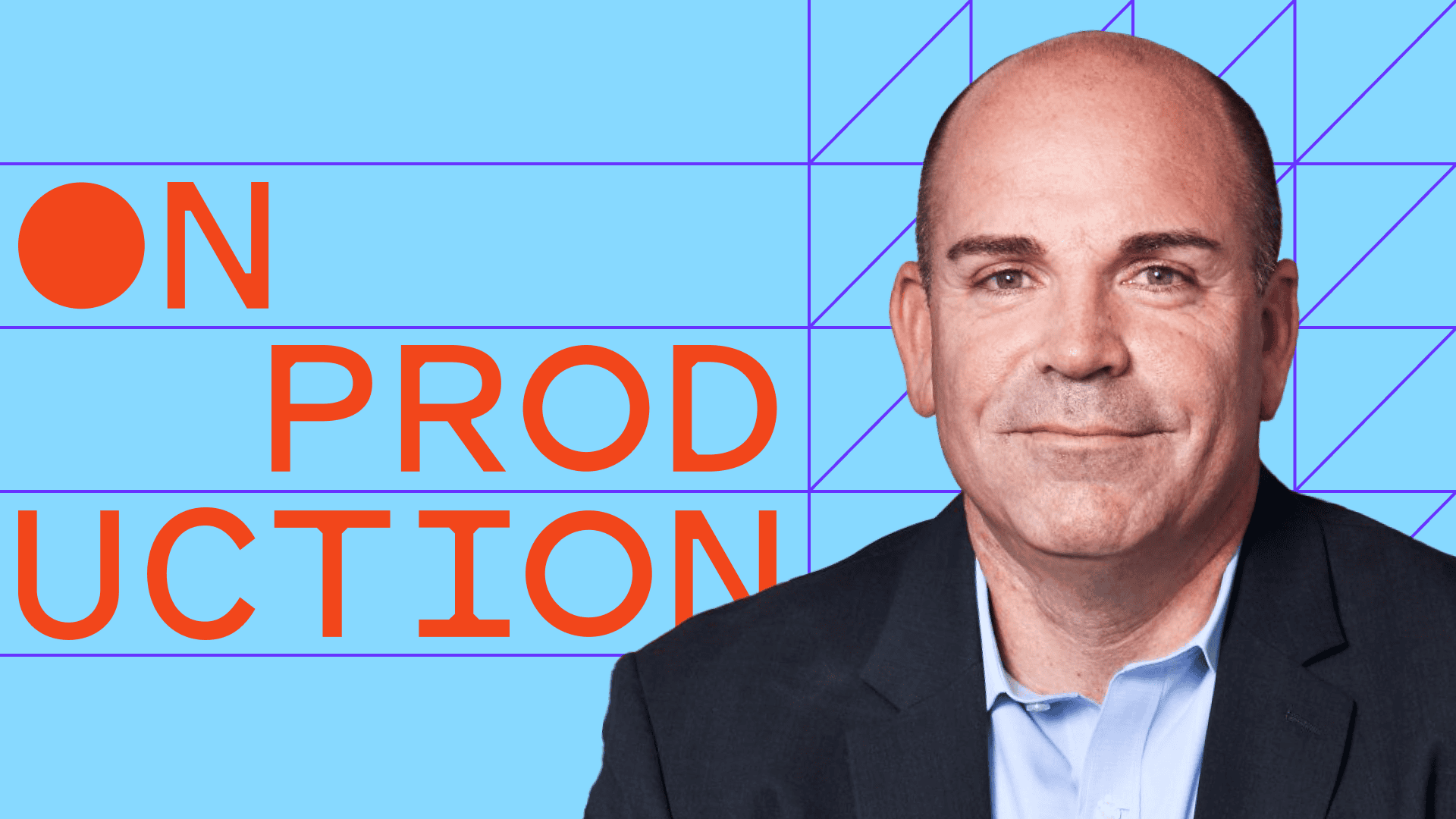
Cameron sits down with Jeff Caruso, Wrapbook's SVP of Studio Sales and Success, for a candid look at where production finance has been—and where it needs to go.
Jeff's path to Wrapbook is anything but theoretical. He started in hands-on production roles before moving into production finance at Summit Entertainment, then spent nearly 13 years at Cast & Crew helping studios and streamers manage the business side of their productions at scale. That combination—set experience, finance expertise, and deep familiarity with the tools the industry has relied on—gives him a uniquely clear-eyed view of why those tools have started to fall short.
The conversation covers the real cost of fragmented systems and manual workflows: not just inefficiency, but risk that shows up at the worst possible moments. Jeff talks about what modern production finance actually demands, why budget-building that once took weeks is on the verge of taking hours, and what he's seen happen when technology and service fail to move at the speed of production.
But the episode doesn't end with technology or trends. Jeff makes the case that no platform replaces the person who picks up the phone, understands the pressure, and says "I'm going to fix this for you." Because at the end of the day, a paycheck isn't just a paycheck—it's someone's car payment, their mortgage, their kid's tuition. The stakes are that real, and the people supporting productions need to treat them that way.
The views and opinions expressed by guests on this podcast are solely their own and do not reflect the views of Wrapbook, its employees, or affiliates.
Welcome back to On Production. Today I'm joined by Jeff Caruso, who's Wrapbook's SVP of studio sales and success and a production finance leader who spent his career helping studios in productions bring clarity, control and speed to the business of filmmaking. Why I'm really excited to chat with Jeff today is that his path into production finance started in the production office as an early experience.
This gave him like a really incredible firsthand understanding of how decisions made in prep and on the production floor ripple through budgets, schedules, and teams. And from those experiences, he later became VP of Production Finance at Summit Entertainment, working at the intersection of creative ambition and financial reality on major feature films. Jeff then spent nearly 13 years at cast and crew, ultimately serving as the GM and head of sales for film, television and streaming, where he worked closely with studios, streamers and production teams, navigating an industry that moves faster than ever. Throughout his career, he's seen how legacy workflows, especially around invoice reconciliation, production finance operations, can struggle to keep up with modern production demands. In this conversation, I'm going to talk with Jeff about what modern production finance actually looks like today from the systems and disciplines that protect a show under pressure to where technology, including AI, can genuinely help. As well, why service and expertise still matter alongside software. Really thrilled to chat with you, Jeff. Let's get into it.
Jeff Caruso (01:40.546)
Thank you for having me. I've been told I have a face for radio, so I don't know how that's going to apply here.
Cameron Woodward (01:43.817)
Yeah, my mom told me that too. So this is perfect. So you began your career, you know, hands on in production office roles before moving deeper into production finance. Is there anything that stood out during that time that like really permanently shaped how you think about production finance, specifically the consequences of, you know, small process failures on the impact of a real shoot day?
Jeff Caruso (02:12.404)
well, think that the biggest aspect of this for me was just how antiquated all of these systems were. Right. I remember when I was at Castle Rock, I remember watching the head of production, literally when he was trying to make a one line schedule, that was in the days when, when you literally had a board and you had physical strips that you were then manipulating around. And so watching this incredibly important guy, and his coordinator.
on their hands and knees trying to fit these strips on this board. Even at that time, you're thinking to yourself, there's gotta be a better way of doing these things. When I was at Summit, something that really stood out for me too was, as somebody who always loved this industry and from afar thought that I understood it, but you never really understand anything until you're actually working in the business. I naively thought that
that you, if somebody, your company was willing to pay $30 million for something, for a feature, let's say, then surely you'll pay $30 million, $250,000. And what I learned very, very quickly is that you have to fight for every single dollar that you get. That the budget that gets locked is a budget that is, that's what your loans are based on, that's what the bond company sees. Everything is related to that budget being locked.
You're not allowed to go over that. So the decisions that you make, every decision that you make affects what happens to that show. And more importantly, it's just as bad to be under as it is to be over. So I used to think, well, hey, we're coming in, we're coming in X amount of dollars under budget. Because when I was at Summit, all of our projects came in under budget. But then you start to see like,
Well, maybe that's not a great thing because you're making choices that take away from the creative aspect of the shows potentially, where maybe the director would have used a crane for this shot or done something, or maybe we would have had more extras on a certain day. So it's very important that you get all of this information in as quickly as possible. those decisions that affect the creative nature of the projects can be made in a very thoughtful way.
Cameron Woodward (04:38.409)
I'm curious, Jeff, over the last decade, what have been the biggest disruptors to how projects get financed, greenlit, managed, and which of those changes do you think are here to stay?
Jeff Caruso (04:50.158)
I think, and this isn't going to be surprising anybody, I believe that the proliferation of incentives has really changed the landscape of the entertainment industry and will continue to do so. I mean, you're in Louisiana, you saw when projects started to increase to come down to Louisiana. This may surprise some people, but the last two Twilight movies that we shot at Summit, were shot mostly in Louisiana. And we did that for the, for, for incentive purposes. You know, if you look at, at the incentives overseas, you're looking at the UK that someplace that has, you know, you're talking about deep crew bases. You're talking about an incredible incentive incentives that you can get even on contingent compensation, which is the box office bumps, that sort of thing. and then you're talking about great exchange rates.
So what you're seeing is, you're seeing states trying to compete with something that the studios can get overseas. It's creating a very real, very competitive atmosphere where there's nothing more important than trying to keep projects domestic for us, better for all of our crews. We think that we can compete and you'd look at places like New Jersey, New York, California.
places that are really doing their best to try to keep projects here domestically. It remains to be seen if that's going to be the case, but they're certainly giving it an honest go. And we're seeing the benefits of that. You have major studios like Netflix creating bases in New Jersey, Paramount's doing the same. California has, the amount of applications for their project has certainly increased.
So we'll see if domestically we can compete with going overseas.
Cameron Woodward (06:46.663)
super interesting. I want to pivot slightly, which is, you you had this incredible experience at Summit of like running production finance. I'm curious, you know, from your Summit experience and your experience at Cast and Crew and now at Wrapbook, like, how do you think that role is evolving with new technology and then also the new production dynamics to your point about, you know, incentives and, and, and offshoring of production as well?
Jeff Caruso (07:12.748)
I think the biggest disrupter right now is going to be AI. It's going to change how people are doing their jobs. I think about when I first started at Summit, I am doing my first cash flow, but literally going through the budget line by line by line by
And now you can create it. Now there's programs that people are using that just creates a cashflow immediately. You look at how budgets are being built now where it used to be where you had to rely on globals within the system. You can do a fairly good job of having several different templates.
Now budgeting is going to be the, you know, now budgeting is so much more, is going be so much more automated. Thanks to AI. There is going to be a human component to all of this that can't be overstated, excuse me, where you still need somebody who's going to be able to take a look at these things and really know what they're talking about. Really, really understand what they're, what they're looking at, but the tools that we can take from AI or take so much more of this manual labor.
out of the picture, this time consuming manual labor where we are chasing down when you're when you're building a budget, you have to chase down from your labor relations. What are all the ATL deals you have to look at? OK, we're shooting here. What are the incentives here? Like what what applies here? That can all be automated to the sense where now instead of taking days or weeks to build a budget, you can do this in something in a far shorter span of time.
It's going to all this is in service of being able to have these companies make better decisions faster about what projects that they can they can certainly do because you know what happens here is that a script comes in, people look at it and somebody says, well, well, this is going to be $15 million. And of course, then physical production comes in like, whoa, whoa, whoa, that's not going to be 15. That's going to be something far, far more. And you have to then it's a race to say, okay,
Jeff Caruso (09:24.226)
What is the most information we can give everybody so they can make informed decisions? It's all about speed, right? Like it's all about being able to say, like, this is going to give us the most value for what we have. I always think of the story. Maybe it's apocryphal, but it was when Roger Corman was talking about why he didn't do Waterworld. And he said, what are you nuts? Like that was going to cost me 5 million. It's like, okay, like that was a project that ended up costing well north of a hundred million.
But it's a good example of, you know, you can make pretty much make any project for any number, you may not like what you get on screen. A $5 million water world is not, is going to look vastly different than what actually ended up. And by the way, I also am fully cognizant of the fact that I'm referencing a movie from the mid 90s that probably nobody has ever heard of, but that's because I'm old.
Cameron Woodward (10:17.801)
I think that's cool now. Did that movie make money?
Jeff Caruso (10:21.112)
You know what's funny? Eventually it did. It's talked about like it's a bomb because it didn't do well, but eventually I think it gained a certain notoriety throughout the years. And I think eventually ended up in the black. It took a very long time. And then there was the, the water world action spectacular at the universal picture at university. Yeah, exactly. But it's a good reason to say it's a good example of, of if, if we want to try to give our filmmakers.
Cameron Woodward (10:38.217)
I actually think that's why most people know it, yeah.
Jeff Caruso (10:49.486)
the most bang for their buck. have to be able to provide them with the best information to be able to say, is what's going to, this is what the vision in your head, this is what this is going to cost. How can you do that as fast, as quickly and as efficiently as possible?
Cameron Woodward (11:02.761)
To that end, Jeff, I'm curious from your vantage point, what has fundamentally changed in how studios and streamers expect productions to operate financially, especially around speed, visibility, and control?
Jeff Caruso (11:15.512)
There's an incredible amount of information that is being requested at this time. So it's not just about paying people or, yes, we're on track. It's, okay, what happens if we lose a day? What happens if we know that we're going to need three more days at the end of this shoot? What is that going to cost? When can we do it? Where can we do it? What happens when we have to do additional photography, right?
So these are all questions that are coming up more more frequently because the era of I've made something, I'm presenting, know, like the studio is taking it and it's going to put it out somewhere. That model has all changed now. Now it's about constantly refining something as you're moving along, which obviously costs money. So at that point, you know, it becomes vital that you are using a system that is going to give you
of the most up-to-date information at that time right now. Because this is what this is all based on. mean, you're talking about millions, not tens, if not hundreds of millions of dollars that's being spent in a very compressed period of time. You have to have the most reliable, the most up-to-date information to make those decisions.
Cameron Woodward (12:37.607)
I want to pivot again slightly, which is to that end, a lot of capital is deployed. And then there's also a lot of uncertainty around theatrical, especially at the time that you and I are having this conversation. know, we're like in the midst of an unapproved merger between, you know, Netflix and Paramount and Warner, you know, for anything that isn't a tent pole, you know, how do you see the theatrical business evolving?
And what does that shift mean in practical terms for how projects are budgeted, greenlit, and financially monitored?
Jeff Caruso (13:11.976)
I'm going to preface this by saying I'm completely biased in my response here because I am a theater guy. I used to go to the movies when I was a kid every single week. In fact, I probably still go to the movies at least once a week. So I am very bullish about the theatrical experience. The news about the Paramount Warner Brothers merger, obviously one of the good signs is that
Paramount is still very much about the theatrical experience, which I think is great. They are saying that this combined entity is going to put out 30 movies a year, theatrically, which is certainly very bullish. I know that there's a lot of talk about whether that they can actually do that. That remains to be seen.
The industry is certainly still struggling to come back since COVID. In the mid teens, the domestic box office was north of 10, if not north of $11 billion. We've never reached those heights in a post pandemic world. I think last year, the domestic box office ended up at, I want to say 8.6 billion, which was up
you know, roughly, was roughly the same, maybe 1 % from the year prior in 2024. I think that the key here, I do believe that theaters will survive. I think about something a friend of mine had said that he had heard from somebody who used to run distribution at one of the studios where they said, yeah, I have a kitchen, but I still go out to eat. Everything to me is better in the theater. You know, like you have a
have a group of people who have come together to put up with the guy in the front row who's on his phone or the person behind me kicking my seat. But we are all gathered together in the dark to watch this humongous movie playing out on screen. Horror movies are scarier. Comedies are funnier. Everything is better, you know, in a darkened theater where you don't have the ability to hit pause and go empty the dishwasher or walk the dog.
Jeff Caruso (15:22.688)
You know, like you were stuck there watching something, you were having an experience. I do think that, that theaters, like I had said, theaters will survive. I think that the trick is going to be with these smaller projects that aren't tent poles. They're not, you know, something like the Avengers or Dune or a spectacle that was meant to be seen on the biggest screen possible and not on your phone or on the back of an airline seat. What happens with them?
And I think the key is going to be about respecting theatrical windows. For people who don't know, the theatrical window is the period of time when a project is exclusively in theaters. It used to be in like the mid eighties that that theatrical window was nine months. And as you've seen over the years, that's gotten shortened in the nineties. want to say it was, I want to say that theatrical window was about six months. Now we're talking about days.
This was a consequence of the pandemic where most famously Warner Brothers during 2020 started releasing projects day and date, which means that they released them in a few theaters. But then they also was a 2020 or 2021. think maybe I got the date. Don't hold me to the dates. But Warner Brothers is releasing all movies both in a few theaters and also on HBO Max at that time. So
There was a lot of confirmation about that because okay, like if I can see I can go to theater or I can watch this in the comfort of my home, which which which am I which am I going to do? Right what I've seen it now, you know is I think about movie like black bag where you have a it's a it's a it's not a tent pole. It's got wonderful stars a big-time director big-time screenwriter. Are people going to go see that movie?
knowing that it's probably going to end up on a streaming service or VOD within days of it being released within a couple of weeks. And we have trained an entire, not just generation, but everybody to say, okay, if I'm on the fence about this project, about something I'm seeing, and maybe the reviews aren't great, you know, I can wait. I can say, you know what, I'll go, I'll wait for this to show up on
Jeff Caruso (17:46.415)
on video on demand or on one of the streamers, because surely it will. We've got to get people back to saying, you know what, I want to see this in the theater. So, you know, good news is, is that this year the box office is up roughly 13 % from last year. And that's before we've gotten into the major releases of the summer, like your Toy Story 5s, Odyssey is certainly getting a lot of traction. Can you believe that? Odyssey, like,
Like this book from God, from the book that you were forced to read in high school, everybody wants to see, because literally every star is in it and it's made by one of the like one of the true artists that are working today. That's going to be huge. You know, so there's a lot of hope that that we will continue to see the theatrical movies, the box office trends increase.
Cameron Woodward (18:39.055)
man, it's going to be so awesome to see the Odyssey. And then of course, like industry insiders, they talk about the importance of Tom Cruise sort of denying and refusing Top Gun to be released until they could have a theatrical release.
Jeff Caruso (18:52.578)
And you know what? He was absolutely right. That was a true moment for people going back, that kind of brought everybody back to the theater. And it was cathartic. was...
Cameron Woodward (19:05.655)
And to your point, like that movie would not have been as good unless you were in the theater with everyone watching these just incredible practical effects with jets, you know, like it was so cool.
Jeff Caruso (19:16.576)
Now, I was lucky enough both to work on a Tom Cruise movie as a production assistant way, back in the day. And you always hear these stories about how like, that star was the first one in and the last one out. And it's like, okay, there's a lot of this has just been. Let me tell you, that guy was the first person in and the last person out. Like he would work that set just like the energy level on that guy. And you see it.
in the movies that he does. And I was also lucky enough to work on a Christopher Nolan movie as well. I worked in the production office on The Prestige, one of his early movies. And to be able to get just a glimpse into that process of, like I said, of a true artist working today, it's just amazing, especially again for a movie geek like me.
to be able to see how somebody who has a true vision about what he wants and how he's going to get it is literally fantastic. was one of the best experiences I've had working on a movie. And I got to work on it with people who both became my friends and colleagues that I still talk to to this day.
Cameron Woodward (20:34.471)
That's awesome. But regardless though, Jeff, like I don't think that it's up for debate that the industry is being asked to do more with less, you know, whether that's, not necessarily even a tighter budget on some of these marquee pictures, but certainly asking for more from those budgets and timelines, whether that's theatrical releases or even just like execution of the creative seems to be faster than it was in the past. And that's now normal when a production is under pressure. What are the non-negotiable finance disciplines that protect the show?
Jeff Caruso (21:09.058)
Well, it's funny that you say that the more with less, because even if these budgets are increasing, they're increasing for a variety of other reasons like ATL or location. They're certainly not looking to spend more on things that they can't justify on screen. And I would also say that there has never been a time in history when more has been asked of
of reporting and consequently more has been asked of payroll companies. You know, I'm old enough to remember when I when I first started out, like it was just it was union and non union payroll. And that was basically it. And then you had to start thinking about sick time and tracking sick time across, you know, different states. And then it was, OK, how are you dealing with the Affordable Care Act and how are you tracking for that? How are all these different aspects of of
of making series and features that people don't think about, but it become just as necessary and this incredible amount of reporting that needs to happen, right? You have to have reporting for the guilds, you have to have audit trails, you have to be able to justify why something happened, maybe even literally years after the fact. What becomes non-negotiable is the security aspect of this.
you know, endeavor that we are involved with here at Wrapbook, right? Like when I think about, about this, you think about what we are in charge of and what we are responsible for. Sure. It's the, it's the PII aspect of things, right? Because we know how much you make, we know where you live. We know if you're, if you know, like if you should be getting garnished, you know, like all of those things that, that we are responsible for safeguarding, but then think about the
you know, about all the other information we have. We have budget information. We know what people make. We know how long a project is. This is all information that people would readily want. We have to have a system that keeps that all secure. We also have to have a system that is flexible enough that only certain people are seeing certain aspects of what they are responsible for. That to me is that non-negotiable area of
Jeff Caruso (23:35.4)
of you have this endeavor that is tens of millions of dollars. How are you doing whatever you can to safeguard that information for people and make them feel secure that we are a partner that is taking that just as seriously as they are?
Cameron Woodward (23:53.956)
That's excellent. That's really good insight. You know, when you joined Wrapbook, both personally in our discussions, but also publicly when we sort of announced to the industry that you would join us here on our mission, like you really emphasize the pairing of next generation tech with also world-class service. I know this has been something that throughout your career in the internet payroll space has been something that's very important to you and to your clients. You know, where do you think humans still make the biggest difference? it, you know, paymasters, production accountants, support teams, and what kinds of problems should never be left to software alone?
Jeff Caruso (24:30.126)
I I I spent a lot of time at at in at Cast & Crew very grateful for the experience that I had there again like I still talk to too many people there some wonderful people there I made the move here for for a lot of different reasons. I was I I was very excited to be at a company that was
thinking about about technology in a very forward way. This new technology where the possibilities were just so exciting. But at the end of the day, this is a relationship based business. This is a business where people have to feel comfortable with picking up the phone and calling and saying, I've got an issue. How do I solve this? And I don't think that you ever get away with that, because no matter how great your tools are no matter how well constructed your platform is and never going to operate for everyone quite the way that they expect. Right. So and maybe something isn't programmed right. Maybe there is a bug or maybe it's doing something right. But whoever is using is like I wasn't expecting that.
Those are the moments where people want that security to be able to pick up the phone and say, what's going on? They don't want to now if they can use a, you know, if they can use technology to help solve that issue, they will, but it's got to solve their problems immediately. They don't want to be caught in this endless loop because again, these decisions are all happening very, very quickly week to week, right? Like I think about
When I think about payroll, I think about a clock that starts at the beginning of every week and it's just ticking down to zero, right? Like we don't have the time to think about like, you know what, let's talk about this next week about how we're going to solve this problem. It's like, we're trying to pay people. We have to figure this out now, right? Like something that somebody had said to me when I first started at Cast and Crew really has stayed with me.
Jeff Caruso (26:36.058)
And she was talking about the importance of what all payroll companies were doing. And it's so true. She said, you know, this isn't a paycheck. Like this is somebody's car payment. This is somebody's house. This is sending somebody's kid to college. Like there is a real importance to what we do. It's not just, we're, you know, like we're here and we're just rolling off, you know, like, like payments to people.
This is an incredibly complicated process that needs people that understand how this works, but also have no what it's like to sit in that chair that the person I'm talking with say, I understand the urgency with what you need to get done and we are all over it. And I don't think that there's ever going to be a something that's going to take the place of that ability to say, you know what?
You know, like this is a problem. I'm going to call Cameron right now and maybe Cameron's not going to solve this problem for me, but Cameron knows who should be, who, who to talk to about that. And we are going to come to a solution. And I think that is the difference between the companies that succeed and the companies that don't ultimately at the end of the day, you have to have product. It's, know, my, my old line that people have heard me say now a million times is that prior to COVID, you know, digital products were a novelty, not a necessity.
Now they are necessity. People have seen the benefits of being able to get out of this old antiquated way of both onboarding people and paying people that you don't have to do this by filling out a million forms manually, that there is a faster, more efficient way. It is very difficult to move this industry along, but I think that we are in a good spot because I think people are finally starting to see the benefits of this. But at the end of the day,
There's always going to be issues. There's always going to be some kind of issue that people need that security of saying, I can reach out to somebody and they will fix my problems from they will help fix the problems. It's really about connection, right? I'm not alone in this because you know, another thing I think about too is that with crews, like I'm not like we're not on the we're not in the production office with them, right? We're not the ones that that when a Joe grip
Jeff Caruso (28:59.98)
has come in and said, I'm not, where's my, I haven't gotten paid today, or there's something wrong with how I got paid. We're not in there with them. We have to understand that, yes, like they're on the front lines with crews who very rightly so expect to be paid correctly and on time. These aren't revolutionary ideas, but there's a lot that can happen in between filling out a time card and getting paid that we have to pay very, very close attention to. And one of the things that I loved about
being here at Wrapbook is just how incredibly positive everybody is about that experience, about being able to say, you know what, like, we can do this a better way, we can do this a faster way, and I think that we're really starting to get people to take notice about how we're doing that.
Cameron Woodward (29:48.104)
That's awesome. I mean, you talk a lot about like eliminating constraints of legacy systems by bringing payroll, start work, time cards, accounting, reporting all into one platform. I'm curious in practice, like what pain shows up when these systems are fragmented and what becomes possible when the data is connected, the software works, and it's of course met with this like a support system as well.
Jeff Caruso (30:14.102)
I think the whole concept of a true all in one platform is revolutionary for this industry because nobody up until now has been able to truly offer it. Right. Really what you're talking about is at other companies, you're talking about about separate systems that have been Frankensteined together to create some kind of cobbled together version of what people need.
And you are dependent on that part on integrations on these systems talking to each other. And you know, as well as I do that technology breaks down and what happens is, is that maybe there is something going on with one system, but not with the other. How does that help you if you're trying to get out a cost report? You know, it's the, it's, you know, it's the beginning of the week and you're about to meet with the studios, but you don't have.
all the information in that cost report, right? Like how does that help you? Technology is not supposed to add more problems or take away some problems, but add others. It's supposed to solve these issues for us. Like, so when I think about the true benefit of an all-in-one platform, I think about something where I'm not reliant on some integration that is going to possibly fail on me.
I'm looking at a system that I can trust, that I can go in, that's going to give me everything that I'm looking for in a very intuitive way. was very, you know, again, I'm not shy about saying it. I loved the possibilities of this system when I first saw it, where we have taken something that is very much could have operated and even given the appearance of something that is being offered by the legacy companies.
and rethinking it in a way that I think is really exciting and saying, okay, what are people really trying to accomplish here and how can we do that? How can we do that in a smart way, right? Like, does it really make sense that if people are input, like even to the idea of inputting invoices, why wouldn't we wanna use OCR for somebody to input that, for that system to input all at once? So again, you're not focusing on
Jeff Caruso (32:38.63)
on just the random busy work manual task, it's going to allow you to free up time to analyze this information to say, okay, these are all the costs from this vendor. Does it make sense that we're not getting, are we getting the best price from them? It is all about being able for accounting teams to make the most informed decisions. In order to do that, like we had talked about,
You know, there's this talk about doing more with less, but you don't do more with less. It's something that's a saying I've never liked. You do less with less, but if you have the right tools, that's where you can then, you can transform your job into something a lot more analytical.
Cameron Woodward (33:27.817)
Super interesting. Jeff, I'm curious, looking ahead from your perspective, three to five years, what do you think production finance operations will need to adopt to the most? Is it AI and automation, labor shifts, globalized production, windowing changes, all these things that you and I have been chatting about, and what will separate the teams in your view that thrive from the teams that struggle?
Jeff Caruso (33:51.405)
I think it's going to be two things. It's going to be automation. There is going to be, you know, that we are moving down a road where we are seeing the benefits of AI. We should embrace that. This is not about people losing jobs. This is about people transforming what they are doing so they can be better people and they can have better understanding of the industry. think it's incredibly exciting.
the idea of again taking out this rope busy work of, know, like, again, like I remember, you know, being in the production office and waiting for the production report and then trying to match that with time cards. Like, like that is not something that people should be spending their time on. Right. So AI is going to completely transform what is possible.
for, you know, for at least on the, on the backside of, of, of what we do, the nuts and bolts of what we do. and then obviously it's going to be globalization. we are, are in a position where, it is simply, it's very difficult to compete with overseas, productions. Like, like for all the reasons I had said before, if you're talking about exchange rates and crew bases and these incentives that really really make it very difficult to keep projects here. We'll always have domestic production here in the U.S. because you're always going to have like, you know, like the stars that have the ability to say, you know what, like we're going to shoot something here. If you want this done, it's going to go here and say, okay, fine. We'll make it here. Like we want, we want this project. But in order for something to be a success, it has to play globally. And that's why you're seeing, you know, such a emphasis on globalization, you're seeing like, like truly like the, the, world is flattening out at that point. Think about like the last mission impossible, you know, all the different countries that, that, that it shot in, right? Like audiences are looking to, for that experience. And certainly financiers are looking for that because
Jeff Caruso (36:09.73)
You know, like, like that just opens up more markets for them to be able to compete in. So those two aspects, I think, are really going to continue to to transform the industry. We're at a very, very exciting time right now, a very stressful time. You know, like we, you know, like we all know a lot of of our friends, you know, have been struggling for work or haven't worked or very thankful for the jobs that they get.
But you know, like I talked to some other people and they think that we're on the on the verge of a, know, like literally somebody said to me a golden age of Hollywood, right? Where we can get back to actually, you know, making fun projects and employing people. think the way you do that again is if you have the right tools to be able to say we can support making all of this product right here, but you have to you can't you can't be forced to rely.
on something that is rickety and outdated and it's not going to give you exactly what you need.
Cameron Woodward (37:11.795)
So, so insightful. Jeff, thank you for joining me, sharing a bit about your background, your, you know, really, really sharp observations about the state of production and how it fits into the work that we do. Really appreciate it.
Jeff Caruso (37:26.904)
Pleasure to be here.
Wrapbook welcomes Jeff Caruso as SVP, bringing deep production finance expertise to help studios embrace the future of production accounting.




Get pricing, see a product demo, and find out how much easier payroll can be.
