
Join the Crew
Get the best resources for producers delivered to your mailbox

Get the best resources for producers delivered to your mailbox


Tom is a filmmaker, producer, and marketing specialist based in Los Angeles.
At Wrapbook, we pride ourselves on providing outstanding free resources to producers and their crews, but this post is for informational purposes only as of the date above. The content on our website is not intended to provide and should not be relied on for legal, accounting, or tax advice. You should consult with your own legal, accounting, or tax advisors to determine how this general information may apply to your specific circumstances.
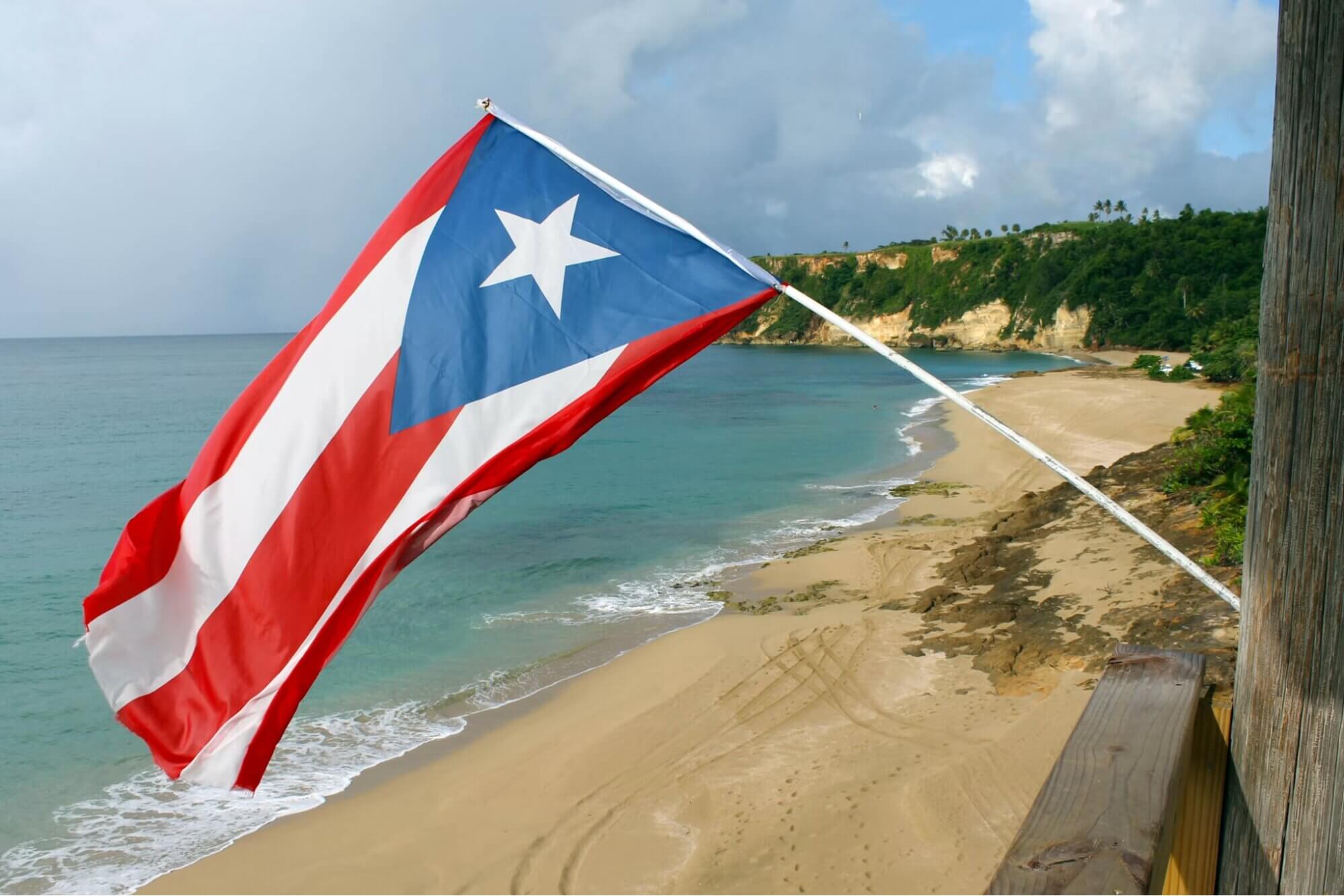
Puerto Rico offers filmmakers remarkable geographic diversity packed into a relatively small footprint. Within roughly 3,500 square miles, productions can access pristine Caribbean beaches, islands, verdant rainforests, rugged mountains, and richly historic cities.
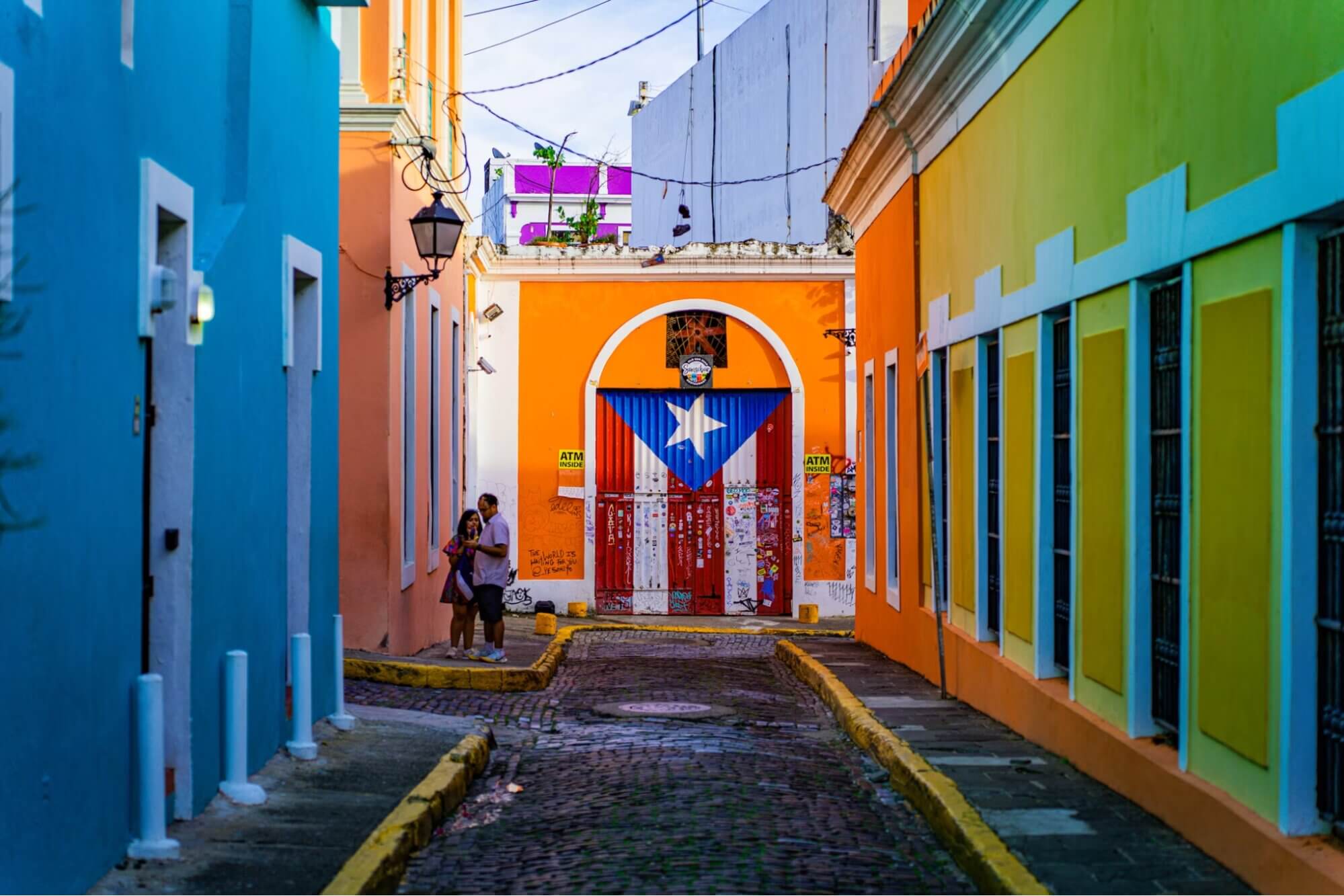
Old San Juan, with its colorful colonial buildings, cobblestone streets, and centuries-old Spanish fortresses, creates a cinematic backdrop unlike anywhere else in the United States. Minutes away, the Condado and Isla Verde districts offer gleaming beachfront hotels and high-rise skylines that can convincingly double for destinations throughout the Caribbean and Latin America.
Beyond San Juan, productions can venture into El Yunque National Forest, the only tropical rainforest in the U.S. National Forest System, or capture dramatic mountain vistas, secluded waterfalls, and miles of picturesque coastline across the island.
The island has hosted an impressive range of major productions over the years. Feature films including Fast Five, Pirates of the Caribbean: On Stranger Tides, and World War Z all utilized Puerto Rico's distinctive locations, while numerous television series, commercials, documentaries, and streaming productions continue to film there today.
And locations are only part of the story.
As a U.S. territory, Puerto Rico offers mainland productions a familiar legal and business environment, uses the U.S. dollar, and requires no passport for U.S. citizens. Those advantages can significantly simplify logistics compared to filming internationally while still delivering the look and feel of an overseas location.
Producers also benefit from an experienced bilingual local crew base, expanding production infrastructure, and the support of the Puerto Rico Film Commission, which assists productions with permitting, location scouting, and local resources.
Combined with the financial support of Puerto Rico film incentives, some of the most competitive available in any U.S. jurisdiction, the island's extraordinary range of locations and production-friendly infrastructure continues to attract independent filmmakers and major studios alike.
The roots of the Puerto Rico film incentive program stretch back to the 1990s, when the island began positioning itself as a competitive production destination relative to its Caribbean and Latin American neighbors with Act 362 of 1999.
While that legislation laid the foundation, modern Puerto Rico film tax incentives took full shape with Act 27 of 2011, which extended the Puerto Rico film tax credit to nonresident above-the-line and below-the-line spend, helping draw larger domestic and international productions to the island.
In 2019, Puerto Rico consolidated dozens of economic development programs under Act 60, the Puerto Rico Incentives Code. Rather than creating an entirely new incentive, Act 60 folded the existing Puerto Rico film tax incentive into a unified statutory framework while preserving its most producer-friendly benefits.
The result is a mature, well-established program that combines generous transferable tax credits with a straightforward administrative process. So what exactly do Puerto Rico film tax incentives look like today? Let's take a closer look.
At its core, the Puerto Rico film tax incentive is a transferable tax credit of 20% to 55% back on qualified spend on the island, designed to encourage film, television, commercial, and digital media production throughout Puerto Rico.
Unlike a cash rebate or refundable tax credit, the Puerto Rico film tax credit is fully transferable. Productions that earn the credit but owe little or no Puerto Rico income tax can sell it to an eligible Puerto Rico taxpayer, converting the credit into cash after completing the project.
Today, the Puerto Rico film tax incentive is funded at $38 million per fiscal year.
Most projects must spend at least $50,000 on qualified Puerto Rico production expenditures to qualify. Short films and documentaries are subject to a lower $25,000 minimum, while commercials and standalone post-production projects must generally reach an aggregate of at least $100,000 across qualifying projects.
One of the greatest strengths of Puerto Rico film incentives is the breadth of projects eligible to participate. Eligible projects include:
Notably, reality television, game shows, and standalone post-production projects are all eligible for Puerto Rico film tax incentives, making the program accessible to a wide range of productions.
In general, qualified Puerto Rico production expenditures include payments to both residents and certain nonresidents for services physically performed in Puerto Rico, along with a broad range of production purchases made on the island.
To really get a sense for how the credit applies, it helps to break eligible spending into two categories: physical production expenses and cast and crew payroll.
A wide range of production costs paid to qualifying Puerto Rico vendors can qualify for a 40% Puerto Rico film tax credit. Eligible expenses generally include:
In general, goods and services purchased outside Puerto Rico do not qualify for Puerto Rico film tax credits.
For most productions, payroll expenses are the single largest portion of the production budget. In Puerto Rico, 20% to 40% of cast and crew payroll expenses can qualify for film tax credits, depending on the residency status of your crew.
The largest component of the Puerto Rico film tax incentive is a tax credit of up to 40% on qualified Puerto Rico production expenditures paid to “Domestic Persons,” which include Puerto Rico residents and businesses organized or registered to do business in Puerto Rico.
That means compensation paid to Puerto Rico resident cast and crew, including both above-the-line and below-the-line personnel, for services physically performed in Puerto Rico generally qualifies for a 40% Puerto Rico film tax credit.
The Puerto Rico film tax incentive also provides a credit of up to 20% on qualified expenditures paid to “Foreign Persons,” which includes nonresident cast and crew whose compensation is subject to Puerto Rico income tax for services physically performed in the territory.
This last part is very important: a 20% withholding is required on gross payments to nonresidents in order for these payments to qualify for Puerto Rico film tax incentives. It's worth notifying nonresident hires about this requirement as early as possible. Nonresident workers subject to this withholding may be able to offset it against their U.S. federal tax liability.
Compensation paid through loan-out companies or other entities may also qualify, provided the entity receiving payment is subject to Puerto Rico income tax under Act 60.

As with resident payroll, only compensation for services physically performed in Puerto Rico qualifies. Work performed elsewhere, even if connected to a Puerto Rico production, does not count as a qualified Puerto Rico production expenditure.
Feature films, series, and documentaries may also qualify for an additional 15% tax credit on qualified expenditures paid to Domestic Persons. This bonus applies when a qualifying Domestic Producer controls the production and has the right to 30% or more of the profit pool shared among the producers of the project.
Certain key creative roles, such as the director, cinematographer, editor, production designer, post-production supervisor, or line producer, must be filled by Domestic Persons. This bonus credit is capped at $4 million per eligible project.
The Domestic Producer bonus is designed to encourage local creative leadership and support the continued growth of Puerto Rico's production workforce.
In addition to the credit itself, qualifying productions may also be eligible for exemptions from certain municipal and state property taxes, municipal license taxes, and Puerto Rico's Sales and Use Tax on qualifying property introduced or acquired for exclusive use in covered film activities.
To receive a Puerto Rico film tax credit, productions must satisfy several statutory and administrative requirements administered by the Puerto Rico Department of Economic Development and Commerce (DDEC).
First among these requirements are the Puerto Rico film tax credit program’s minimum spending thresholds.
As mentioned above, most projects must spend at least $50,000 on qualified Puerto Rico production expenditures to qualify. Short films and documentaries are subject to a lower $25,000 minimum, while commercials and standalone post-production projects must generally spend an aggregate of at least $100,000 across all qualifying projects.
Productions must also obtain a Tax Grant Decree from the DDEC before activities covered by the incentive begin. The Decree is a contract between the Government of Puerto Rico and the production company, establishing eligibility for Puerto Rico film tax incentives and outlining the terms under which the credit may be claimed or transferred.
While the Puerto Rico film tax incentive generally does not require that a set percentage of principal photography occur in Puerto Rico, there is one important exception: development expenses are eligible only if at least 50% of the project's principal photography ultimately takes place on the island.
Productions must also ensure that proper withholding is in place for any nonresident payroll they intend to qualify. As noted above, a 20% withholding is required on gross payments to nonresident cast and crew for those payments to count toward the Puerto Rico film tax credit.
After production wraps, all qualified Puerto Rico production expenditures must be reviewed and certified by an independent auditor. Following the review, the DDEC will issue a Tax Credit Certification, which allows the production to claim or transfer their Puerto Rico film tax credit in accordance with Act 60.
The Puerto Rico film tax incentive is administered by the Puerto Rico Department of Economic Development and Commerce (DDEC) in collaboration with the Puerto Rico Film Commission.
To participate, productions must submit an application for a Tax Grant Decree to the DDEC. Although producers should begin the process as early as possible, Act 60 provides some flexibility by allowing a Decree's effective date to precede the filing of the request under certain circumstances. The Puerto Rico Film Commission advises productions to complete the application before the end of principal photography.
A typical application includes a detailed production budget, proof of financing, a production schedule, and an estimate of anticipated Puerto Rico production expenditures. Productions seeking the Domestic Producer bonus should also document the eligibility of the producer and qualifying key creative personnel.
Unlike some incentive programs, Puerto Rico film incentives are not awarded on a strictly first-come, first-served basis. The DDEC and Puerto Rico Film Commission consider factors including a project's anticipated economic impact, local payroll and spending, and overall benefit to the territory's production industry when evaluating applications.
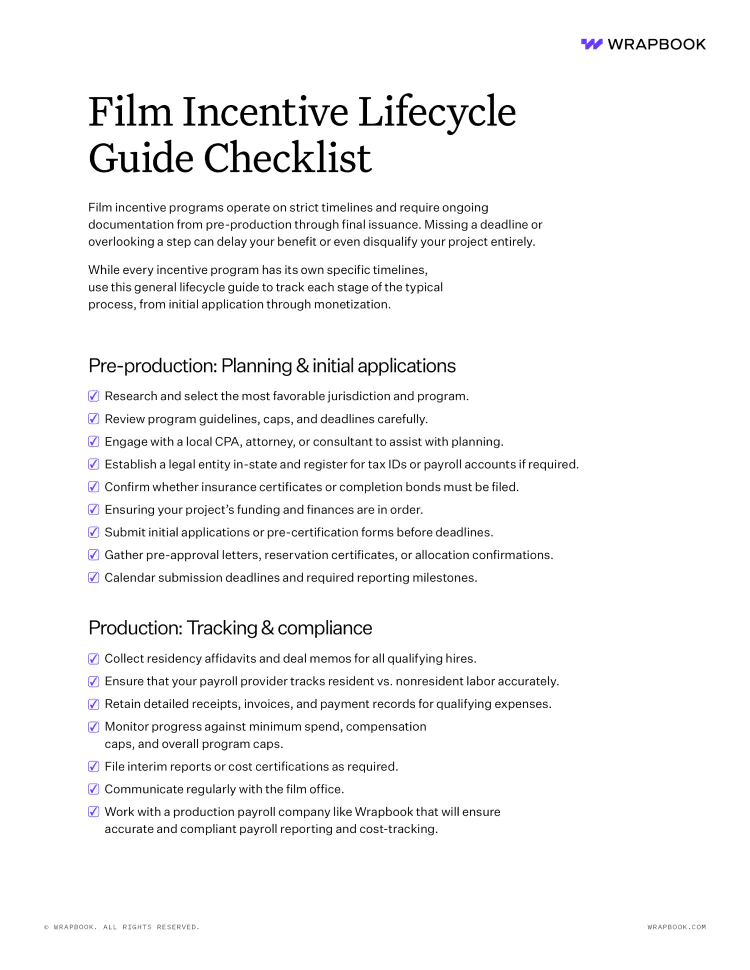
Once approved, the DDEC issues a Tax Grant Decree establishing eligibility and the terms under which the credit may be earned. After production wraps and the required independent audit is complete, the DDEC issues a Tax Credit Certification that allows the Puerto Rico film tax credit to be claimed or transferred.
The Puerto Rico Film Commission is the island's primary liaison between the film industry and the DDEC. Beyond administering the Puerto Rico film tax incentive, the Commission assists productions with location scouting, permitting, and connections to local crew and vendors.
For any production exploring Puerto Rico film incentives, the Film Commission is the best first point of contact.
Whether you're developing an independent feature, a scripted series, a documentary, or a commercial campaign, Puerto Rico film incentives offer some of the most competitive production savings in the U.S. Combined with the island's remarkable range of locations and its production-friendly infrastructure, Puerto Rico’s is a package that's hard to match.
To explore how Puerto Rico film tax incentives compare to programs across the United States, visit Wrapbook's Production Incentive Center. And to learn more about production incentives offered all across the United States, check out our state-by-state guide to film tax incentives.
Nicknamed La Isla del Encanto, which translates to "the island of enchantment" in English, Puerto Rico has plenty to enchant filmmakers, from white sand beaches and lush tropical rainforests to the colorful colonial streets of Old San Juan.
The scenery, though, is only half the draw. Puerto Rico film incentives are among the most generous in any U.S. jurisdiction, offering significant savings to productions that choose to film on the island.
In this guide, we're breaking down everything producers need to know about Puerto Rico film tax incentives, including how the credit works, who qualifies, what expenditures count, and how to apply.
Before we get into the details of Puerto Rico film incentives, take a moment to explore Wrapbook's Production Incentive Center.
The Production Incentive Center is a comprehensive resource designed to help producers research, compare, and navigate film incentive programs across the United States and its territories.
With tools like the State Incentive Map, you can quickly browse programs nationwide. Or give the Incentive Comparison Tool a spin and see how Puerto Rico film tax incentives stack up against production incentives in other leading destinations like Georgia, Louisiana, New Mexico, and neighboring Florida.
No matter what you're shooting or where, Wrapbook's Production Incentive Center makes it easy to evaluate your options and identify the incentive that's right for your next production.


