Join the Crew
Get the best resources for producers delivered to your mailbox

Get the best resources for producers delivered to your mailbox


Tom is a filmmaker, producer, and marketing specialist based in Los Angeles.
At Wrapbook, we pride ourselves on providing outstanding free resources to producers and their crews, but this post is for informational purposes only as of the date above. The content on our website is not intended to provide and should not be relied on for legal, accounting, or tax advice. You should consult with your own legal, accounting, or tax advisors to determine how this general information may apply to your specific circumstances.
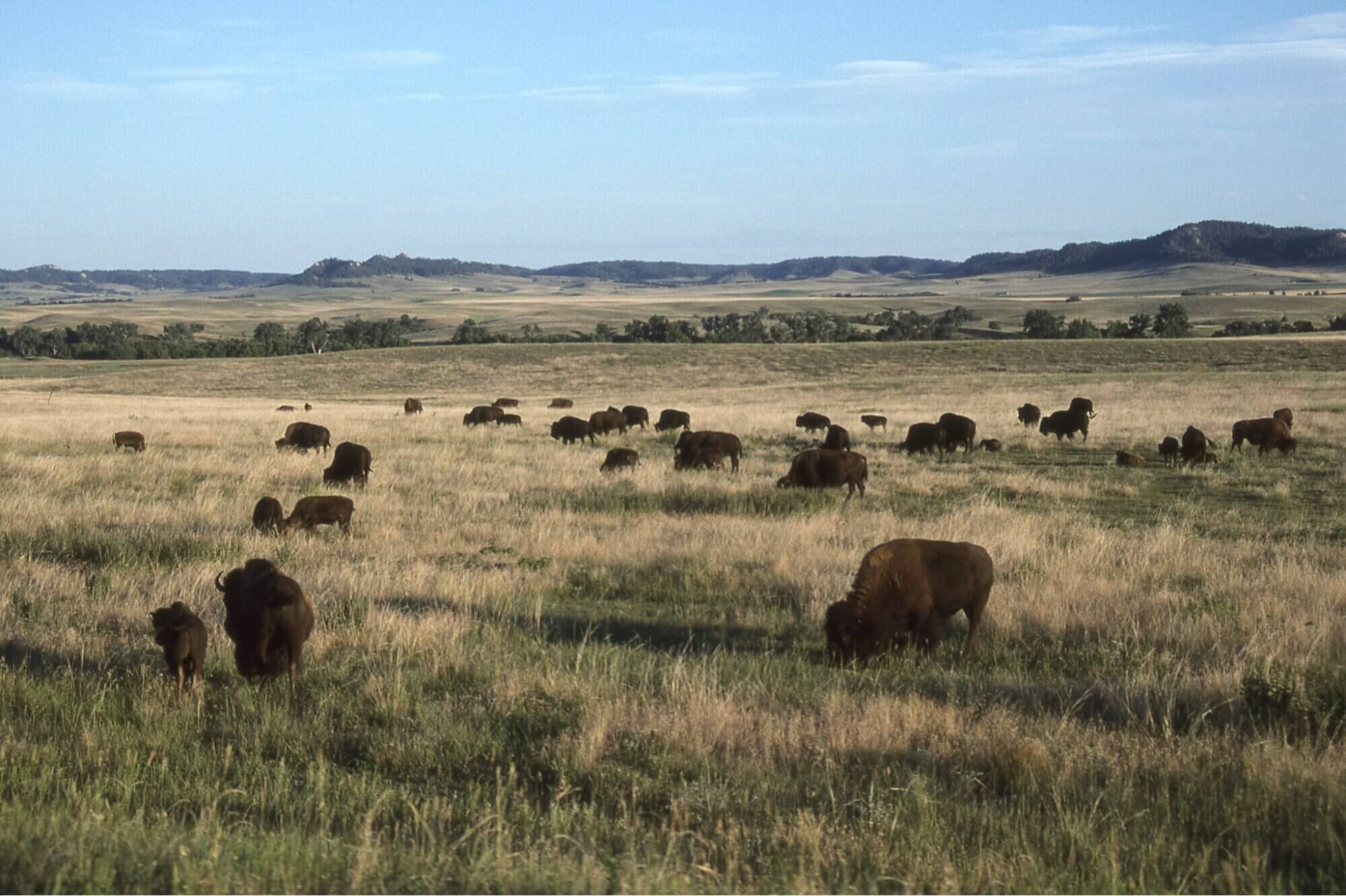
Nebraska's visual range extends well beyond what many filmmakers expect. From the rolling Sandhills, one of the largest grass-covered dune systems in the world, to the fertile Platte River Valley and the rugged Pine Ridge bluffs of the Panhandle, the state offers an expansive and underrepresented visual palette.
For productions seeking authentic American heartland settings, Nebraska delivers a sense of place that's impossible to manufacture on a backlot.
Omaha anchors the state's urban production infrastructure. The city's Old Market district, with its brick-paved streets and Victorian-era warehouses, gives period productions a ready-made backdrop. Modern Omaha also offers corporate districts, river access, and neighborhoods that can convincingly double for any number of Midwest cities.

Lincoln, the state capital, adds classical civic architecture and a walkable urban core. Beyond the two major cities, Nebraska's rural counties deliver wheat fields, grain elevators, one-street main towns, and the kind of open-sky isolation that gives stories room to breathe.
That isolation is part of what has drawn significant productions to the state. Alexander Payne, one of Nebraska's most prominent filmmakers, shot his Academy Award-winning film Nebraska across the state's small towns and open plains. More recently, indie films including Chloé Zhao’s Academy Award-winning Nomadland and coming-of-age comedy Snack Shack have made the Cornhusker State their production home.
Nebraska's film community is growing, too, anchored by the Nebraska Film Office and the statewide production resource hub at Film in Nebraska. The Nebraska Film Office assists productions with location scouting, permitting, and connections to local crew and vendors across the state.
Combined with the financial support of Nebraska film incentives, which are specifically designed to reward productions for rooting themselves in Nebraska's stories, landscapes, and workforce, the state is quietly becoming one of the Midwest's more compelling production destinations.
Nebraska's entry into the film incentive landscape came later than many of its regional peers. For years, the state lacked a dedicated statewide production incentive, relying instead on informal support through the Nebraska Film Office and the localized economic development tools available under the Local Option Municipal Economic Development Act.
The passage of LB937 in 2024 by the Nebraska Legislature changed that. LB937 established the Cast and Crew Nebraska Act (CCNA), creating Nebraska's first dedicated refundable film tax credit program and signaling a formal commitment to growing the state's production economy.
In parallel, the Nebraska Department of Economic Development (DED) administers the Nebraska Film Office Grant, Nebraska's dedicated Nebraska film grants program, designed to attract larger-budget productions with a minimum spend of $1 million in-state.
The grant program has operated in competitive cycles, most recently open from late 2024 through mid-2025. As of mid-2026 the application window has closed and new cycles are pending funding decisions.
Together, these two programs form the foundation of Nebraska film incentives today. So what exactly do those incentives look like? Let's take a closer look...
Nebraska film incentives currently operate through two distinct programs administered by the Nebraska Department of Economic Development: the Cast and Crew Nebraska Act (CCNA) refundable tax credit and the Nebraska Film Office Grant.
As of mid-2026, CCNA is the active and primary Nebraska film state tax incentive, while the Film Office Grant has paused new applications following the close of its most recent cycle in June 2025. Producers should contact the Nebraska Film Office directly to confirm current grant availability before building it into a financing plan.
The CCNA is a refundable income tax credit with a base rate of 20% on qualified Nebraska production expenditures and a potential maximum of 35% when all available uplifts are applied.
Because the credit is refundable, productions that earn more credit than they owe in Nebraska income tax receive the balance as a direct payment from the state. Out-of-state production companies with no Nebraska tax liability can access the full value of the credit without needing to sell or transfer it.
In order to qualify for Nebraska film tax credits through the CCNA, short film, documentary, animation, and commercial projects must spend at least $25,000 on production in the state. Full-length features, including made-for-television movies, must spend at least $500,000 and all other television projects must spend at least $500,000 per episode.
The CCNA program operates with annual funding of $500,000 per fiscal year. Applications are considered in the order received, making early engagement with DED essential.
When active, the Nebraska Film Office Grant provides Nebraska film grants of up to 20% on qualified Nebraska spending, with a maximum award of $400,000 per project.
To be eligible for the Nebraska Film Office Grant, productions must incur at least $1 million in qualified expenditures in Nebraska, making it a program aimed squarely at larger-budget features and episodic productions.
Eligible project types include feature films and, following a program expansion, television series and miniseries. Because grant funding is subject to DED appropriations and periodic application cycles, producers considering the Nebraska Film Office Grant should contact the Nebraska Film Office to confirm whether new cycles have opened before factoring this program into their budget.
One of the strengths of the CCNA is the breadth of productions it supports. Eligible project types under the Cast and Crew Nebraska Act include:
Notably, documentaries and commercials are both eligible for Nebraska film incentives, making CCNA accessible to a wide range of production formats beyond narrative features and scripted series.
For the Nebraska Film Office Grant, eligible projects include feature films, television series, and miniseries, subject to the grant's Nebraska story and residency requirements.
So what expenditures qualify for the Nebraska film state tax incentive? And how much can productions expect to receive back in savings?
The good news is that CCNA covers a broad range of in-state spending. To understand how the credit applies, it helps to break qualified expenditures into two categories: cast and crew payroll and physical production spend.
For most productions, payroll expenses are the largest single line item in the production budget, and they represent a significant opportunity for savings under the CCNA.
Wages paid to Nebraska resident cast and crew qualify for the 20% CCNA credit, covering both above-the-line and below-the-line personnel for services performed in the state.
There is one cap specific to resident above-the-line labor: above-the-line wages may not exceed 25% of total in-state qualified expenditures. Productions with highly compensated resident above-the-line talent should factor this ceiling into their credit calculations.
For nonresident cast and crew, only below-the-line wages qualify for the Nebraska film tax credit. Compensation paid to nonresident above-the-line personnel, including directors, producers, writers, and principal cast, does not qualify.
Below-the-line per diems of up to $30 per day also qualify for nonresident crew, while above-the-line per diems and living allowances are excluded for all workers regardless of residency.
Wages paid through loan-out companies can qualify, provided the loan-out withholds and remits applicable Nebraska income tax on payments for services performed in the state.
One structural cap applies across all payroll: total wages and earnings paid during the qualified production activity must not exceed $500,000, which effectively focuses the program on productions whose Nebraska wage spend falls at or below this level.
A wide range of production costs paid to Nebraska vendors can qualify toward the CCNA credit. Eligible expenses generally include:
In general, goods and services purchased outside Nebraska do not qualify for Nebraska film tax credits.
The CCNA's most distinctive feature is its three stackable 5% uplifts, each designed to reward productions that invest meaningfully in Nebraska's identity, communities, and workforce.
Productions can earn up to 35% on qualified Nebraska expenditures by combining the 20% base credit with any or all of the three bonus uplifts.
Productions that film Nebraska as Nebraska, base at least 70% of principal photography from the original submitted screenplay in Nebraska, and provide a screen credit referencing Nebraska qualify for an additional 5% credit on qualified expenditures.
Full-length productions that film entirely in locations at least 30 miles outside the corporate limits of a metropolitan or primary-class city are eligible for an additional 5% credit on qualified expenditures.
Full-length productions can earn an additional 5% credit on wages paid to Nebraska residents employed as first-time actors or below-the-line employees on full-length films in Nebraska.
Up to ten qualifying individuals per film may be counted toward this uplift, and wages must be at or above Nebraska minimum wage. This bonus reflects the CCNA's broader goal of developing Nebraska's production workforce, not just attracting spend.
To qualify for the CCNA, productions must meet several requirements designed to ensure meaningful Nebraska location activity and local workforce participation.
Minimum qualified expenditure thresholds vary by format. Full-length features and made-for-television movies must spend at least $500,000 in Nebraska. Television episodes must spend at least $500,000 per episode. Short films, documentaries, animation projects, and commercials carry a lower threshold of $25,000 per project.
Productions must conduct at least 40% of their total production days in Nebraska, and full-length films must have at least 10 production days in the state.
Nebraska resident hiring requirements also apply. At least 40% of below-the-line employees must be Nebraska residents. At least 15% of the cast must also be Nebraska residents. Nebraska expatriates can be included in both calculations, but must not exceed 15% of the total below-the-line employees.
The Nebraska Film Office Grant has its own unique requirements.
To qualify for the grant when it is open, productions must spend a minimum of $1,000,000 in qualified Nebraska expenditures and must allocate the largest percentage of their principal photography days to Nebraska relative to other filming locations. At least 50% of worker days while filming in Nebraska must be Nebraska residents. Grant applications must also demonstrate a Nebraska story connection, such as a narrative set in Nebraska, characters tied to the state, or identifiable Nebraska locations integrated into the storyline.
Nebraska film incentives are awarded on a competitive, case-by-case basis. Under the CCNA, applications are reviewed in the order received against available annual funding. Because the program's annual cap is $500,000, credits are limited, and producers should confirm remaining capacity with Nebraska’s DED.
After production wraps, all qualified expenditures under the Nebraska film state tax incentive must be independently reviewed and verified by a licensed CPA, consistent with best practices for production audits, before DED will issue a Tax Credit Certificate.
Applying for Nebraska film incentives is a two-step process administered by the Nebraska Department of Economic Development through its AmpliFund portal.
Step 1: Before principal photography, productions must submit a CCNA Application for Qualification through the DED AmpliFund portal.
Timing requirements vary by format. Full-length films, documentaries, and television programming must submit at least 30 days before principal photography begins. Short films, animation projects, and commercials must submit at least 10 days before filming starts.
A non-refundable $500 application fee is required. Approval confirms eligibility but does not reserve credits, given the program's competitive cap structure.
Once approved, DED will schedule an implementation meeting with the production team to align expectations and confirm how qualifying expenditures should be tracked and documented throughout the shoot.
Step 2: After production wraps, productions submit an Application for Tax Credit along with a cost report and supporting documentation. DED reviews the expenditures, confirms compliance with CCNA requirements, and issues a Tax Credit Certificate. Productions can then claim the refundable credit through the Nebraska tax system.
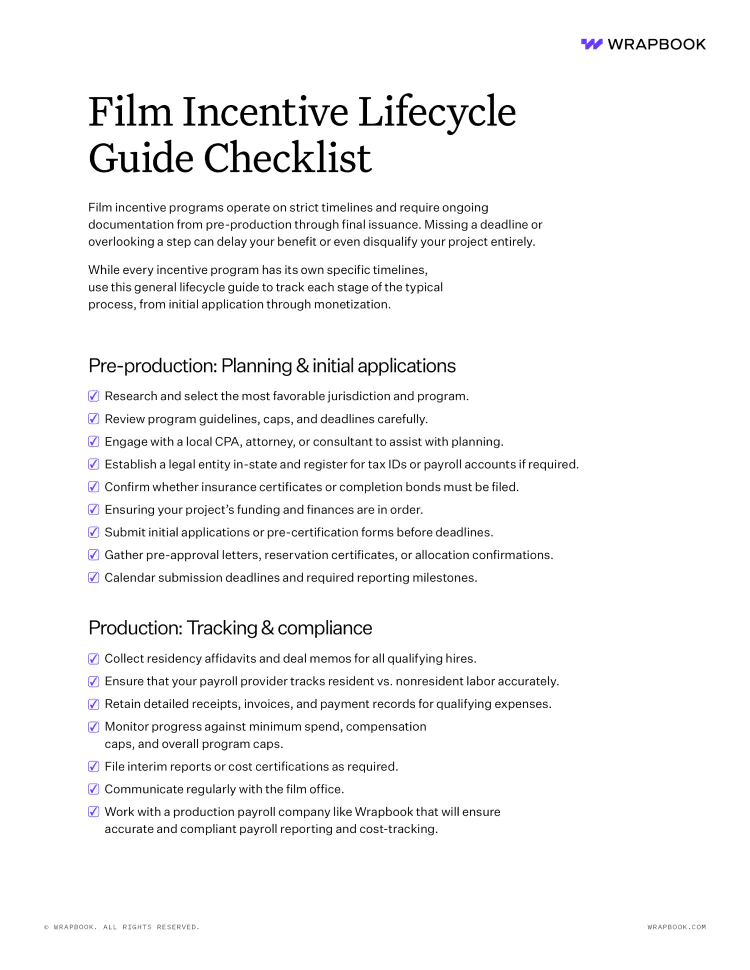
For the Nebraska Film Office Grant, applications must be submitted between 180 days and 30 days prior to the start of filming. Producers should monitor official DED channels and contact the Nebraska Film Office directly to confirm whether a new grant cycle has opened, as new cycles depend on available funding.
Because both programs are subject to funding constraints and competitive review, producers should engage with DED early in the pre-production process to confirm current program availability.
The Nebraska Film Office is Nebraska's primary state agency supporting film and television production. Operating within the Nebraska Department of Economic Development, the Office assists productions with location scouting, permitting, and connections to local crew and vendors throughout the state.
The Nebraska Film Office is the best first point of contact for any production exploring Nebraska film incentives, whether for the CCNA credit, a potential future Film Office Grant cycle, or general production support across the state.
For productions working in and around the Omaha metro area, the Eastern Nebraska Film Office (ENFO)—also known as Educational Nationwide Film Opportunities—provides dedicated regional production support. ENFO assists with location scouting, permitting, crew connections, and logistical coordination for productions filming in eastern Nebraska's urban and suburban communities.
ENFO's regional expertise and community relationships make it a valuable production partner for projects shooting in Omaha, Lincoln, and the surrounding counties, and its support can stack on top of statewide Nebraska film incentives to help productions get the most out of the region.
Whether you're developing an independent feature, a documentary, a commercial campaign, or an episodic series, Nebraska film incentives offer a meaningful and flexible framework for saving money while telling stories rooted in one of America's most distinctive regions.
To explore how Nebraska film incentives compare to programs across the Midwest and throughout the United States, visit Wrapbook's Production Incentive Center. And to learn more about how production incentives work across the country, check out our state-by-state guide to film tax incentives.
From Nebraska’s sweeping Sandhills to the architectural character of Omaha's Old Market district, the Cornhusker State offers filmmakers a distinctly American sense of place that's difficult to replicate anywhere else.
Nebraska film incentives are making that landscape an increasingly compelling financial choice.
In this guide, we're breaking down everything producers need to know about Nebraska film incentives, including how the programs work, who qualifies, what expenditures count, and how to apply.
Before we get into the details of Nebraska film incentives, take a moment to explore Wrapbook's Production Incentive Center.
The Production Incentive Center is a comprehensive resource designed to help producers research, compare, and navigate film incentive programs across the United States and its territories.
With tools like the State Incentive Map, you can browse programs nationwide in just a few clicks. Or give the Incentive Comparison Tool a spin to see how Nebraska film incentives stack up against programs in neighboring states like Colorado, Iowa, and Missouri.
No matter what you're shooting or where, Wrapbook's Production Incentive Center makes it easy to evaluate your options and identify the incentive that's right for your next production.